





Gut metabolite linked to choline found to restore insulin sensitivity

Key takeaways
- Researchers identified the gut microbial metabolite TMA restores insulin sensitivity by blocking the inflammation-triggering protein IRAK4 in the context of a high-fat diet.
- Boosting TMA production — through nutrition or pharmacological strategies — may offer a new therapeutic pathway for type 2 diabetes.
- The study highlights how diet-microbiome interactions can directly fight metabolic inflammation.

International scientists have discovered a gut microbial metabolite that helps fight insulin resistance and type 2 diabetes. Trimethylamine (TMA) processes dietary choline and plays a key role in restoring insulin sensitivity.
The publication in Nature Metabolism touts the finding as a “major breakthrough,” based on research from 20 years earlier. It suggests potential new therapeutic strategies for diabetes can focus on improving TMA production.
The research team found that TMA can block the inflammation-triggering protein IRAK4, in response to a high-fat diet. As a result, it improves blood sugar control. IRAK4 is part of the immune system that is sensitive to dietary imbalance.
The study authors underscore that beneficial interactions between gut microbes and nutrition can promote metabolic health.

Closer to reality
During his postdoctoral research, study co-lead professor Patrice Cani, from the Imperial & University of Louvain, Belgium, found that a high-fat diet leads to a number of bacteria that activate the immune system and trigger inflammation. This eventually causes insulin resistance in diabetic people.
At that time, this was considered to be unrealistic, but is now well accepted.
With co-lead professor Marc-Emmanuel Dumas at Imperial College London, UK, the team found that the natural nutrient choline can improve blood sugar control.
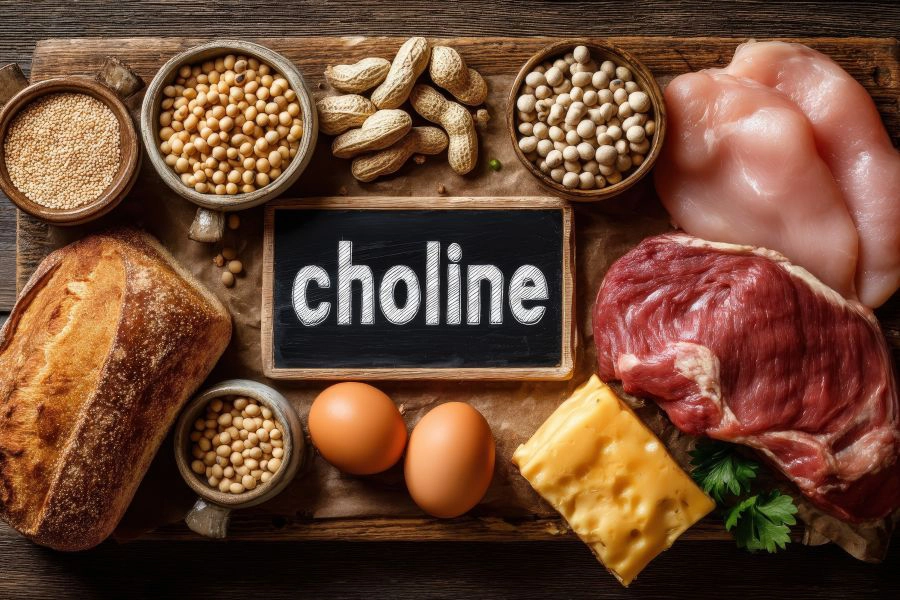 Choline is found in animal-based foods, cruciferous vegetables, beans, nuts, and whole grains.Choline is found in animal-based foods, cruciferous vegetables, beans, nuts, and whole grains.
Drop in inflammation
Type 2 diabetes causes a constant overload, causing IRAK4 to overreact and driving continuous inflammation.
To test their hypothesis, the researchers combined human cell models, mouse studies, and molecular-target screening and evidence that TMA can block IRAK4. They explain it essentially reprograms the negative metabolic responses caused by poor diet.
Additionally, the study finds that TMA can also prevent mortality caused by sepsis by blocking widespread inflammation.
“This shows how nutrition and our gut microbes can work together by producing molecules that fight inflammation and improve metabolic health,” says Cani.
“This flips the narrative,” adds Dumas. “We’ve shown that a molecule from our gut microbes can actually protect against the harmful effects of a poor diet through a new mechanism. It’s a new way of thinking about how the microbiome influences our health.”
Other researchers included Dr. Dominique Gauguier from the Imperial & National Institute of Health and Medical Research, France, and Professor Peter Liu, University of Ottawa Heart Institute, Canada.
Nutrition and pharma interventions
Furthermore, the researchers saw that deleting IRAK4 genetically or blocking it pharmacologically had the same effect as the bacterial metabolite.
The researchers suggest that nutritional strategies or drugs that boost TMA production may be a novel approach to combating insulin resistance.
“What we eat shapes our microbes, and some of their molecules can protect us from diabetes. That’s nutrition in action!” concludes Cani.
In other news from this field, a recent study has discovered gut metabolites that impact liver metabolism and insulin sensitivity, traveling from the intestine to the liver and then to the heart, from where they are spread to the rest of the body.