




Medically tailored meals cut costs and health emergencies, study finds

Key takeaways
- A Massachusetts study found that Medicaid patients receiving dietitian-designed home meals had 31% fewer hospitalizations and 20% fewer emergency room visits.
- The program reduced per-person health care costs by US$3,433 over an average of six months, which almost entirely offset the total cost of providing the meals.
- The researchers hope the evidence will accelerate national interest, 16 states are already pursuing or actively running Medicaid waivers to cover similar nutrition programs.
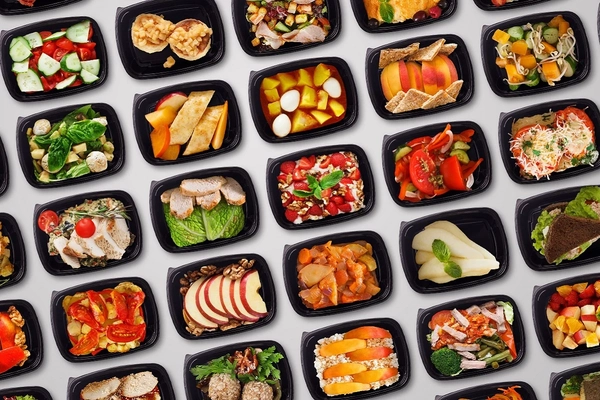
In the US, the first large statewide analysis of Medicaid Massachusetts data reveals that hospital patients with diabetes, heart disease, depression, and other conditions who received home-delivered, dietitian-designed meals experienced significantly fewer health emergencies and lower costs of care than those who did not.
At least a dozen US states are rolling out medically tailored meals in pilot projects through the federal-state health insurance program, which serves 71 million citizens who qualify based on income or disability status. Massachusetts is the first to offer this to citizens with diet-related diseases.
Taking a closer look at the findings, Nutrition Insight speaks with Dariush Mozaffarian, senior author and director of the Food is Medicine Institute at the Friedman School of Nutrition Science and Policy at Tufts University, US.

“Until recently, large-scale evidence has not been available,” he tells us. “Most studies were relatively small or short-term. Policymakers needed to witness the effects at scale, embedded in real-world programs.”
“With our new research, this is what we now see in Massachusetts across nearly 1,900 people in 11 health systems receiving medically tailored meals.”
A second barrier to these programs that Mozaffarian highlights is structural. “Historically, insurance systems weren’t built to reimburse food. This is starting to change, with 16 states now having pending or active Medicaid waivers covering Food is Medicine programs. But the pace is slow — it’s time to accelerate this across the country.”
Statewide analysis
The new study published in Nature Medicine analyzed data from 2020 to 2023 across 11 health care systems in Massachusetts. They compared outcomes for 1,866 people who received meals with similar eligible Medicaid members who did not, carefully accounting for differences such as demographics, health conditions, and prior health care use.
“Medically tailored meals are designed for people who are dealing with both a serious diet-sensitive condition — for example, diabetes, heart failure, chronic kidney disease, cancer, or poor mental health — and other challenges, such as limitations in activities, disability, or a social stressor like food or nutrition insecurity. Across our 50-state modeling work, we estimated that roughly 10.4 million Americans meet these criteria,” says Mozaffarian.
Last year, Mozaffarian’s team projected that medically tailored meals could save around US$32.1 billion in health care costs across 49 US states in one year, based on a modeling study. Medically tailored meal provider MANNA told us there is “plenty of evidence” that these programs will save the government money.
 Per-person health costs fell by US$3,433 while on the meal program (around six months), offsetting 98% of its cost (Image credit: Tufts University).For the current research, all meals were prepared and delivered by Community Servings, a Boston-based nonprofit. Participants received 10 meals per week — a mix of breakfasts, lunches, and dinners — plus snacks. Each participant had an initial consultation with a registered dietitian nutritionist to tailor meals to their medical needs and dietary preferences.
Study participants received meals for periods of time ranging from three to 33 months, with participants typically receiving meals for about six months.
Tailored meals lead to fewer hospitalizations
Using Medicaid claims data, the researchers tracked hospitalizations, emergency visits, primary care visits, and overall costs. Massachusetts Medicaid members who received medically tailored meals had 31% fewer hospitalizations and 20% fewer emergency department visits, compared to members who did not receive meals.
Per-person health care costs declined by US$3,433 while patients were on the meal program (an average of roughly six months), offsetting 98% of the program’s cost.
The researchers also ran multiple statistical checks to confirm their findings, which included analyzing data from before the meal program began to ensure that differences between groups were not already present. The results were consistent across all these approaches.
“All these patients were struggling with many challenges, not only poor health but also lower income and food insecurity,” says Mozaffarian.
“We also ran sensitivity models applying the same statistical models to time periods before anyone was enrolled in the program, finding no differences between the groups in those periods, which is exactly what you’d expect if the program, not some pre-existing difference in the groups, was driving the results.”

US states are increasingly testing nutrition-focused Medicaid programs, with Massachusetts' findings poised to guide similar initiatives nationwide.
The researchers also found no change in primary care visits. “If what we were detecting was simply that motivated, health-seeking people were doing better across the board, we’d expect to see more primary care engagement too,” says Mozaffarian. “But no such pattern was observed. So, we can be pretty confident that the meals are the driving factor.”Research limitations
The authors note several limitations. Because participants were not randomly assigned to receive meals, any unmeasured differences between those who chose to receive meals and those who did not could have affected the results.
Moreover, the study reflects a program delivered by an established nonprofit serving people at higher risk due to health and economic factors. The authors note that program outcomes may differ among other meal providers or among healthier patients or those who are more financially stable.
States across the US are increasingly testing Medicaid programs that address nutrition, and the findings from Massachusetts could guide similar meal programs across the country.
“It’s rare to find anything in medicine that both improves health and saves money,” says Mozaffarian. “It should be a no-brainer to extend similar programs to patients in other states and covered by other health insurance programs, such as Medicare and employer-based insurance.”
Recent analysis by the Rockefeller Foundation predicted that Food is Medicine programs could boost the economy, creating over US$45 billion in economic activity and generating jobs. However, this depends on whether states prioritize local sourcing and investing in food system infrastructure to grow the local economy.
Advocating for a greater focus on nutrition in US health care, the Food Is Medicine Coalition and Harvard Law School recently released a “first-of-its-kind” national framework designed to inform hospital professionals how to introduce medically tailored meals into the hospital programs.