





Rockefeller’s “big bet”: Food is Medicine to drive US$45B economic impact

Key takeaways
- Rockefeller Foundation projects FIM programs could generate US$45 billion in US economic activity, 316,000 jobs, and US$5.6 billion in revenue for small and mid-sized farms via local sourcing.
- FIM links health care spending to agriculture, potentially saving US$23.7 billion annually in costs, preventing 2.6 million hospitalizations.
- State policy design is key — prioritizing local procurement, multi-year contracts, and infrastructure keeps dollars circulating locally rather than to national distributors.
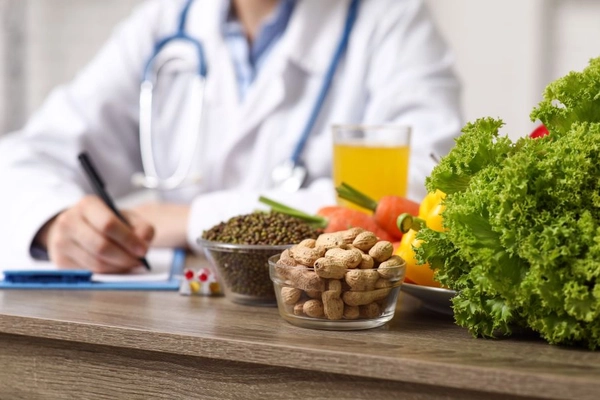
The Rockefeller Foundation has predicted that Food is Medicine (FIM) programs could boost the economy, creating over US$45 billion in economic activity and generating jobs. Its successful implementation, however, depends on whether states prioritize local sourcing and investing in food system infrastructure to grow the local economy.
The organization’s new report, “From Farm to FIM: The Economic Impact of Local Food is Medicine,” adds that such programs can provide US$5.6 billion for small and mid-sized farms only if states scale them up.
The researchers explain that FIM connects public health to economic growth by tying health care spending to local agriculture. Well-designed programs can bring significant profits for family farms while reducing health care costs and opening 316,000 jobs across sectors.

“FIM programs are already improving the health of communities around America. Now, we are starting to understand how nutritious, locally sourced food can also drive economic growth,” says Rajiv Shah, president at The Rockefeller Foundation.
“At a time when too many Americans are struggling with poor health and rising costs, this report shows that Americans can eat better and save lives, money, and farms.”
Connecting farmers, food and health care
The Centers for Disease Control and Prevention flags that chronic diseases impact 129 million Americans, and 75 million have two or more. Alarmingly, 90% of US health care spending is spent on managing chronic conditions.
 FIM could unlock a US$45 billion economic boost and 316,000 jobs, saving farms and health care costs nationwide.Notably, the Rockefeller Foundation points out that FIM has slashed health care spending with medically tailored meals, estimated to potentially save US$23.7 billion annually while avoiding 2.6 million hospitalizations.
“NASDA sees tremendous momentum and opportunity in the FIM movement to bridge the gap between farmers, regional food systems, and innovative nutrition programs,” says Ted McKinney, CEO of the National Association of State Departments of Agriculture.
“Connecting local farmers with institutions like hospitals, schools, and food banks can help expand access to a variety of nutrient-dense foods while supporting new economic and domestic market opportunities for farmers and producers.”
Moreover, in support of FIM programs, the Council for Responsible Nutrition-International has newly published a scientific report that reveals how nutrition can expand healthspan. It details how targeted healthy diets can promote healthy aging and muscle, metabolic, and immune health.
The nutrition industry is already joining the bandwagon. For example, Abbott’s Healthy Food Rx FIM program helped US participants living with diabetes, with participants reporting “significantly improved” diet quality and health status.
The CEO of medically tailored meal provider MANNA previously told Nutrition Insight how prescribed medically tailored meals can support people battling serious illnesses.
Politically, there is consensus as Democrats and Republicans have expressed support for FIM in the fight against chronic diseases. Moreover, the majority of US adults in a survey said they would be interested in food-based nutrition interventions.
Revitalizing US agriculture
The Bureau of Labor Statistics projects that agricultural employment will fall 3% from 2024 to 2034. Small and mid-sized farmers make up over 90% of US farms, and recent financial strains are causing over 20,000 farms to close each year.
 Local FIM sourcing powers US$5.6 billion in farm revenue and resilient food systems.However, the new report highlights that small and mid-sized family farms could gain at least US$5.6 billion in additional revenue from FIM programs. This will also provide predictability and confidence to invest in their businesses and expand healthy food production. The researchers add that FIM may also help farmers transition to more regenerative growing practices.
Moreover, the state will retain economic benefits through local partnerships. This allows FIM dollars to circulate within local businesses, such as those that provide food aggregation, processing, storage, transportation, meal preparation, and delivery services.
“This research makes clear that FIM isn’t just a health intervention — it’s an economic opportunity for farmers, rural communities, and local food systems across the country,” says Jenny Lester Moffitt, VP of Farmland Protection and Strategic Priorities at American Farmland Trust.
“Programs that intentionally connect health care spending with local agriculture create market opportunities that help farmers stay on their land while strengthening the health, resilience, and prosperity of our communities.”
Moffit, who is also the former under secretary for Marketing and Regulatory Programs at the US Department of Agriculture, adds that robust connections between health care and agriculture ensure that farmland stays in production and has viable markets.
Importance of FIM design
The Rockefeller Foundation stresses that actualizing economic benefits depends on the state’s policy choices and how the FIM programs are designed. For instance, states can embed local sourcing into Medicaid contracts, use multi-year purchasing commitments, and invest in food system infrastructure.
Importantly, the researchers say that without clear local sourcing requirements, health care dollars are likely to move to national distributors rather than boosting local economies.
The report also details analyses for policymakers at different stages of FIM implementation alongside case studies of organizations already benefiting from FIM schemes. Researchers carried out an analysis between September 2025 and January 2026.
The Rockefeller Foundation says that FIM is part of a US$220 million “big bet” on nutrition initiatives benefiting people, the planet, markets, jobs, and beyond. The organization has committed $100 million to expand access to FIM programs, such as supporting research, improving policy action, and communications.
Benefits across states
The report reveals benefits across 50 states and projects potential farmer revenue and new jobs created. California, Texas, and New York dominate potential farmer revenue, while Florida, Ohio, and Michigan also make major contributions.
- California: US$511.9 million; 32,050 jobs
- Texas: US$315.1 million; 29,800 jobs
- New York: US$292.1 million; 18,290 jobs
- Ohio: US$257.4 million; 16,120 jobs
- Michigan: US$212.9 million; 13,330 jobs
- Florida: US$208.0 million; 19,670 jobs