




Singaporean food scientists boost kombu’s nutrient bioavailability, probiotics and brain benefits

Key takeaways
- NUS scientists broke down kombu’s rigid cell walls to release trapped nutrients using co-fermentation with enzymes and lactic acid bacteria.
- The process significantly boosts the levels of probiotics and GABA, a bioactive compound known for reducing stress and supporting brain health.
- The researchers used aroma-producing yeast to replace kombu’s fishy odor with pleasant fruity scents, making it more palatable for new health products.
Through a co-fermentation method, food scientists at the National University of Singapore (NUS) have discovered how to unlock nutrients trapped inside kombu’s (Saccharina japonica) rigid cell walls. The process also fortifies the seaweed with gut-healthy probiotics and calming gamma-aminobutyric acid (GABA).
The researchers fermented an enzyme-treated kombu sample with lactic acid bacteria and an aroma-producing yeast. They found that this boosted the growth and survival of probiotics more than fermentation based solely on lactic acid bacteria.
In addition to its elevated health benefits, the blend produced scent compounds that emulate the aromas of bananas and pears, replacing the fishy odors typically associated with the brown seaweed widely consumed in Japan, Korea, and China.

Despite its strong nutritional value, kombu’s pungent “fishy” and “grassy” odors are off-putting to some consumers, which keeps them from accessing its full benefits, the study authors note.
“Our unique co-fermentation method of processing kombu is the gateway to creating new health products. With our tastier fermented kombu, we could create probiotic fermented seaweed drinks and supplements, or even use it as an ingredient in plant-based foods,” says Dr. Lu Yuyun, senior research fellow and co-corresponding author of the research paper.
“This approach may also be adapted to other seaweed species to broaden the range of appealing seaweed-derived products.”
Palatability and bioavailability challenges
Writing in the International Journal of Food Microbiology, the authors highlight that much of kombu’s nutrients are locked inside rigid cell walls and dense plant biomaterial. The human digestive system cannot easily break down these structures, meaning that kombu’s nutrients tend to pass through the body without being absorbed.
In their study, the scientists demonstrated that enzymes and lactic acid bacteria fermentation can effectively raise kombu’s nutritional value by breaking down large proteins and carbohydrates into smaller, more digestible components.
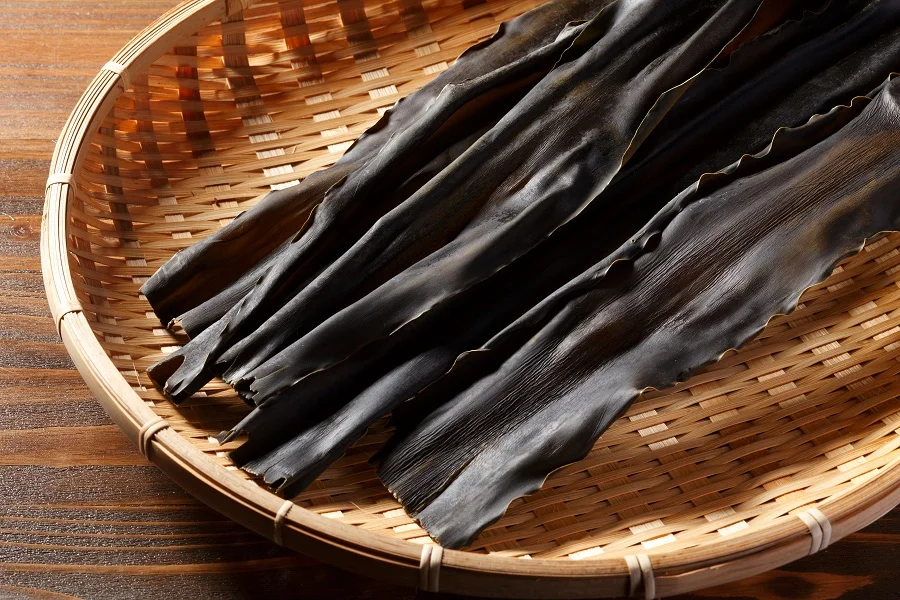 Fermenting enzyme-treated kombu with lactic acid bacteria and an aroma-producing yeast infused the seaweed with fruit-like aromas.However, these approaches alone cannot effectively remove the compounds that give kombu its characteristic fishy and grassy odor. To replace these smells, researchers used yeast fermentation, which can naturally produce pleasant fruity and floral aromas.
The scientists co-fermented their enzyme-treated kombu with the lactic acid bacterium Lactiplantibacillus plantarum and the aroma-producing yeast Pichia kluyveri, commercialized under the brand name FrootZen by Novonesis.
This produced pleasant acetate esters, such as “banana-like” isoamyl acetate and “rose-like” 2-phenylethyl acetate. The co-fermentation slurry also produced more of certain bioactive metabolites, such as GABA, a well-studied compound linked to calming effects and stress reduction, with potential benefits for mental health.
Future product developments
In future product development, the researchers suggest their blend could be used to develop fermented kombu-based functional foods and beverages that are healthy and palatable. Commercial fermented kombu products are uncommon, even in Asian markets where kombu is widely consumed.
“Kombu has a tremendous amount of untapped potential to be a superfood, but for its health benefits to reach a wider population, kombu has to be more palatable and its nutrients more accessible,” says study author and associate professor Liu Shao Quan from the Department of Food Science and Technology in NUS Faculty of Science.
Geng Chenhan, first author of the research paper, adds: “Elevating the flavor profile of kombu makes it more enticing to a broader range of consumers. Our next goal is to optimize fermentation conditions, such as fermentation sequence, time, and temperature, to further improve process efficiency and product quality.”
“In the future, we will also conduct sensory evaluation to better understand consumer preferences for seaweed-based foods.”