





FiE 2025: Jungbunzlauer unlocks mineral formulations for gummy supplements

Key takeaways
- Jungbunzlauer presented its mineral innovations at FiE 2025, which help supplement brands in overcoming formulation changes in bioavailability, taste, and texture.
- Jungbunzlauer recommends that its clients use minerals with low solubility, a neutral taste, and a highly micronized particle size.
- The company’s magnesium bisglycinate is a bioavailable version that enables a high magnesium load, strong and stable tablets, and processing ease.
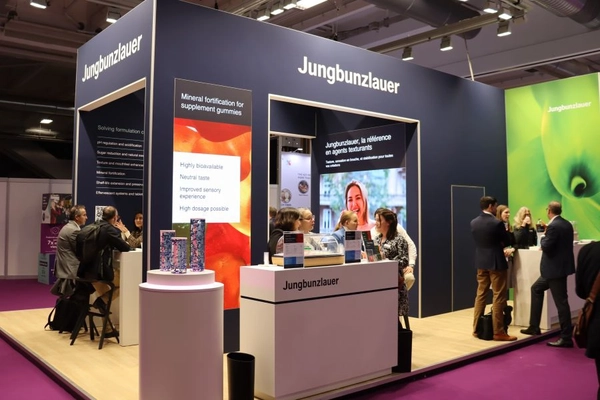
At the recent Food ingredients Europe (FiE) 2025 trade show in Paris, France, Jungbunzlauer highlighted its latest mineral innovations, enabling their use in ever-popular gummy supplements. These solutions aim to help brands deliver formulations with an optimal mineral absorption without impacting taste or texture.
At the trade show floor, Nutrition Insight met with Dr. Sabrina Weiher, product manager at Jungbunzlauer, to discuss how the company’s solutions address mineral formulation challenges.
She also noted that gummies are becoming more popular due to their convenience and on-the-go snackable formats. Familiar vitamins and mineral supplements are driving the growing interest in these formats.
“In the gummies market, it started with vitamins, and minerals followed,” said Weiher. “I’m sure botanicals and other ingredients will follow, but at the moment, consumers are looking for vitamins and minerals.”

“Vitamins are easier to include in a gummy format than minerals due to the dose that needs to be used,” she explained. “Calcium, for example, has a Recommended Dietary Allowance (RDA) of 800 mg, so you have to include a lot more calcium in a gummy, which is challenging.”
In addition, she noted that authorized EU health claims for vitamins and minerals help drive interest in these ingredients for supplements.
“Many supplements use vitamins and minerals along with other ingredients to make the authorized health claims. A prominent example is the use of immunity claims with zinc. You don’t need much — only 10 mg for the RDA — and then you can claim it supports immunity.”
For the future, she expects the interest in gummy supplements will continue, and there will be a growing demand for vegan alternatives. “We’re looking into more solutions and minerals, and where these trends will go.”
Formulating with minerals
Weiher noted a vastly growing interest in magnesium. “We say it’s like the new calcium. Ten years ago, calcium was everywhere, and now it’s magnesium.”
However, formulating with magnesium is difficult because products require a high concentration in a gummy without affecting taste. Some of the key issues include gummy stability, taste, and texture.
 Dr. Sabrina Weiher, product manager at Jungbunzlauer.“We tried all our different magnesium salts,” she added. “What we learned is that highly soluble salts usually have more issues with stability or taste because of the high concentration in the gummy.”
“It’s much better to use low-solubility salts, because they don’t influence taste as much. But if you use low-solubility salts, you need them to be very fine — a micronized version — to avoid a sandy mouthfeel.”
Therefore, Weiher said Jungbunzlauer recommends that its clients use minerals with low solubility, a neutral taste, and a highly micronized particle size.
She noted that this is especially important for gummies and other applications that consumers chew, as these result in a “high concentration of the mineral directly in your mouth.”
Earlier this year, the company informed us about how it helps brands create smooth, flavorful, and bioavailable gummies by utilizing micronized citrate salts of magnesium and calcium.
Bioavailable magnesium
According to Weiher, consumers are actively looking for magnesium bisglycinate, which is “a very trendy mineral right now.”
“Magnesium offers many health benefits, and bisglycinate is top of mind for many people. We wanted to contribute to this trend, so we added it to our portfolio.”
Weiher explained that bioavailability is one of the key advantages of this type of magnesium. “We did a small in vitro bioavailability study comparing it to magnesium oxide, which is an inorganic magnesium source.”
Jungbunzlauer found that the bisglycinate demonstrated “significantly higher bioavailability than magnesium oxide,” which indicates superior absorption by the body.
The company launched its fully reacted magnesium bisglycinate at SupplySide Global and CPHI this year, where trade show visitors could explore the ingredient’s capabilities.
Weiher added that the ingredient enables a high magnesium load, strong and stable tablets, and processing ease.
“This mineral is mainly used in capsules and tablets — classical supplement applications — so it’s important to have good flowability and processability and to have a high bulk and tapped density to get a high load of magnesium into the product. Our product offers that,” she concluded.