





Homemade dog food diets lack essential nutrients, raising disease risk

Key takeaways
- A study based on owner surveys suggests that only 6% of homemade dog diets were nutritionally complete.
- The research highlights that most homemade dog meals lack essential nutrients, appealing to owners prioritizing natural foods.
- Veterinary experts emphasize the risk of severe health issues (e.g., bone problems) if homemade diets are not precisely formulated and balanced.

A new study has revealed that most homemade dog meals lack essential nutrients and may put pets’ health at risk. Scientists involved in the Dog Aging Project (DAP) highlight that over the last two decades, these diets have grown in popularity as consumers increasingly prioritize natural and whole foods for their dogs.
The study involving open-ended survey responses assessed the nutritional completeness of 1,726 homemade diets based on ingredients and preparation methods provided by dog owners. Pet parents of more than 50,000 dogs from all backgrounds enrolled in the study.
“We found that only 6% of homemade diets had the potential to be nutritionally complete,” says Dr. Janice O’Brien, doctoral researcher at the Virginia-Maryland College of Veterinary Medicine at Virginia Tech, US.

“Since our study didn’t include exact ingredient amounts, it’s possible that a smaller percentage than 6% were nutritionally complete.”
What’s in a complete dog meal?
Homemade dog meals generally appeal to owners who prioritize feeding their pets natural, whole foods fit for human consumption, propelling the “humanization” consumer trend in greater focus among suppliers and brands this year.
Reflecting a shift away from ultra-processed foods in their own diets, owners increasingly see the value of unprocessed pet diets. A recent study revealed that a kibble diet increased dogs’ long-term blood sugar, blood lipids, and body weight, while dogs on a raw food diet experienced the opposite effect. However, researchers caution that some “complete” plant-based dog foods are low in iodine and B vitamins.
The new DAP study was published in the American Journal of Veterinary Research and led by the Texas A&M College of Veterinary Medicine and Biomedical Sciences (VMBS) and other US institutions that study the effects of aging and canine health.
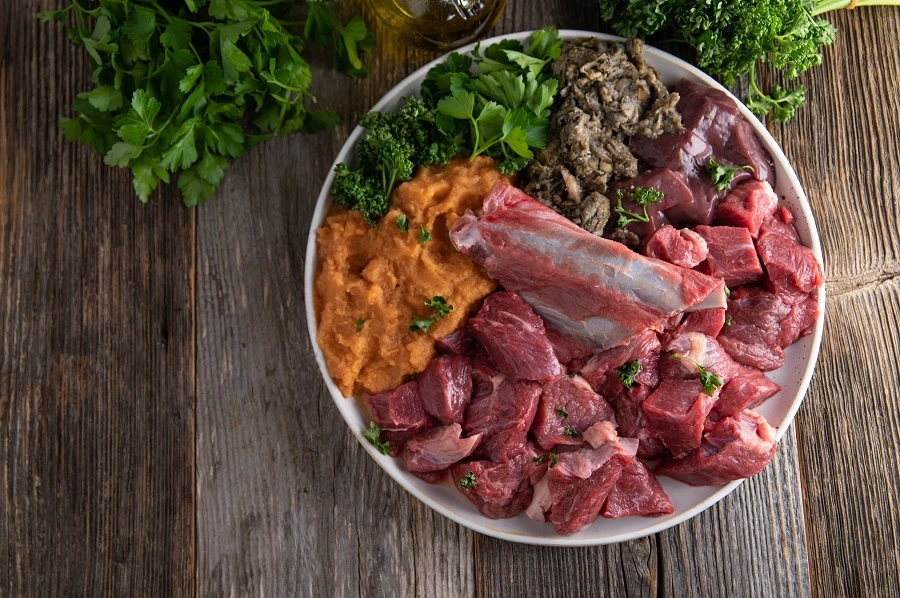 Of the 1,726 home-prepared diets, 20% did not have enough ingredient information to code dietary completeness and 44% were classified as deficient.Owners entered their dogs’ dietary data into an online tool called Balance It, which helps design nutritionally complete homemade diets for pets.
“Balance It is compliant with both the US FDA and the Association of American Feed Control Officials’ recommendations for canine nutrition,” O’Brien notes. “By entering the list of ingredients in each recipe into Balance It, we determined if there were nutrients missing.”
Typical dog meals
Owners reported non-meat-based proteins, led by eggs, followed by beans and lentils. Bone sources included whole bone, bone broth, and bone meal/ground bone.
The most common starch sources were sweet potatoes, rice, brown rice, and squash, with less common grains including buckwheat, millet, or bulgur. Carrots were the most reported vegetable, followed by green beans, broccoli, leafy greens, and peas. Apples and blueberries were the most common fruits reported.
Dairy products included kefir or yogurt, cheese, and cottage cheese. A small number of dogs received non-dairy milk substitutes. The primary fiber source was pumpkin (versus psyllium).
The most frequent oils and fats were fish oil, coconut oil, and olive oil, while some owners added animal fats like butter.
Other reported additions included brewer’s or nutritional yeast, garlic, and nonfood items like clay. A few owners also mentioned feeding baby food, cat food, or teas.
In addition, the research found that 45% of owners added “some form of commercially prepared diet” or base/topper to supplement the home-prepared ingredients.
Of the 1,726 home-prepared diets, 20% did not have enough ingredient information to code dietary completeness, 44% were classified as deficient, 31% were partially deficient, and 6% were deemed complete.
Based on the results of the study, dog owners should be aware that choosing to prepare a pet’s meals at home comes with responsibility, stresses Dr. Katie Tolbert, study author and a board-certified veterinary nutritionist, small animal internist, and associate professor in VMBS’ Department of Small Animal Clinical Sciences.
“There is a temptation for a lot of dog owners to go off script when preparing meals at home. If you decide to formulate your dog’s food at home, be sure to work with a board-certified veterinary nutritionist and stick to the diet exactly as prescribed. Nothing is considered a ‘filler’ that you can leave out.”
Risks of omitting supplements
For instance, substituting different types of oil can change the nutritional completeness of a pet’s diet. The researchers stress that simple adjustments — like adding a calcium supplement — can cause serious problems if left out.
“If your dog’s calcium and phosphate levels get out of balance, it can develop bone health problems, including a condition nicknamed ‘rubber jaw’ where the bone starts to become soft, like cartilage,” Tolbert underscores. “It can also cause problems in the kidneys.”
The stakes of good nutrition are even higher for dogs with existing illnesses, warn the study authors.
“Dogs that are not already in good health can have exacerbated symptoms if they do not receive a balanced diet that is specifically formulated to treat their disease,” Tolbert notes.
Additionally, he suggests avoiding adding ingredients that are unsafe for dogs, like whole bones or grapes.
“Grapes can be toxic to dogs,” she says. “Whole bones, on the other hand, are risky because dogs can end up with sharp pieces of bone in their stomach.”
Bringing home holistic meals
The researchers advise dog owners planning whole meals to first speak with a veterinarian about their pet’s specific dietary needs. This can be followed by consulting a board-certified veterinary nutritionist to design a personalized healthy diet for the animal.
When planning to keep a dog on a homemade diet long-term, Tolbert recommends submitting a sample to a food testing laboratory to ensure that the pet’s diet is the “same in practice as it is on paper.”
“It can be helpful to know exactly what is in the food you’re feeding your pet to make sure the recipe is as precise as possible,” he concludes.