




Biotics and HMOs expand from infant formula into adult nutrition with multi-ingredient formats


Key takeaways
- Global HMO product launches jumped over 50% as the industry shifts toward multi-ingredient formulas targeting whole-body health and the gut-brain axis.
- While still vital for stage-adapted infant formulas, HMOs and biotics are rapidly expanding into adult nutrition through convenient formats like gummies and functional beverages.
- New clinical data is pushing biotics into specialized niches like athletic recovery, IBS management, and GLP-1 companion support.

The global biotics and human milk oligosaccharides (HMO) market is gaining momentum as it transitions from single-strain products to highly targeted, multibiotic formulations. These next-generation solutions target broader health aspects across all life stages, connecting gut health to immune resilience, cognitive development, athletic performance, and the brain.
Nutrition Insight sits down with experts at Valio, dsm-firmenich, Gnosis by Lesaffre, and Clasado Biosciences to explore regional innovation trends, the rise of synergistic synbiotics, and the emerging health categories of sports nutrition and sleep support.
Sinikka Saikkonen, senior business development manager at Valio, highlights that both the HMO and biotics categories are experiencing strong momentum. “Based on our recent global new product launch data, the number of food and beverage products containing HMOs increased by more than 50% between 2024 and 2025.”
“Asia remains the clear innovation leader, accounting for more than two-thirds of global HMO launches, with markets such as Vietnam, the Philippines, India, and China showing particularly strong activity,” she notes.
“The most popular ingredient combinations pair HMOs with probiotics, prebiotics such as GOS (galactooligosaccharides), and bioactive ingredients including MFGM (milk fat globule membrane) and lactoferrin. At the same time, growing interest among adult and aging populations is expanding opportunities for biotics in areas such as gut well-being, immune resilience, and healthy aging.”
Sonja Kleinke, associate director of Global Marketing, Dietary Supplements at dsm-firmenich, looks closer into regional specifics. “In Asia-Pacific, and particularly in China, growth is being driven by synbiotic and functional positioning in innovative consumer formats.”
“In Europe and the Nordics, demand is concentrated around metabolic health, stress, and microbiome balance, while North America leads in clinical substantiation and commercialization of multibiotic formulations,” she details.
“Across these markets, we’re seeing both formulators and consumers moving toward multibenefit, multi-ingredient solutions, with single-strain products giving ground to targeted combinations backed by credible science.”
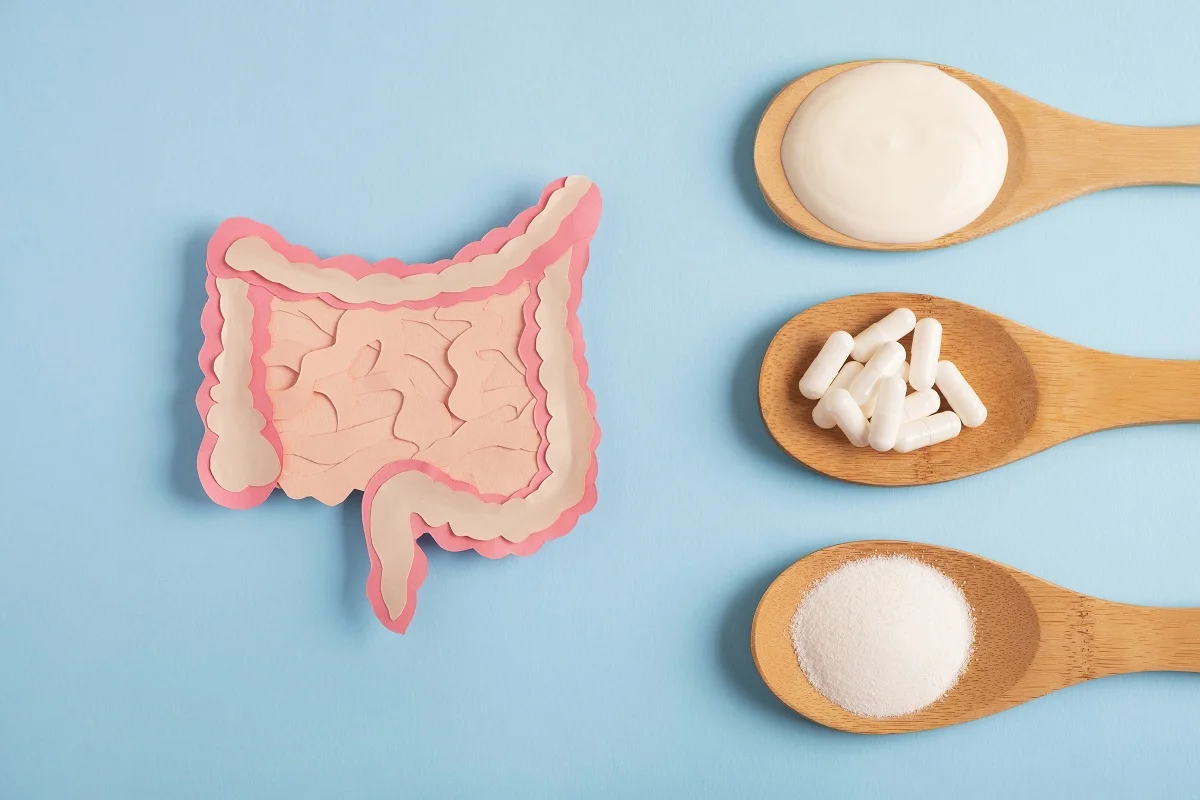 The global HMO and biotics market is expanding into adult health with multi-ingredient formulas, driven by rapid launch growth in Asia and clinical formulation advances in North America.Additionally, dsm-firmenich’s market research shows a shift in consumer demand from basic digestive support toward broader, whole-body health outcomes — a trend Kleinke observes accelerating across all major markets.
Innova Market Insights data indicates that 59% of consumers associate gut health with proper function for the entire body, driving demand for supplements that support the gut-brain axis. Data further shows that consumers link the gut-brain axis primarily to immunity (50%) or energy (41%).
Multi-biotic formulations
Kleinke highlights that innovation is increasingly guided by a “system-level” view of the gut microbiome. The company is developing comprehensive, holistic solutions grounded in clinical and mechanistic science to create, nourish, and protect the conditions a healthy microbiome needs to thrive.
“In practice, this means developing multi-biotic formulations that draw on several ingredient categories in combination,” she says. “For instance, a synbiotic solution using ingredients from our Humiome portfolio might pair targeted probiotic strains with prebiotic substrates such as fructooligosaccharides or our Glycare HMOs, which have demonstrated prebiotic effects in both infant and adult populations.”
She adds that synbiotic solutions may also incorporate postbiotics like dsm-firmenich’s Humiome Post LB — a clinically validated preparation of two proprietary inanimate strains supporting digestive and immune health — alongside gut-supportive microbial metabolites, such as butyrate. Together, these components offer broader and more consistent support than any one ingredient alone.
“We are also advancing the newer, next-generation biotics beyond the traditional pre-, pro-, and post- categories, like the emerging concept of ‘co-biotics’ — compounds that work on both the host and resident microbiota simultaneously to deliver health benefits,” says Kleinke.
dsm-firmeinich’s Humiome B2 with patented Microbiome Targeted Technology (MTT) is an example of this. Unlike traditional solutions, where the majority of vitamin B2 is absorbed in the small intestine, Kleinke explains that the MTT dual-layer coating allows approximately 90% of the nutrient to be delivered to the colon.
“Here, evidence shows that Humiome B2 with MMT can support microbial diversity, resilience, and metabolism, while also supporting established host functions including energy metabolism and nervous system health.”
HMO synergies
Anu Turpeinen, nutrition research manager at Valio, also speaks on the growing industry focus on holistic nutritional solutions that blend HMOs with other biotics and bioactive milk components.
“While HMOs are already well established for supporting the development of a healthy gut microbiota and immune system in infants, recent clinical research has also linked specific HMOs to improvements in language and social development, reinforcing earlier findings related to cognition and neurodevelopment,” she tells us.
“In early life nutrition, one of the strongest trends is the move toward increasingly sophisticated and stage-adapted formulations that combine HMOs with other biotics and bioactive ingredients to support multiple aspects of infant development simultaneously.”
.webp) Clinical research is driving sophisticated, multi-ingredient formulations that combine HMOs with biotics to simultaneously support infant immunity, gut health, and cognitive development.Rather than focusing on a single benefit, Turpeinen says innovations are designed to support immunity, cognitive development, gut health, and digestive comfort through carefully selected ingredient combinations.
Clinical research is driving sophisticated, multi-ingredient formulations that combine HMOs with biotics to simultaneously support infant immunity, gut health, and cognitive development.Rather than focusing on a single benefit, Turpeinen says innovations are designed to support immunity, cognitive development, gut health, and digestive comfort through carefully selected ingredient combinations.
“Looking ahead, we are working on increasingly targeted combinations of HMOs, probiotics, postbiotics, and other bioactive nutrients designed to support specific developmental outcomes and individual nutritional needs.”
Yeast probiotic power
As a yeast-based probiotic, Gnosis by Lesaffre’s ibSium is positioned toward managing irritable bowel discomfort. The product’s strain, Saccharomyces cerevisiae CNCM I-3856, is supported by clinical substantiation in managing abdominal pain while modulating microbiome composition.
“The benefit of this activity is a reported positive influence on mental well-being, as shown in a clinical study where participants supplementing with ibSium reported improved quality of life parameters — lower food avoidance, better body image, and less interference with daily activities,” says Emilie Puppinck, senior product manager of Biotics with Gnosis by Lesaffre.
She adds that three previous studies have shown that supplementing with ibSium alleviates abdominal discomfort in 63% of participants: a 14.6% relief in bloating, and normalization of stool consistency within four weeks.
For example, in one study, 1,160 participants reported more than 96% satisfaction with gut comfort improvement from supplementing with ibSium. Puppinck says that three out of four participants experienced positive effects on their digestive comfort within the first 15 days of consumption.
Additionally, she says that the class of lower digestive disturbance in irritable bowel syndrome (IBS) and other conditions is increasingly diagnosed and understood, such as IBS-C for constipation and IBS-D for diarrhea.
“In a new study published in Gastroenterology, researchers assessed data from more than 52,000 children, finding that early life stress impairs the gut-brain axis, leading to long-term gut disorders such as IBS.”
Gnosis by Lesaffre also highlights Quatreflora, its S. cerevisiae CNCM I-3856 specifically branded for women’s vaginal health. According to Puppinck, it boasts the first clinical study demonstrating the migration of yeast from the intestine to the vagina to manage Candida overgrowth, maintaining its innovative status among yeast-based probiotics.
“After four weeks, S. cerevisiae CNCM I-3856 was detected in the vaginal samples of 21% of women in the 500 mg group and 16% of women in the 1,000 mg group.”
Biotics for sports nutrition
Clasado Biosciences highlights recent studies supporting its prebiotics in sports nutrition.
“New research from Nottingham Trent University, UK, showed that daily supplementation of our prebiotic GOS ingredient, Bimuno GOS, reduced I-FABP, a biomarker of gut barrier damage, by 38% in team-sport athletes undergoing intense training in hot conditions,” says Marcelo Durante, VP of sales and marketing at Clasado Biosciences.
“The same six-week, double-blind, placebo-controlled study also recorded improvements in gut comfort, with reduced severity of gastrointestinal symptoms such as bloating, nausea, gas, and upper abdominal discomfort during high-intensity exercise.”
.webp) The biotics market is shifting toward science-backed, personalized formats like functional foods, targeted synbiotics for sleep, and gastrointestinal support for GLP-1 users, though clinical dosing remains a challenge.Together, Durante says these findings give sports nutrition brands a science-backed way to support athletes who want to train and compete without gut-based setbacks, while tapping into gut health as an increasingly important driver that can support performance-focused consumers.
The biotics market is shifting toward science-backed, personalized formats like functional foods, targeted synbiotics for sleep, and gastrointestinal support for GLP-1 users, though clinical dosing remains a challenge.Together, Durante says these findings give sports nutrition brands a science-backed way to support athletes who want to train and compete without gut-based setbacks, while tapping into gut health as an increasingly important driver that can support performance-focused consumers.
What’s next for biotics
Valio is working on increasingly targeted combinations of HMOs, probiotics, postbiotics, and other bioactive nutrients designed to support specific developmental outcomes and individual nutritional needs.
“Beyond early life nutrition, we are also seeing growing interest in biotics in convenient formats such as functional beverages, drinkable yogurts, gummies, soft chews, and snack bars. Overall, the future of nutrition is becoming more personalized, more science-driven, and more closely aligned with the needs of consumers at different life stages,” says Turpeinen.
Overall, Clasado Biosciences’ Durante says that dosing remains the most significant challenge in biotic formulas. “It’s essential that biotics, such as prebiotics, are included at levels that deliver a clinically proven benefit, not just a token amount to ride the gut health trend, as well as remaining stable throughout shelf life.”
Looking ahead, he anticipates prebiotic awareness to keep accelerating as gut health cements itself as a mainstream pillar of well-being. “Synbiotics, which combine prebiotics and probiotics, will move from generic pairings toward targeted blends backed by demonstrated synergy, where the prebiotic measurably enhances the probiotic’s effectiveness.”
“Sleep support is also shifting from short-term fixes to longer-term, root-cause approaches focused on sleep quality rather than simply sleep duration. Finally, we anticipate growing interest in biotics, especially prebiotics, as companions to GLP-1 treatments, helping to manage the gastrointestinal side effects increasingly associated with their use — provided the ingredient acts quickly enough to support compliance and doesn’t exacerbate symptoms.”