



Front-of-package health claims don’t guarantee healthier foods, finds Cornell study


Key takeaways
- A Cornell study of nearly 150,000 US F&B products found that items with front-of-package health claims are not consistently healthier overall.
- Reducing one unhealthy ingredient often leads to trade-offs, such as adding extra sugar to low-sodium beverages or more fat to lower-fat options.
- Terms like “natural,” “organic,” and “non-GMO” do not reflect a product’s actual sugar, salt, or fat levels, despite creating a consumer “halo effect.”

US food and beverage products branded with health-related claims are not consistently healthier, according to a recent analysis of nearly 150,000 food and beverage products launched on the market over the past decade.
The study revealed that at times, reducing one unhealthy ingredient sometimes meant adding more of a different one. Moreover, they clarified that a “natural” label does not automatically equate to “healthy.”
The Cornell team applied the Nutrient Profiling Model, a scoring system developed by the UK Food Standards Agency. Unlike a single-nutrient claim, this model assesses a product’s complete nutritional makeup in one score, penalizing excess sugar, sodium, saturated fat, and calories while rewarding fiber, protein, and fruit and vegetable content.
Nutrition Insight speaks to the Cornell University study co-authors Miguel Gomez, professor of food marketing, and Pei Zhou, a postdoctoral researcher, about the value of using standardized nutrient profiling models to benchmark nutritional value instead of relying on broad food labels.
“Our study does not suggest that a single attribute-based claim should be expected to reflect a product’s entire nutritional profile,” she notes. “These claims are designed to communicate specific product characteristics and may be accurate for those attributes.”
“Our findings instead highlight the value of more comprehensive, profile-based approaches to food labeling, which can provide a broader assessment of overall nutritional quality by considering multiple nutritional dimensions together.”
Zhou observed the nuances of “healthy” product labeling for products with “original flavor” and “lower-fat” cream cheese options. “They had reduced the fat, but they had more total sugars and more sodium. There are so many label claims on packages.”
“Our main question was whether products with claims are healthier than those without health claims.”
Beverages pose health gaps
When studying the US foodscape, the researchers discovered that, among the newly launched products they analyzed, two-thirds qualified as less healthy overall, even though half of the products had on-package health claims.
They note that the issue often stems from trade-offs hidden in the fine print of formulation. For instance, they say “reduced sodium” soda is disproportionately likely to make up for it with extra sugar.
Meanwhile, they observe that “no trans-fat” packaged meals often lean harder on saturated fat and sodium instead. “The claim is technically true. The overall nutritional picture, the study suggests, doesn’t necessarily improve, and can sometimes get worse in another direction.”
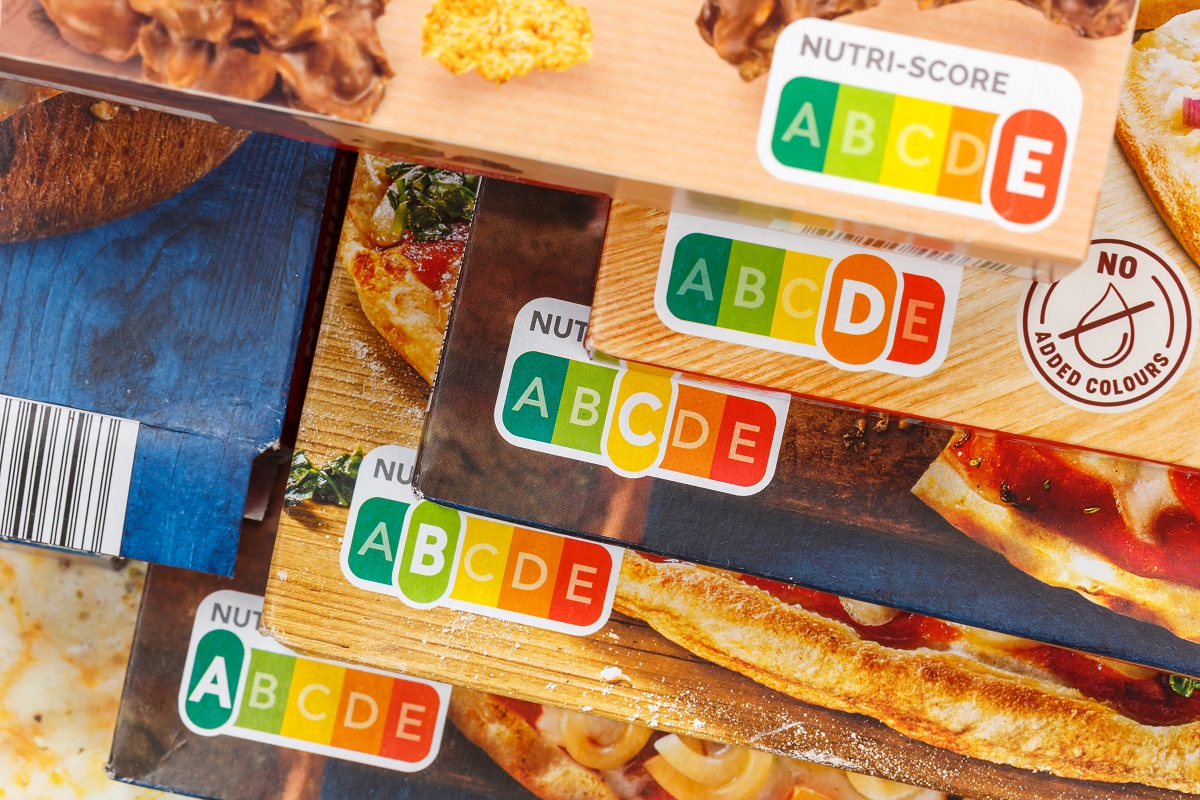 The researchers advocate transitioning from single claims to broader nutrient profiling systems, such as traffic stop sign ranking systems.According to the findings, beverages presented the most obvious gaps, with typical claims like “low sodium,” “sugar-free,” and “low saturated fat” being the most likely to diverge from actual nutritional quality.
“We cannot provide a definitive explanation for why discrepancies were more frequent among beverages,” says Zhou.
“In our results, the discrepancies were concentrated among ‘minus’ claims, which were also relatively common in beverages. For some sodium- and saturated-fat-related claims, the less favorable overall nutrient profiles were largely associated with higher total sugar.”
Consumer halo effect
The researchers identify what they consider the most striking finding: that labeling foods as “natural” does not amount to any nutritional value.
They stress that terms like “organic,” “non-GMO,” and “whole grain” carry no information about a product’s sugar, sodium, or fat content — and therefore are not a good benchmark of overall nutritional value.
However, they cite previous consumer research repeatedly showing that shoppers perceive “natural” labeling as shorthand for saying “healthy.” This is a psychological shortcut researchers call the “halo effect.”
The US FDA finalized an updated definition of the “healthy” claim in recent years and has proposed a new front-of-package labeling scheme intended to summarize a product’s nutrition profile at a glance. The study authors note this approach comes closer to the systems already used in the UK, and mandatory warning labels adopted in Chile and Mexico.
“We provide some direction for policymakers in our paper,” Gomez adds. “The general idea is to transition from single claims to a broader nutrient profile style. In countries like Chile or Mexico, they use traffic stop signs to warn consumers about high salt, sugar, and fat, and this limits the positioning of products in the supermarket.”
A previous observational study in Chile linked such warning labels to a significant reduction in childhood obesity when used in tandem with marketing restrictions and school food regulations.
The current study authors conclude that their practical advice for shoppers is “unglamorous but familiar”: “A claim on the front of a box is a hint, not a verdict. The nutrition label on the back — added sugars, sodium, saturated fat, all of it together — still tells the fuller story.”