



Study reveals “high in” nutrition label is more effective than US FDA info box


Key takeaways
- Researchers tested nutrition FOP labels with packaged foods containing excess saturated fat, sodium, and added sugar levels in 13,000 participants.
- The US FDA’s 2025 proposed label caused misperceptions compared to labels only indicating “high in” nutrients.
- The researchers urge the FDA to pick the best FOP nutrition label for promoting fast, healthy consumer choices.
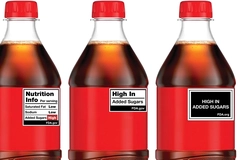
Researchers have designed a nutrition label that can better help consumers identify healthier options than the US FDA’s proposed Nutrition Info Box label. The new labels carry a simplified design with “high in” printed on product packaging with excess saturated fat, sodium, and added sugar levels, suggesting health risks.
Led by the University of California (UC) Davis, US, the team conducted an online trial with over 13,000 adults to test out nutrition label efficacy. The test follows the 2025 FDA proposal of a new front-of-package (FOP) nutrition label aimed at promoting better consumer dietary choices. Earlier research suggested the nutrition info box works best for consumers with high nutrition literacy, widening the understanding gap.
Understanding FDA’s proposed label
Corresponding author Jennifer Falbe, UC Davis associate professor of nutrition and human development, notes that the FDA’s effort to enable shoppers with an at-a-glance guide is an essential move.
The federal proposal would require a small “nutrition info” box on most packaged food. The label would detail ratings of low, medium, or high for saturated fat, sodium, and added sugars.
The ratings should be based on the percentage of daily value, defined by the FDA, indicating the daily limit of these nutrients in one serving.
However, the researchers point out that to make nutrition information easier for consumers to understand, FOP labels should only warn about products that are high in added sugar, sodium, or saturated fat, with labels that say, “high in” a specific nutrient.
FDA proposed Nutrition Info Box.To illustrate, they suggest that a candy could have one simple “high in added sugars” label and a pot pie could have “high in sodium” and “high in saturated fat” labels.
However, the FDA label for the candy and pot pie would list all the concerning ingredients based on low, medium, or high levels, with the exact percentage of the daily value of each.
Comparing labels
The online randomized trial across the US compared the FDA’s proposed black-and-white nutrition info box to alternative designs.
Falbe shares that just the “high in” label designs outperformed the FDA’s proposed label. Participants could detect healthier choices faster. Also, several “high in” labels specifying the nutrient also surpassed the FDA’s label.
The FDA’s proposed label also caused participant misperceptions of meat and candy as being healthier than they were.
“That’s probably because the FDA label listed two ‘lows’ and one ‘high’ for these products,” says Falbe. “The two ‘lows’ may have created a false health halo, another reason the FDA should go with a ‘high in’ label.”
“This label will be seen every day by millions of Americans for decades, so the FDA should pick the best label.” It would also be featured on the package front with the existing nutrition facts panel at the back or sides.
“A lot of people overconsume added sugars, sodium, and saturated fat, so to be able to quickly see that ‘high-in’ label makes it very easy to say, ‘maybe I should avoid that today,’” comments lead study author Brittany Lemmon, Ph.D. candidate in epidemiology.
Other co-authors of the paper in The Lancet Public Health also come from Stanford University School of Medicine and the University of Illinois Chicago School of Public Health.