



Experts debate plastic food packaging’s health impact, urging new scientific evidence

Key takeaways
- Experts disagree on the health risks of plastics in food packaging due to limited evidence.
- Studies are detecting more microplastics in human tissue, but real-world impacts remain unclear.
- Researchers call for standardized testing to better assess exposure and health risks.

Amid an ongoing debate on plastic food packaging’s impact on health, experts are discussing what the current science says about its impact on human health. As new evidence emerges, they argue that the current scientific landscape needs standardized testing methods, while urging that new findings on increased plastics in human tissue should not be ignored.
Nutrition Insight sits down with toxicology experts from the Plastics Research Council and the University of New Mexico (US), alongside a spokesperson from Earth Action, to dive deeper into plastic packaging and the current scientific evidence of its impact on human health.
“Our report quantifies the amount of micro- and nanoplastics migrating from packaging into food, [but] it does not rank health risks across exposure routes,” the Earth Action spokesperson tells us.

“The key point is that, unlike diffuse environmental sources, packaging releases particles directly into food at the point of consumption, with minimal dilution. So, while packaging is a much smaller source by total mass than tire wear or mismanaged waste, it is distinctive as a direct, recurrent ingestion pathway.”
The nonprofit organization previously published a report that quantified plastic migration into food, but stressed that it did not study what happens after ingestion, nor did it measure uptake in the body.
Commenting on Earth Action’s report, toxicology specialist Dr. Leslie Patton, a board-certified toxicologist at the Plastics Research Council, says that it raises questions about potential exposure to micro- and nanoplastics from food packaging and discusses possible links to a range of health outcomes. “However, it is important to distinguish theory from demonstrated human health impact.”
“The report is primarily based on modeled exposure estimates rather than direct measurements of what people are actually exposed to through food and beverage packaging in everyday life. For example, the report states that 1,000 tons of microplastics enter food annually.”
She argues that the report walks through a high-level explanation of how this was calculated. “However, the measured data that are the basis of the estimates are not clear.”
Toxicologists take on health implications
Another recent study linked plastic particles to significant increases in liver disease, finding clear evidence that exposure to micro- and nanoplastics could trigger oxidative stress, fibrogenesis, and inflammation. The review study’s findings apply to animals, but they claim to have features similar to advanced liver disease in humans.
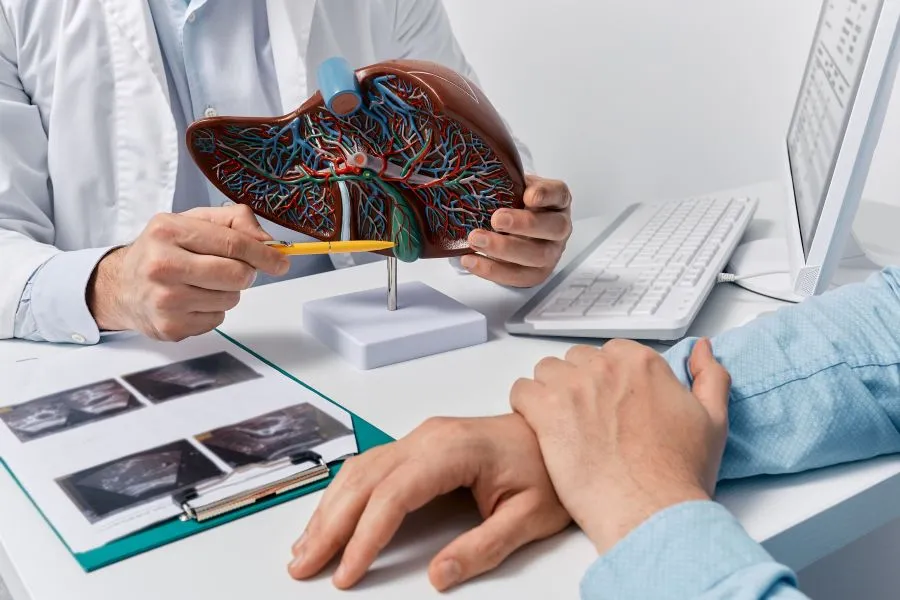 Patton says there is no existing credible evidence that suggests a typical exposure to microplastics causes liver inflammation or other hepatic effects.Patton says there is no existing credible evidence that suggests a typical exposure to microplastics causes liver inflammation or other hepatic effects.
“While some studies report plastic particles causing adverse liver effects, they lack context. For example, they use exposure levels that are orders of magnitude higher than realistic environmental exposures. If you expose a cell to a high concentration of any particle, even one with low potential for toxicity, such as dust, the particle is likely to cause inflammation.”
She adds that some studies have explored potential biological responses to micro- and nanoplastics, but significant questions remain about how exposure should be measured, how particles should be characterized, and how well laboratory findings reflect real-world conditions.
Plastics in the brain
Nutrition Insight also speaks with toxicologist Matthew Campen, Ph.D., professor at the University of New Mexico’s College of Pharmacy, who published a study last year finding microplastics in human brain tissue.
The findings confirmed an increase in microplastic accumulation over time, with PE — the most common plastic used in packaging, bottles, and containers — as the most frequently detected polymer.
“We found quite high levels of plastics in the brain, higher than any other organ we have studied,” Campen tells us.
“This was recently corroborated by a group in Beijing, China. Their concentrations were much lower than what we reported, but the historical use of plastics has also been much lower in China compared to the US, so Americans may well be sentinels for what health effects do occur.”
However, he notes that the impact of food packaging is “probably much less than the impact of contamination existing in the growing of most food, and especially in processed food.”
Furthermore, Campen underscores that scientists do not yet have enough data to establish a clear relationship between the amount of microplastic exposure and any specific health outcomes.
“There is tremendous uncertainty in what our exposures are and where they are coming from. There is too much emphasis on fresh plastics and not enough understanding of how degraded plastics that we throw away actually return to the environment, and emerging evidence that they actually get back into our food through agricultural pathways.”
Based on the current scientific evidence within Campen’s knowledge, he says that contamination from packaging is most likely minimal.
“In our study of brains, the autopsy samples from 2016 had been in storage — a plastic jar — for eight years, while the ones from 2024 had only been in plastic storage for a few months. Yet the samples from 2024 had 42% more plastics, suggesting that the contamination of plastics in our brains is coming from somewhere else, such as our dietary and environmental exposures.”
Calling for testing methods
Patton says one of the biggest challenges is the lack of standardized testing methods. “Different studies often use different particle sizes, analytical techniques, exposure scenarios, and contamination controls, making it difficult to compare findings or draw definitive conclusions.”
“Scientific and regulatory organizations continue to emphasize the need for more reproducible research and harmonized methodologies before firm conclusions can be reached about potential health impacts.”
 The safety of chemical additives that are present in food contact plastic has been assessed by regulatory bodies and determined to be safe, Patton argues.She continues: “In short, while researchers are still working on appropriate techniques to measure potential biological effects of microplastics, the current body of evidence does not support drawing definitive conclusions about how micro- or nanoplastics affect the liver or other organs under typical real-world exposure conditions.”
The Earth Action report discusses the potential effects of plastic particles themselves and the chemicals that may be associated with them. “However, the report does not fully assess how these factors translate into actual health risk, particularly when exposure levels are low, as they are in the real world,” comments Patton.
Moreover, she stresses the importance of distinguishing between detecting chemicals and particles and establishing if either one of them is causing harm.
“The safety of chemical additives that are present in food contact plastic has been assessed by regulatory bodies such as the US FDA and determined to be safe as used,” Patton argues.
Digestive tract “not an open pathway”
The Earth Action report does not address the accumulation of microplastics, notes Patton. This phenomenon, which refers to an increase over time, has not been documented in scientific literature. She adds that most ingested particles are expected to pass through the digestive tract, with only a small, retained fraction: approximately 0.3% of the amount ingested.
“It is important to note that the digestive tract is not an open pathway into the body. It is a biological barrier designed to absorb nutrients while excluding most insoluble particles. While some older particle-uptake studies showed that very small particles can sometimes cross the gastrointestinal barrier under experimental conditions, dietary particles do not accumulate in meaningful amounts.”
“One of the key challenges in this area of research is that studies often use different methods to detect and measure microplastics. These differences include how particles are defined, the size ranges that are measured, the analytical techniques used, and the controls put in place to prevent contamination,” she adds.
Patton argues that because there is currently no globally standardized approach, it can be difficult to compare results across studies or draw firm conclusions about long-term accumulation in human tissues.
“More nuanced studies about how long microplastics remain in the body and the rate at which they are cleared can be designed to answer these worthwhile questions once there is higher methodological rigor and validated testing approaches.”
Debating on methods
Patton claims that the data used in Earth Action’s report are from multiple small studies of various packaging materials from which plastic is purportedly leaching.
“Most of the studies have small sample sizes, poorly defined variability, and missing information. These errors will compound when additional assumptions are made that use these data as a basis,” says Patton. “The assumptions made within the report used to project potential exposure do not match other researchers’ estimates and do not represent real-life exposure.”
She further points out that scientific understanding of the impact of micro- and nanoplastics on human health is evolving.
“However, very few published studies have looked at health effects at typical or even high-end typical doses. If you give a laboratory animal a dose at many orders of magnitude greater than real-life exposures, you will inevitably see effects. The same could be said of any substance, including sugar, table salt, or water.”
 Earth Action says the absence of evidence is not evidence of safety.Meanwhile, the spokesperson from Earth Action clarifies that the report quantifies how much plastic migrates from packaging into food and not its health risk, although “the absence of evidence is not evidence of safety.”
“Exposure here is direct, involuntary, and widespread, which is exactly where precautionary, design-based action is proportionate. Encouragingly, much of this exposure is avoidable through choices already within reach.”
In response to the criticism on data and studies used, Earth Action maintains that it is a fully independent, science-based research consultancy with no vested interest in any packaging material or format.
“Our mission is to develop new knowledge and bring emerging sources of plastic pollution to light, using footprinting approaches that also allow brands and policymakers to anticipate and reduce them. We sit deliberately at the interface between science and action.”
“Importantly, we do not run experiments ourselves. Our contribution is to compile, harmonize, and synthesize the results of many independent researchers — consolidating a coherent ‘big picture’ out of isolated studies, and using it to guide concrete reduction trajectories.”
The spokesperson further explains that the literature was identified through systematic database searches and citation tracking, then screened against explicit, documented criteria: particle size distribution reported or estimable, cross-contamination controlled, and transparent methodology.
“Around twenty experimental studies met that bar and were harmonized across seven packaging formats, representing roughly two-thirds of global food packaging by volume.”
“As with all our reports, this work also went through a process of critical review by external experts and prior consultation ahead of publication. We are also explicit about where the evidence is thin — particularly for nanoplastics — rather than papering over those gaps.”
However, to provide balance, the organization says it is worth stressing that in mass terms, the quantities migrating from packaging are relatively small compared with other environmental contamination sources.
Earth Action concludes that what genuinely sets their report apart is not its scale, but the route of plastic’s direct ingestion pathway — its particles entering food at the point of consumption, with little dilution.