



EU meat remains tax-favored despite links to high diet-driven environmental burdens

Key takeaways
- Most EU countries still apply reduced VAT to meat, despite its outsized environmental footprint, according to new research.
- Removing VAT breaks on meat could cut diet-related environmental impacts by up to 6%, the study finds.
- Household costs can remain low if tax revenues are redistributed, averaging about €26 per year.
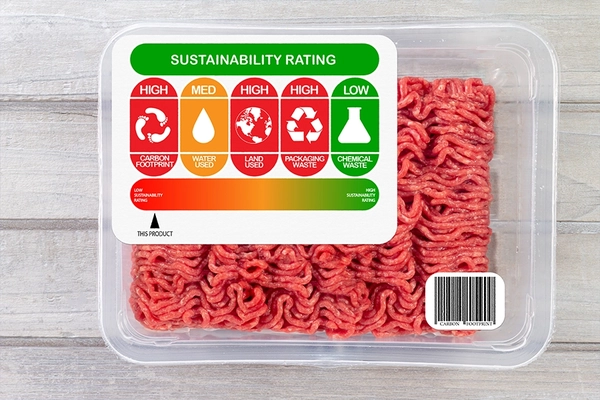
New research suggests that applying a full value-added tax (VAT) on meat could significantly reduce the environmental impact of European diets without placing a major burden on household budgets.
The Nature Food study, led by the Potsdam Institute for Climate Impact Research (PIK), finds that food consumption accounts for nearly a quarter of household greenhouse gas (GHG) emissions in the EU — and substantially higher shares (56–71%) of land, water, and biodiversity impacts — yet meat remains tax-favored in most member states.
Although the new study did not analyze potential health benefits of reduced meat intake, the PIK study’s findings intersect with growing nutrition research suggesting that pricing policies can shape healthy dietary patterns.

The WHO previously argued that well-designed food taxes, with subsidies for healthier foods, can reduce obesity and diet-related diseases while supporting environmental sustainability. This can especially help low-income households while generating revenue for public health.
Earlier research has linked red and processed meats to a higher risk of various cancers, dementia, and colorectal cancer. The Physicians Committee for Responsible Medicine has called for dietary guidelines to recommend a plant-based diet to reduce cancer risk.
Nutrition Insight speaks to the study authors about EU tax policies and household costs. Their findings expose how current pricing structures undermine goals to reduce meat intake.
The researchers estimate that full VAT on meat could reduce diet-related environmental impacts by 3–6% across the EU.
EU VAT on meat
According to the study, 22 of 27 EU countries applied reduced VAT to meat in 2023 despite its disproportionate contribution to food-related GHG emissions.
Study author Charlotte Plinke, PIK doctoral researcher, focused the paper on EU data, consumer behavior, and policy instruments. “Any consideration of how nutrition guidance interacts with fiscal policy in different regions would require a separate analysis.”
“Removing reduced VAT rates on meat products is conceptually aligned with broader discussions in the EU about the promotion of environmentally friendly consumption through adjustments of the VAT rates.” https://www.europarl.europa.eu/doceo/document/TA-9-2022-0034_EN.html
 Charlotte Plinke (Image credit: PIK).“Generally, EU member states can decide whether to apply reduced or standard VAT rates on food products. Thus, whether countries will actually apply standard VAT rates on meat products depends on political will and social acceptance,” she notes.
Disconnect between food taxes and environmental goals
The University of Oxford, UK, has reported that replacing meat and dairy with plant-based food alternatives would reduce nutritional imbalances, mortality and disease risks, environmental resource use, and pollution.
Although processed plant-based foods such as veggie burgers and plant milks were associated with fewer climate benefits and higher costs than unprocessed legumes, the research notes these processed alternatives still offered “environmental, health, and nutritional benefits compared to animal products.”
According to Michael Sureth, PIK researcher of Welfare and Policy Design and co-author of the new VAT study, food-related environmental impacts are not sufficiently reflected in current food prices.
“In the EU, many member states apply reduced VAT rates to meat products despite their disproportionate effect on environmental pressures. This suggests a disconnect between environmental objectives and how food consumption is currently taxed, rather than evidence about individual preferences or awareness.”
Other research has found that food taxes can bring environmental and human health benefits without raising the average grocery bill. By removing VAT on fruits, vegetables, legumes, and whole grains while taxing meat and sugary drinks, this study suggested that food taxes could potentially prevent 700 premature deaths among people under 70 each year in Sweden.
Policies impacting price and purchasing habits
Plinke’s research examines how price changes, brought about by policy, impact consumption patterns.
 Michael Sureth (Image credit: PIK).“The policies examined, i.e., removing VAT tax breaks on meat products and a GHG emission price on food, work by changing relative prices of food products: Both policies make meat products more expensive relative to other food products.”
“This relative price increase incentivizes consumers to switch to less damaging food products, which leads to a reduction in the overall environmental impacts of food consumption,” she explains.
The study estimates, based on households’ reactions to price changes, that both policies can result in significant reductions in GHG emissions, water consumption, land use, biodiversity loss, and nitrogen and phosphorus emissions.
Minimal government costs
Sureth points out that if governments tax meat or other foods for environmental impact and return the extra revenue to households, the cost to families is small. Full VAT on meat would raise average annual food spending by €109 (~US$129) per household; however, governments can offset most of the cost.
“For the VAT reform, we find average net costs of €26 (~US$31) per household per year when additional tax revenues are returned to households. For GHG-emission pricing on food products, these costs could be reduced to an average of €12 (~US$14) per household per year, again assuming redistribution of the generated tax revenues.”
“The specific design of revenue redistribution is a political question that must be worked out transparently and fairly through democratic processes and has not been part of our study. When we additionally account for the avoided environmental damages of the two policy options, the benefits even surpass the overall costs for EU households,” he concludes.