




Colon cancer awareness month: US poll finds adults unaware of processed meat risks

Key takeaways
- Nearly half of US adults remain unaware that processed meat raises colorectal cancer risk, the leading cancer killer under age 50.
- Policy solutions like FOP cancer warnings (akin to tobacco), processed meat bans in public institutions, and subsidies for high-fiber foods could close the knowledge gap.
- Plant-based alternatives offer cardioprotective benefits without cancer risks, and the industry can innovate here rather than fight labels.

March marks the US National Colorectal Cancer Awareness Month, and a new poll has found that almost half of the nation’s adults are not aware of the link between the disease and processed meat consumption.
Nutrition Insight connects with the Physicians Committee for Responsible Medicine to explore the findings alongside policy, front-of-package (FOP) labels, and taxation solutions.
Colon cancer has been found to be the leading cause of death in adults under 50. Yet, half of the poll’s 2,202 US adults remain unaware of this risk. https://jamanetwork.com/journals/jama/article-abstract/2844189
Policy changes can help
The Physicians Committee’s registered dietitian Anna Herby points to policy changes that may help close this gap faster than consumer campaigns.

“Similar changes to what we see for tobacco would be extremely helpful — policy requiring clear warnings on the FOP that the food is linked with cancer. In California, for example, Proposition 65 requires that the state maintain a list of substances linked with cancer, including alcohol.”
“Businesses that use these substances have signs posted that carcinogens are present,” she adds. “This has not yet been applied to processed meat despite the clear link between it and cancer, as well as processed meat’s classification as a Group 1 carcinogen by the WHO.”
Herby suggests that adding processed meat to the list in California and helping other states adopt similar rules would help close the knowledge gap.
“In addition, governments can implement policies regarding the food served in public institutions, such as schools, hospitals, and government buildings. Processed meat should not be on these menus.”
 Anna Herby, registered dietitian at Physicians Committee for Responsible Medicine.“New York City has implemented this policy with huge success, removing processed meat from their publicly funded hospitals and replacing it with health-promoting meals,” she notes. “Lastly, the National Toxicology Program should also add processed meat to its Report on Carcinogens so that more consumers are aware.”
Access to information and alternatives
The poll reveals that many people want more information and two-thirds support cancer warning labels. Only one-third of the surveyed adults said they received information about the link between processed meat and colon cancer from a healthcare professional. The study finds that adults with lower household income and lower education are least likely to receive this information.
On labels, Herby says: “We see FOP labeling with tobacco products, which has been extremely successful in reducing intake and educating the public, and there’s no reason that this labeling on processed meats can’t be equally successful.”
“Food companies should be responding by innovating away from animal products and providing plant-based alternatives to bacon, sausage, and deli meat, which are known to be healthier, but likely the companies would spend their resources fighting warning labels.”
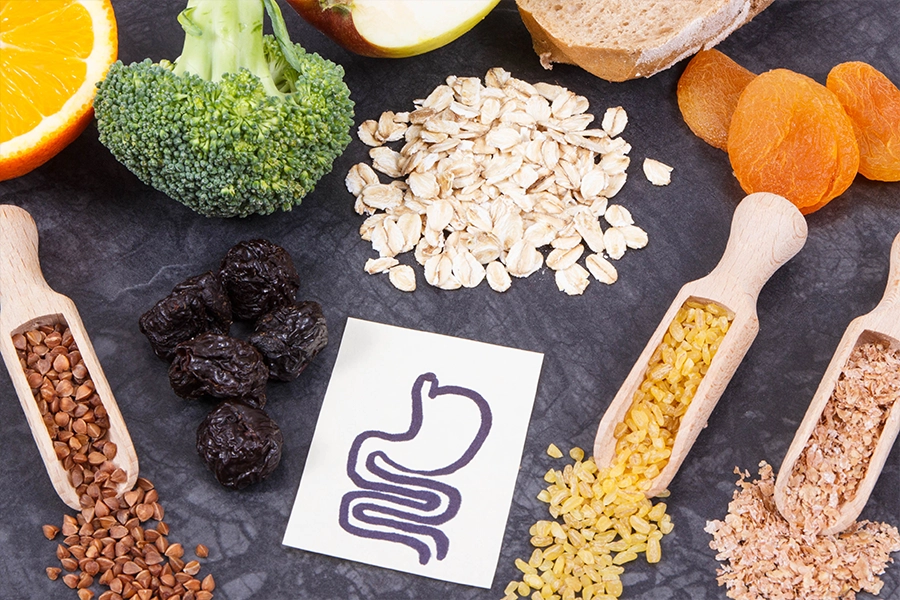 Herby supports subsidizing high-fiber staples and taxing processed meats to lower colorectal cancer risks.She adds that although plant-based alternatives are also processed, research has shown that they can bring cardioprotective benefits and do not pose the same cancer risk linked to animal-based processed foods.
Subsidies for high-fiber foods?
Previous research has found that plant-based diets cut colorectal cancer risk by 22% from fiber and phytochemicals. We discuss whether governments should subsidize high-fiber staples, such as beans or berries, or tax processed meats to shift population diets.
“Both of these strategies will be extremely helpful to improve public health and reduce rates of colon cancer. Farmers should be encouraged to move away from producing animal products and should have financial incentives to produce more sustainable crops that are also healthier for individuals,” suggests Herby.
“So many subsidies go toward growing crops that are fed to livestock instead of to humans. Fruits, vegetables, legumes, and whole grains need to be subsidized and prioritized in federal nutrition assistance programs so they can be accessible to a wider portion of the population, especially individuals living in food deserts where access to healthy food is a barrier to improving health.”
Additionally, Herby points to a review showing that 10 g of daily fiber can lower colorectal cancer risk by up to 10%. “Simple ways to get this amount include eating a little over a cup of raspberries, two tablespoons of chia seeds, or two-thirds cup of black beans.”
Invest in plant-based meat alternatives
To lower the risk of colon cancer from processed meats, Herby states that reformulating processed meat is not the solution, as any meat preservation, including naturally occurring nitrites from celery and natural smoking, can pose cancer risks.
“Even unprocessed red meat is linked to colorectal cancer. Instead, meat companies can invest in innovation toward plant-based meat alternatives.”
This month, the Physicians Committee’s Food for Life is offering online and in-person classes across the US that teach about cancer-fighting plant foods.
“Food for Life classes are a great option because they empower individuals to understand which foods can increase or reduce cancer risk,” says Herby.
“Participants learn how to cook simple, delicious meals based on whole foods like legumes, whole grains, fruits, and vegetables, and they also have community support to implement these diet changes for the long term.”