



Bile acid compounds produced by gut bacteria may influence early-life immune system

Key takeaways
- Gut bacteria transform liver bile acids into new structures that regulate inflammatory responses and T-cell development for immune tolerance.
- Infants developing markers for type 1 diabetes also show altered bile acid levels, linking early microbiome disturbances to autoimmune risk.
- Secondary bile acids increase as children age and could eventually serve as biomarkers for early health interventions or risk identification.
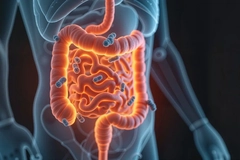
Molecules produced by gut microbes early in childhood may be essential in shaping the human immune system as it develops. New findings on the gut-immunity axis shine light on how this may contribute to the risk of certain autoimmune diseases, such as type 1 diabetes.
Although more research is needed to determine causality, the scientists say their findings raise the possibility that microbially conjugated bile acid profiles could one day help identify children at higher risk of these diseases, or even point toward new early-life interventions that support a healthier immune trajectory.
Bile acids are synthesized from cholesterol in the liver and secreted into the intestine after food consumption to aid in fat digestion. Only in recent years have scientists discovered that gut bacteria can recombine these acids with different amino acids and other molecules to produce a vast range of new bile acid structures.

Researchers studied these acids taken from more than 300 stool samples of children aged between three and 36 months who carried a genetic risk for type 1 diabetes. Some developed islet autoantibodies, early markers of the disease.
The trial revealed that infants who developed these islet autoantibodies had altered levels of specific bile acid conjugates, such as deoxycholic acid conjugates and ursodeoxycholic acid conjugates.
“This is the first study to show how these gut-microbe-derived bile acids develop during the first years of life,” says professor and principal investigator Matej Orešič from Örebro University in Sweden and the University of Turku in Finland.
“These [recombined] molecules vary with age, link closely to specific gut microbes, and directly regulate immune and inflammatory responses. This may help explain why disturbances in early-life microbiome development are associated with a higher risk of autoimmune diseases, including type 1 diabetes.”
What they tracked
Researchers tracked over 100 microbially conjugated bile acids, a class of compounds they note were only recently discovered and remain poorly understood.
Their research found that as children grow, liver-derived primary bile acid conjugates decline, while gut-microbe-derived secondary bile acid conjugates steadily increase.
Researchers tracked over 100 microbially conjugated bile acids, a class of compounds they note were only recently discovered and remain poorly understood.
The researchers also identified specific gut bacteria whose abundance was strongly linked with these bile acid patterns.
Because type 1 diabetes is an immune-mediated disease, the team also tested whether these newly identified bile acids could influence human immune cells. In laboratory assays, several microbially conjugated bile acids were found to modulate inflammatory signaling in monocytes, including responses to lipopolysaccharide, a potent immune stimulant derived from bacteria. Some bile acids dampened inflammatory pathways, while others amplified them.
“This fits with currently emerging evidence that bile acids are key to gut microbiome and immune maturation during early life,” says academy research fellow Santosh Lamichhane from the University of Turku.
The research is published in the Nature Communications journal and is part of the EU project INITIALISE, which is coordinated by Orešič and supported by the Research Council of Finland.
Informing new intervention strategies
Furthermore, the analysis revealed that the new bile acid structures could directly influence the differentiation of Th17 cells and regulatory T cells (Tregs), two immune cell types that help balance inflammation and immune tolerance.
More research is needed to determine causality, but the scientists say their findings raise the possibility that microbially conjugated bile acid profiles could one day help identify children at higher risk, or even point toward new early-life interventions that support a healthier immune trajectory.
In other reports, dietary scientists revealed new findings this week, supporting that higher consumption of preservatives widely found in industrially processed foods and beverages may raise the risk of type 2 diabetes.
Building on the discovery that gut-derived molecules shape early immune development, previous research suggests that the immune system’s interaction with the microbiota may also be a primary driver of autism spectrum disorder. This is aiding the development of AI-driven probiotic interventions aimed at rebalancing metabolic profiles to regulate these immune-mediated pathways.