


International Ayurveda Day 2026: Ashwagandha and turmeric lead India’s export push


Key takeaways
- On International Ayurveda Day, SHEFEXIL’s Debjani Roy tells us that Ayurvedic ingredients need modern evidence to compete in global markets.
- Evidence is strongest for botanicals such as ashwagandha, turmeric, boswellia, and amla, while many multi-herb formulations still need clinical research.
- Roy argues standardization can protect rather than diminish Ayurveda and warns rising demand must be met by sustainable cultivation, not more wild harvesting.
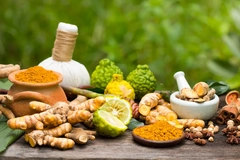
International Ayurveda Day 2026 is celebrated “for a healthier tomorrow.”
This ancient traditional medicine system from India empowers a balanced and personalized approach to healing through specific diets, herbs, yoga, and meditation. Today, Ayurveda Day reaches more than 150 countries, where evidence and sustainability are key focuses.
To learn about the integration of Ayurvedic traditions into the modern global nutrition market, Nutrition Insight speaks with Dr. Debjani Roy, executive director of Shellac & Forest Products Export Promotion Council (SHEFEXIL), Ministry of Commerce and Industry, Government of India.
She points out strong evidence for popular botanicals like ashwagandha and turmeric, while noting traditional formulations still require further clinical research. Roy also underscores a need for sustainable cultivation and responsible harvesting to protect biodiversity and support local communities to leverage local botanicals’ export potential. She says SHEFEXIL aims to bridge the Western knowledge gap, bringing traditional knowledge to market requirements.
How much do traditions need modern clinical validation to be taken seriously in global nutrition markets, and where is that evidence strongest and weakest?
Roy: I would put it this way: Ayurveda does not need modern science to prove that it has a history — but it does need modern evidence to compete in a modern global marketplace.
The global nutrition and wellness market is increasingly sophisticated. Consumers, regulators, and responsible brands want evidence around safety, consistency, efficacy, dosage, and quality. So the opportunity is not to replace Ayurvedic knowledge with Western science but to build a bridge between the two.
The evidence is strongest today around some of the better-studied botanicals and their defined applications — for example, ashwagandha, turmeric (curcumin), boswellia, and certain standardized botanical extracts. We have clinical studies, mechanistic research, and growing experience around safety and standardization.
Where the evidence is weaker is around many multi-herb formulations, traditional combinations, dosage protocols, and some of Ayurveda’s more holistic claims. That is where we need better-designed clinical trials, standardized preparations, and stronger documentation.
 Roy says the goal should be to give the world enough scientific confidence to engage with Ayurveda responsibly.The goal should not be to reduce Ayurveda to a molecule. The goal should be to give the world enough scientific confidence to engage with Ayurveda responsibly.
Which Ayurvedic ingredients are ready for international supplement markets today?
Roy: We should distinguish between an ingredient being commercially interesting and an ingredient being scientifically and regulatorily ready.
I would say ingredients such as ashwagandha, turmeric, boswellia, amla, ginger, and certain standardized botanical extracts are already positioned strongly for international nutrition and supplement markets — provided they meet the destination country’s requirements for identity, purity, contaminants, standardization, safety, and permitted claims.
Ashwagandha, for example, has attracted significant international interest, while turmeric has a substantial research base. These are ingredients where India can move from simply exporting raw herbs to supplying standardized, traceable, scientifically characterized ingredients.
But there are many other Ayurvedic botanicals that require more patience. For some, we still need stronger human clinical evidence, toxicology, pharmacokinetic understanding, validated markers, and consistent raw material specifications.
We should not rush every Ayurvedic ingredient into every market. Credibility is built by knowing when an ingredient is ready — and when it needs more science.
How is SHEFEXIL positioning Indian ingredients as credible exports, and what’s the biggest barrier?
Roy: The international reach of Ayurveda is an extraordinary opportunity, but visibility alone does not create export credibility. We have to convert cultural recognition into commercial confidence.
 Roy calls for distinguishing between ingredients that are commercially interesting and those that are scientifically and regulatorily ready.SHEFEXIL’s role is to help create that bridge between India’s traditional knowledge and the requirements of global markets.
That means encouraging exporters to move up the value chain — from raw herbs toward standardized ingredients, extracts, finished formulations, and science-backed nutrition products — while strengthening quality, documentation, traceability, regulatory preparedness, and international buyer engagement.
The biggest barrier, in my view, is not demand. There is enormous curiosity and interest in Indian botanicals.
The bigger challenge is creating consistent quality and internationally understandable evidence: the same botanical identity, the same specifications, reliable contaminant controls, reproducible active markers, transparent supply chains, and claims that comply with each market’s regulations.
India has the biodiversity, knowledge, and manufacturing capability. The next step is making all three globally auditable and trusted.
How do you balance honoring Ayurveda as a holistic tradition with the Western supplement market’s demand for isolated “actives” and specific claims?
Roy: This is one of the most important conversations we need to have.
Ayurveda traditionally looks at the whole person, the whole formulation, and the interaction between ingredients, whereas the Western supplement industry often asks: What is the active? What does it do? What is the dose? What claim can I put on the label?
I don’t think we should choose one philosophy over the other.
We can scientifically characterize individual compounds and extracts — because that is essential for quality, reproducibility, and regulatory compliance — without claiming that the isolated compound represents the entirety of Ayurveda.
In fact, standardization can protect Ayurveda rather than diminish it. If we can say that an extract consistently contains a defined range of key constituents and has been manufactured under controlled conditions, we make the traditional ingredient more reproducible and more credible internationally.
 According to Roy, export growth has to be accompanied by resource stewardship without consuming the biodiversity on which industry depends.The future is not “Ayurveda versus modern science.” It is Ayurveda interpreted through modern evidence without losing its underlying philosophy.
With many Ayurvedic botanicals wild-harvested or grown by smallholders, how is India ensuring rising global demand doesn’t deplete them?
Roy: This is where export growth has to be accompanied by resource stewardship. We cannot build a global industry by consuming the very biodiversity on which that industry depends.
India already has mechanisms through the National Medicinal Plants Board to promote cultivation, conservation, and sustainable management of medicinal plants. The policy direction is increasingly toward cultivation and resource augmentation to reduce pressure on wild populations.
There is also a strong case for Good Agricultural Practices and Good Field Collection Practices, traceability, and certification. The National Medicinal Plants Board and the Quality Council of India have established a voluntary certification framework specifically aimed at improving the quality and safety of medicinal plant produce.
But sustainability isn’t only about the plant. It is about the farmer and the forest-dependent community as well.
We need stronger farmer linkages, cultivation clusters, sustainable harvesting protocols, traceability, and fairer value distribution. Current government programs also support conservation areas, resource augmentation, and livelihood linkages with local institutions and communities.
If global demand grows, the answer cannot simply be “harvest more.” It has to be “cultivate better, harvest responsibly, conserve strategically, and ensure that the communities who protect these resources benefit from their value.”
India’s opportunity is not merely to export Ayurveda. It is to export confidence in Ayurveda — confidence built on tradition, science, quality, sustainability, and traceability. That is how Indian ingredients can become trusted global nutrition ingredients rather than simply interesting traditional botanicals.