




Bioavailability boosts: How advanced delivery systems are redefining supplement formulation

Key takeaways
- Advanced delivery technologies are redefining supplement efficacy by maximizing absorption, stability, and real-world nutrient performance.
- Encapsulation, fermentation, phospholipids, and chelation enable lower doses, improved tolerability, and more reliable clinical outcomes.
- Suppliers emphasize science-backed, format-flexible bioavailability solutions to meet evolving consumer, regulatory, and formulation demands.
Bioavailability is rapidly becoming a decisive factor in supplement and functional nutrition innovation. Brands, regulators, and consumers are looking beyond label claims to real-world efficacy. Increasingly, success is defined not by dose size, but by how efficiently nutrients are absorbed, tolerated, and delivered in the body.
Ingredient suppliers are investing in advanced delivery technologies such as encapsulation, chelation, liposomes, and dispersion platforms that are backed by clinical data. Innova Market Insights’ data suggests a 9% rise in bioavailability claims across global supplement launches from September 2020 to October 2025.
Nutrition Insight explores how leading suppliers are approaching bioavailability from distinct but complementary angles with experts from Balchem Human Nutrition and Health, Aker BioMarine, Gnosis by Lesaffre, and Pharmako Biotechnologies.

Balchem Human Nutrition and Health’s VP of science, business development, and marketing, Dominik Mattern, is focusing on encapsulation and amino acid chelation to improve the stability, absorption, and tolerability of vitamins and minerals across diverse formats.
“Let’s take vitamin K2 as an example,” he says. “This essential vitamin can be challenging to work with, as it is sensitive to ultraviolet light and oxygen and highly susceptible to degradation in high-alkaline environments or in combination with alkaline compounds, such as calcium carbonate.”
“Left unprotected, vitamin K2 may also break down when formulated in combination with krill oil or certain minerals, such as calcium and magnesium. To help overcome this common stability issue, we developed K2Vital Delta — the world’s only patented double microencapsulated vitamin K2 MK-7 (menaquinone-7).”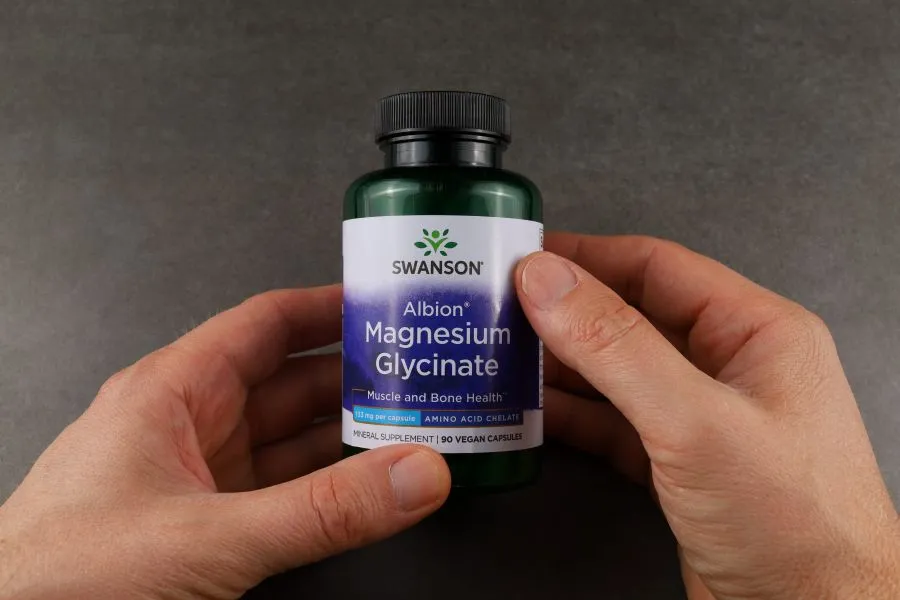 Dominik Mattern at Balchem says the benefits of its encapsulation technology extend to a variety of ingredients.
Simo Echchafai, the SVP of human health ingredients North America at Aker BioMarine, says the company is leveraging marine phospholipids to enhance the absorption of omega-3s and other challenging bioactives through its PL+ delivery platform.
“PL+ Technology is Aker BioMarine’s proprietary bioavailability-enhancing platform built around marine phospholipids,” he reveals. “Designed as a self-emulsifying delivery system, PL+ addresses one of the biggest challenges in nutrition — the poor absorption of many bioactive compounds.”
Meanwhile, Antoine Vanhove, the product manager at Gnosis by Lesaffre, reveals the company is applying precision fermentation to chondroitin sulfate (CS), delivering a highly consistent, non-animal ingredient with clinically proven improvements in absorption and joint health outcomes.
At the same time, George Kokkinis, Founder and CEO of Pharmako Biotechnologies, tells us the company is taking a platform-driven approach, developing versatile delivery systems — from self-emulsifying and liposomal technologies to high-loading dispersion systems — designed to improve performance, reduce pill burden, and meet the demands of modern nutrition formats.
Precision nutrient protection
Mattern says Balchem’s vitamin K2 MK-7 delivers greater stability when formulated with calcium, L-arginine, and magnesium than unprotected vitamin K2. He also points out that the advantages of encapsulation extend beyond this nutrient.
Choline supports brain and nervous system function. The ingredient readily absorbs moisture, which can trigger unwanted interactions in multivitamins. Mattern details that Balchem’s patented particle technology coats VitaCholine in a protective layer that prevents moisture uptake and preserves compatibility with sensitive ingredients.
“Chelation — or the process of shielding minerals using amino acids such as glycine to protect them from the environment in the body — is the precision-engineered technology behind the bioavailability of our Albion Minerals portfolio,” Mattern explains.
“In lab testing, our Albion magnesium bisglycinate displayed three times greater absorption compared to magnesium oxide or magnesium citrate, demonstrating the significant performance enhancements unlocked through chelation. Together, microencapsulation and chelation are key pillars in our approach to delivering differentiated, science-backed, and bioavailable nutrients that truly support consumer health.” Antoine Vanhove at Gnosis by Lesaffre says MyCondro is stable and suitable for a variety of formats, including RTD formulations.
Animal-free bioavailability
According to Vanhove at Gnosis by Lesaffre, animal-derived CS is often inconsistently bioavailable. He points to recent research showing that sourcing from animal tissue can result in uneven quality and unreliable absorption.
He also says that Gnosis by Lesaffre’s patented MyCondro microbial fermentation process allows it to deliver “95% purity with a consistent structure that is identical to conventional CS.” This removes animal-related contamination risks while pharmacokinetic data shows a roughly 45% higher bioavailability than traditional sources.
“MyCondro is exceptionally stable in capsules, tablets, and dispersible powders (including protein powder, for example), and is also soluble for ready-to-drink (RTD) formulas,” he says. “Thanks to the higher bioavailability, the effective dosage is only 600 mg compared to 1,200 mg of conventional CS — half the amount of material.”
He further notes that MyCondro can be combined with established joint health ingredients, such as glucosamine and methylsulfonylmethane. The ingredient has also been pharmacokinetically evaluated against and outperformed pharma-grade animal CS, which is considered the industry benchmark.
“One published study demonstrated MyCondro’s superior bioavailability, providing up to 45% better absorption after 48 hours over pharma-grade bovine CS,” says Vanhove. “This enhanced absorption ensures that the body receives more of the active compound for effective results, resulting in a dose amount to achieve desired results is lower than conventional animal-derived CS.”
Redefining bioavailability standards
According to Echchafai at Aker BioMarine, phospholipids are soluble in water and fat, which differentiates them from standard triglycerides and ethyl esters. This allows nutrients to disperse efficiently in gastrointestinal fluids.
 Simo Echchafai, the SVP of human health ingredients North America at Aker BioMarine.Additionally, he explains that the company’s PL+ delivery technology forms micelles around bioactives, which boosts their absorption and cellular uptake. This can be used for “hard-to-absorb” ingredients like curcumin, CoQ10 (coenzyme Q10), milk thistle, and omega-3s.
Aker BioMarine’s research evidences that PL+ can boost nutrient uptake 22–25 times, which enables stronger results at lower doses.
In a 12-person randomized crossover trial, PL+ eicosapentaenoic acid and docosahexaenoic acid produced 10.5 times higher blood levels after 12 hours. Echchafai says the ingredients reached peak concentrations faster and maintained elevated absorption for up to 72 hours. Final results revealed a roughly four times higher maximum omega-3 blood concentration than standard fish oil.
Moreover, he underscores that valid scientific research has become increasingly important for credibility and commercial assurance, and helps brands “remove guesswork” from formulation, substantiate claims, and protect product reputation in a more evidence-driven market.
“Enhanced bioavailability is most critical for populations with higher intake needs and can be applicable for many target groups,” he continues. “For example, GLP-1 users may face reduced absorption, higher nutrient turnover, or limited food volume, making nutrient efficiency essential — this reality is reshaping ingredient development and delivery systems that help fill gaps, maximize absorption at lower doses, and improve tolerability.”
“Aker BioMarine’s PL+ Technology directly addresses these demands by using phospholipid-bound delivery, which mirrors natural cell membranes to enhance uptake of omega-3s and other actives and improve bioavailability, making it particularly relevant for aging populations, women’s health, sports nutrition, and emerging GLP-1-supportive formulations where every calorie, capsule, and gram must deliver more.”
Format-flexible delivery
Furthermore, Kokkinis at Pharmako Biotechnologies highlights the company’s development of delivery platforms to enhance solubility, dispersion, stability, and dose efficiency for a range of actives. Its AquaCelle technology is a self-emulsifying system that improves absorption of lipophilic compounds like omega-3s and reduces reflux, which allows for smaller, more tolerable capsules.
At the same time, its LipiSperse technology allows for high-loading dispersion of crystalline compounds. PlexoZome liposomes and its dry-format Pro version allow for complementary approaches such as m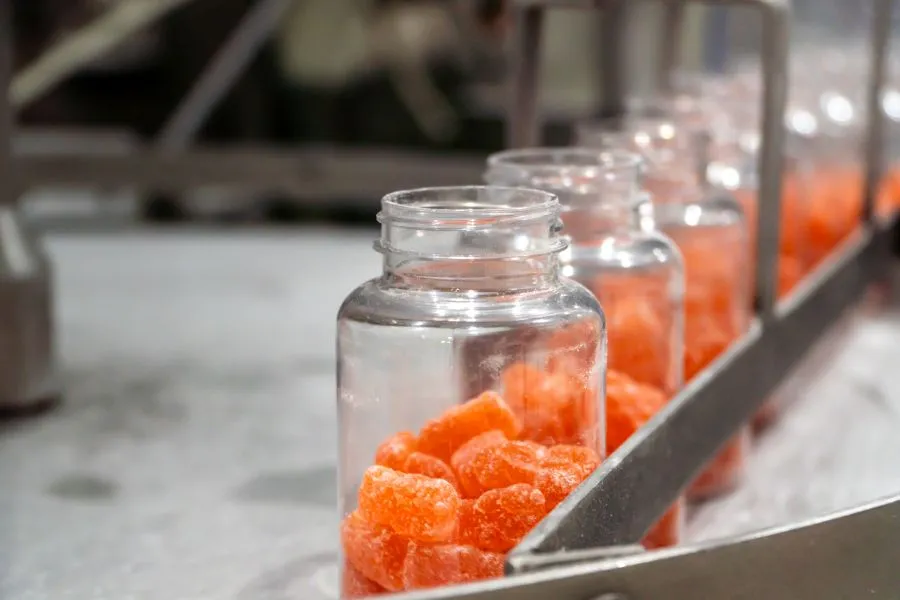 Kokkinis at Pharmako Biotechnologies reveals that its technologies can increase bioavailability across a range of popular formats.icroencapsulation, lipid-based systems, and pH- or mucoadhesive-targeted release.
Together, Kokkinis says these solutions improve absorption predictability, functional performance, and consumer experience while reducing dose variability compared with standard raw materials.
“At Pharmako, we design our delivery systems to be format-flexible from inception, ensuring that performance is not lost across capsules, powders, beverages, gummies, or functional foods,” he explains. “By maintaining high active loads and using only purposeful excipients, formulators can achieve reduced doses, smaller serving sizes, and product format diversity.”
“Technologies like CPO and PlexoZome Pro enable oils and liposomal actives to enter formats traditionally unavailable, without compromising stability or efficacy. We admit the first batch of every commercialized product into real-time stability, following the International Council for Harmonisation Guidelines standard.”
“We then also admit the first batch made in a new year, to that same standard,” Kokkinis concludes. “Over time, we get a very detailed picture of how our technologies behave and what ingredients they are suited to or not.”