


Nootropics Depot calls for legal clarity on botanical supplement classifications and stricter testing

Key takeaways
- Nootropics Depot notes that botanical composition analysis is more complex than pharmaceutical testing as these ingredients include more compounds.
- The company says some supplement brands engage with dry labs or “lab shopping” to obtain passing results and fake certificates without scientific testing.
- It is calling for a new legal category for “enhancement compounds” to separate them from the food (supplement) and drug definitions.
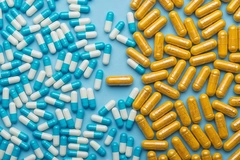
With a toolbox of sophisticated extract and raw material screening instruments, Nootropics Depot urges to bring botanical and mushroom composition analysis up to par with pharmaceutical-grade quality assays, which its CEO believes would require legal reform.
The company highlights testing discrepancies across the supply chains for these ingredients. It also criticizes how some supplement brands may take samples to different labs until they receive a positive result, or market formulas with low-quality filler ingredients, such as leftover plant biomass after extraction.
Nootropics Depot touts its internal testing rigor while operating under a three-year term of federal probation. In 2023, Nootropics Depot’s parent company, Centera Bioscience, pleaded guilty to introducing misbranded drugs into interstate commerce.

The case involved the sale of substances like tianeptine, phenibut, and racetams — compounds that the company marketed as “nootropics,” but which the US FDA flagged as “pharmaceutical drugs not approved for use in the US.”
In part two of our series on botanical quality analysis, Nutrition Insight speaks with CEO Paul Eftang about the regulatory friction, which propelled his business toward a total overhaul of how its supplements are validated.
He argues the federal conflict stemmed from a legal “gray zone.” Currently, US law recognizes only two categories: food (including supplements) and drugs.
“Nootropics are a class of compounds meant to enhance a healthy person, not treat a disease,” Eftang explains. “It was my interpretation that there had to be a third classification. My mistake was in assuming the government agreed with me. The government’s position is that if a product doesn’t meet the strict definition of a supplement, it is by default a drug.”
The company founder is pushing for legislative reform of the Dietary Supplement Health and Education Act of 1994 (DSHEA) that would officially recognize “enhancement” compounds as a separate category.
Maintaining an internal library
Eftang maintains that the legal scrutiny on Nootropics Depot validated his commitment to quality. He says that during a 2021 raid, FDA inspectors complimented the sophistication of Nootropics Depot’s facility. “I joke that we might be the only brand that was complimented on our quality systems during a federal law enforcement raid,” he remarks.
.webp) Nootropics Depot’s internal library maintains a catalog of commercially available competitor products that are periodically tested for compound-specific content.Reflecting on the FDA’s overall regulatory involvement in commercial supplements in the US, he laments the agency’s focus on safety over efficacy.
Nootropics Depot’s internal library maintains a catalog of commercially available competitor products that are periodically tested for compound-specific content.Reflecting on the FDA’s overall regulatory involvement in commercial supplements in the US, he laments the agency’s focus on safety over efficacy.
“This is where the supplement industry itself has to step up and raise the bar,” he suggests. “It’s what we have been trying to do at Nootropics Depot for 13 years now. The tools exist for us to do it. What is required next is the motivation to push for it.”
Nootropics Depot’s internal library maintains a catalog of commercially available competitor products that are periodically tested for compound-specific content. These analyses have identified repeated discrepancies between labeled claims and measured levels of key botanical bioactives in products such as turkesterone, Ecklonia cava, and tongkat ali.
The tests also reveal the impact of practices such as reusing leftover plant material after extraction, which some manufacturers do to boost the total volume of the product without the cost of using more fresh botanicals.
“The only meaningful change that will happen in the quality side of this industry will be if consumers start to demand more from brands,” continues Eftang. “To do that, consumers need to be educated on these benchmarks.”
Role of third‑party analytical labs
Unlike pharmaceutical quality testing of single compounds, Eftang notes botanical and mushroom extracts involve a “matrix effect” — a complex mixture of thousands of compounds. As a natural product, the composition of these compounds may also vary substantially depending on cultivation or growing conditions, harvesting practices, and extraction.
Moreover, he underscores that identifying the correct species and bioactive concentration in an extract requires advanced methods like DNA sequencing and high-performance thin-layer chromatography (HPTLC), especially when reference standards are unavailable.
After identifying a mushroom species like lion’s mane, Eftang notes that determining whether an extract sample is produced from the mushroom’s a mycelium, fruiting body, or a mix of the two is a more complex task for an analytical lab than identifying a pure pharmaceutical ingredient.
“Moreover, once you identify it, you need to determine if the bioactives are in the concentration you want,” he adds. “If it’s a lion’s mane mycelium, we look for erinacines. If it is the fruiting body, we look for erinacines and hericenones.”
“After this, you need to ensure your methods are properly extracting that specific bioactive from the matrix and that there are no other compounds in the mixture that will throw the measurements off. If there is something in there affecting your measurement, that is called matrix interference,” he explains.
“This happens all the time in the plant and mushroom world, so analytical labs need to be on their A game to ensure proper analytical chemistry is being performed.”
 Eftang says that analytical labs supporting the supplement industry often disproportionately face more financial barriers than in the tightly regulated pharmaceutical space.
In a previous interview with Nutrition Insight, importers of botanical and mushroom extracts underscored the importance of clear expectations and accurate ingredient specifications to ensure product quality, in addition to rigorous validations and analyses.
“Lab shopping” hinders quality assurance
Eftang says that analytical labs supporting the supplement industry often disproportionately face more financial barriers than in the tightly regulated pharmaceutical space.
“The complexity of the methods for testing is higher, but the budgets of these companies sending samples to these labs are lower,” he notes. “The industry standard is also much more lenient, and the consumers are not demanding these higher standards.”
To prevent failing results, he says that brands may involve in “lab shopping,” where a brand that fails a lab test does not reject the batch, but sends samples to different labs until one of them passes it.
In addition, Eftang also points to the issue of dry labs: “These are labs that will accept a sample from a brand, do zero testing, and give a passing result to anyone who pays. Brands like this because they have certificates of analysis (COAs) to show consumers.”
He urges a narrowed regulatory focus on supplement quality analysis. “The government does regularly cite labs in the pharmaceutical industry for failing to do proper testing or hold standards, but I never see it in the supplement world.”
“We need the FDA to go after these dry labs more seriously, to ensure consumers are not being defrauded by fake science.”