



Nitrosamine risk could become focus for nutraceuticals, says LabAnalysis’ Sharad Vora

Key takeaways
- Consumers expect higher quality, consistency, and safety from nutraceuticals, driving demand for advanced testing, says Vora.
- Vora sees nitrosamine risk assessment as a potential future focus for nutraceuticals, notably protein supplements.
- Vora argues that governments and regulators are better placed than industry to tackle social media misinformation, including GLP-1 promotion.
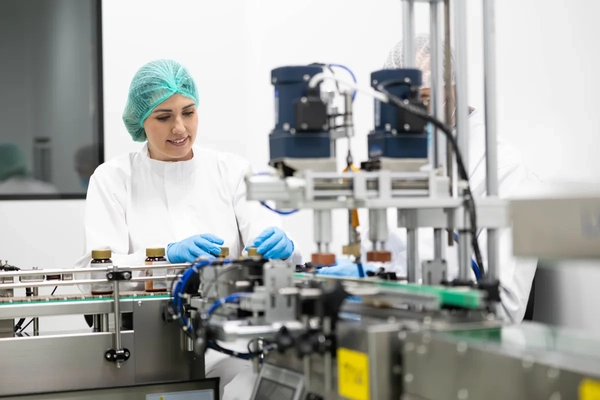
Consumers increasingly expect nutraceuticals to deliver high levels of quality, consistency, and safety, a shift that may push manufacturers toward more sophisticated testing strategies, according to Sharad Vora, sales manager UK and Nordics at LabAnalysis Life Science.
When a company develops a new vitamin, protein supplement, or other nutraceutical, it must evaluate purity, impurity profiles, stability, and batch-to-batch consistency, Vora tells Nutrition Insight.
“For manufacturers, understanding exactly what is in a product and ensuring consistency over time are essential quality requirements,” he says.
LabAnalysis Life Science’ capabilities include liquid chromatography with triple quadrupole mass spectrometry, Orbitrap, Q-TOF, gas chromatography, and dissolution testing. These techniques can characterize products, support quality control, and verify compliance with product specifications.
“High-quality analytical testing helps manufacturers confirm that products meet their intended specifications and quality standards,” says Vora.

Nitrosamines on the horizon
Nitrosamine testing is a major focus in the pharmaceutical industry because certain nitrosamines are recognized as potentially carcinogenic and face regulatory scrutiny. Vora believes some of the scientific principles and risk-assessment approaches used in pharmaceuticals could eventually become relevant to parts of the nutraceutical sector.
 Vora expects increasing attention given to nitrosamine risk assessment in nutraceuticals.“In my view, we may see increasing attention given to nitrosamine risk assessment in nutraceuticals as the sector continues to evolve,” he says.
Protein supplements are one area where the question could arise. Vora explains that proteins contain amine groups and that, under certain conditions, chemical reactions can theoretically lead to nitrosamine formation. However, he stresses that this is a potential future area of focus rather than an established concern across the nutraceutical industry today.
“My view is that manufacturers should proactively evaluate potential risks and be prepared for future scientific and regulatory developments.”
LabAnalysis Life Science currently provides high-sensitivity nitrosamine testing, customized analytical methods, and risk-screening services for pharmaceutical raw materials and finished products. Vora says similar approaches may find wider application in nutraceutical testing if industry expectations or regulatory requirements evolve.
Social media influence
Vora also raises concerns about the growing influence of social media on health care decisions and says consumers should learn to distinguish between scientific evidence and opinions shared online.
“Scientific research follows a structured process involving observation, hypothesis generation, experimental testing, and evidence-based conclusions,” he says. “Consumers should understand the difference between scientifically validated information and personal opinions.”
 Vora warns that the promotion of GLP-1 medicines on social media may lead consumers to seek prescription drugs without adequate medical supervision.He warns that the promotion of GLP-1 medicines on social media may lead consumers to seek prescription drugs without adequate medical supervision.
“In my opinion, products that can significantly affect an individual’s physiology should be used with appropriate medical oversight.”
Consumers should be able to make informed decisions based on accurate information and have access only to properly regulated and tested products, he adds.
Governments’ role
Vora argues that the pharmaceutical industry already operates within a robust regulatory framework, but once products enter distribution channels, its influence over online messaging is limited.
“My view is that governments and regulators are ultimately better placed than industry to address misinformation on social media platforms,” he says. “Industry can provide expertise and guidance, but it does not control social media platforms.”
In the UK last month, MPs urged the NHS to treat obesity as a chronic, relapsing condition with a diabetes-style national care pathway. Their report warns of a growing black market for GLP-1 drugs and calls for tighter regulation.
Vora adds that LabAnalysis Life Science supports manufacturers through analytical testing services, validated methodologies, scientific expertise, and technical training.