


How Indigenous agroecology can unlock diverse diets and food security in a monocrop world


Key takeaways
- Global food security relies on three major crops, making systems vulnerable to climate shocks, disease, and geopolitical crises.
- Modern agriculture uses a lot more energy to produce one calorie of food compared to 1940s farms, which generated almost double the food per calorie invested.
- Solutions embrace Indigenous knowledge, permaculture, agroecology, and thousands of localized crops over Green Revolution monocultures.
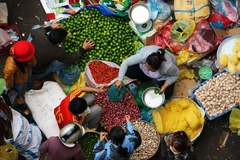
The new book “Green Thinking” calls for a renewed food system by pointing out the need to unlearn or “compost” damaging and outdated ideas by replacing them with Indigenous methods that prioritize food diversity. It critiques that global food security is threatened by a lack of diversity in food sources, as it relies mainly on three crops — wheat, rice, and maize.
Nutrition Insight speaks with author Natalie Bennett, a member of the upper house of Parliament — the UK House of Lords — who states that modern food production is not just overdependent on limited crops, but it is also inefficient. It takes 10 kcal of energy to produce 1 kcal of food today, whereas in the 1940s, the average US farm produced 2.3 kcal of food energy for each calorie put in.
Bennett, who was formerly editor of the Guardian Weekly and leader of the Green Party, also points out the food system’s vulnerability to disease, geopolitical instability, and climate change. Exploring solutions, she points to learning from Indigenous practices and promotes holistic farming methods such as permaculture and agroecology.
Permaculture mimics natural ecosystems to create regenerative, self-sufficient systems, and agroecology applies ecological principles to its design and management.
Additionally, the WHO finds low-quality diets, with a lack of diversity, are a leading risk factor for poor nutrition and contribute significantly to the growing burden of non-communicable diseases throughout the world.
According to Bennett: “The lack of diversity in our food is a huge threat to our health and food security, with more than half of all human calories consumed in the world coming from just three crops and three-quarters from 12 plants and five animals.”
“Wheat, rice, and maize crops are predominantly a small range of varieties (India once had 60,000 rice varieties, and the crop is now dominated by a handful), and the bulk are grown in a handful of countries.”
For instance, she points to the food security crisis generated by the 2022 Russian attack on Ukraine, which impacted fertilizer, oil, wheat prices, and supply. Moreover, amid Iran’s Strait of Hormuz closure threatening 20–30% of global fertilizer exports, Greenpeace urged redirecting feed crops to human nutrition and explained how ecological farming could shield nutrition supply chains from geopolitical shocks.
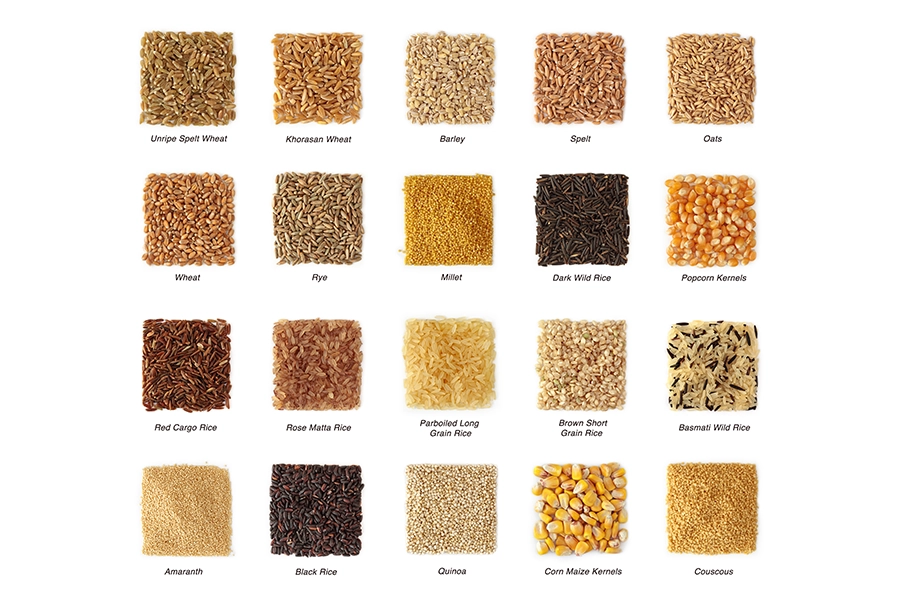 Green Thinking exposes the global food system’s risk — the over-reliance on only three major crops.“The aim of recent decades for developers of a new crop or variety is to have it go big to conquer the world,” Bennett underscores. “What we need to do is to see the encouragement of thousands of different crops in different places according to local growing conditions, tastes, and traditions.”
“There has also been, under the supermarket model, the push to make everything available all of the time, which is a recipe for vast amounts of food waste. We need to recover and restore seasonality and consider what the land is suited to produce, rather than what yields the most profit.”
According to Bennett, unsustainable food systems only serve a few mega-corporations while exposing the rest to food insecurity. However, she also illustrates that companies can play a helping role, as seen in the case of the East Anglian food company Hodmedods.
This company once found its crop accidentally overwhelmed by mustard plants, which could have been treated as weeds. Instead of removing these wild, unplanned plants, the company realized it could harvest the mustard seeds and made a “very decent profit” on the proceeds.
World thinkers inspire new approaches
Under the slogan “unlearning outdated ideas in science, economics, and politics,” Bennett’s book discusses social justice, referencing important thinkers such as US anthropologist and activist David Graeber, UK economist Kate Raworth, Indian environmental activist Vandana Shiva, and US microbiologist Lynn Margulis.
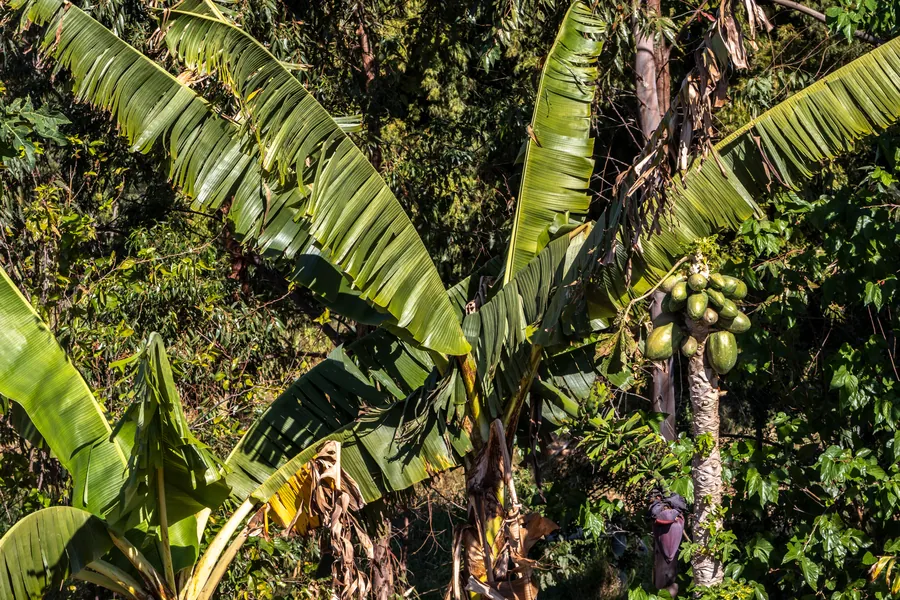 Indigenous practices and agroecology can revive diverse, resilient nutrition.Bennett explains how these thinkers have informed her approach to food diversity since there is a need for new practices.
“Graeber reminds us continually that over the 300,000 years of human history, individuals and societies have chosen to live in all kinds of different ways — creative, innovative, often surprising ways — and we can too. The horrible monoculture has consumed so much of our world that it cannot and will not continue.”
“Shiva is among many of the thinkers referenced in the book — also [Indigenous academic] Tyson Yunkaporta and [Potawatomi botanist and author] Robin Wall Kimmerer — who remind us of the depth of human knowledge and understanding rooted in places where cultures have continued for thousands, or tens of thousands, of years. Those humans were just as smart, just as innovative as we are, and we need to draw on that knowledge through the people continuing in these cultures today.”
Bennett adds that Raworth teaches that individuals have to live within the physical limits of this one planet, where the economy is a complete subset of the environment. Additionally, anthropologist Jason Hickel sends the message that humans can and must flourish in a “post-growth world” where people live better lives instead of accumulating more “stuff.”
“Geographer Jamie Lorimer calls for a probiotic approach — focusing particularly on the importance of the microbial world, which is a major part of our own bodies, through the microbiomes in our digestive system, lungs, and on our skin,” she explains.
“We have to abandon the antibiotic, ‘sterilize everything’ approach of the 20th century, which is poisoning our planet, to allow life — and hence ourselves — to flourish.”
Prioritizing the Indigenous and local
Bennett says she approaches life as cooperation, not competition, and calls for learning from indigenous practices while growing food in holistic ways.
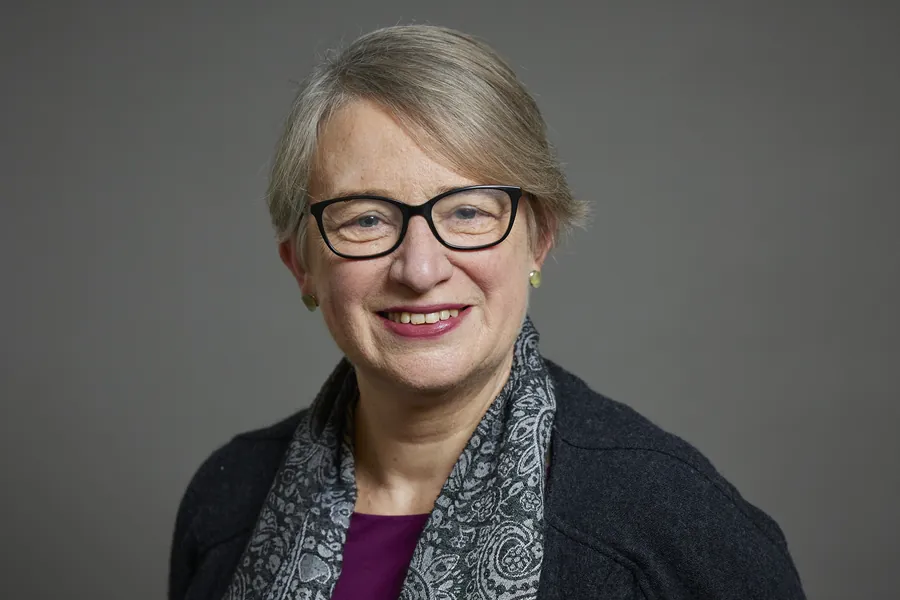 Natalie Bennett, a member of the UK House of Lords.To make a practical impact, she says it is essential to allow agency for Indigenous people and communities so they can develop their own systems in ways that fit within their culture and environment. It should not force them into the current mainstream models of operation.
Additionally, in her book, she refers to the importance of bringing Indigenous knowledge into universities, but such neoliberal, market-driven institutions pose a challenge — the same issue applies to the food system.
“We need an understanding that the ‘Green Revolution,’ which was very much a product of the US, based on the reductionist American corporate science of the 1960s and 1970s, is a dead end and understand its political foundations, which promoted explicitly an alternative to ‘red’ revolutions of peasant-based agriculture in China and Vietnam.”
“That ideology is being continued by organizations like the Bill Gates Foundation, seeking to promote the same flawed philosophy, particularly in Africa, rather than acknowledging that local knowledge and understandings should be amplified and supported, rather than squashed,” Bennett concludes.
Last week on Earth Day 2026, Nutrition Insight explored the importance of agroecological practices that drive enhanced nutrition through diverse diets while uplifting local and indigenous staples with World Neighbors. We also examined a study linking micronutrient supplementation in agriculture programs for healthy child growth and development with the International Food Policy Research Institute.