


Functional mushrooms may aid PFAS elimination, but human evidence is still lacking

Key takeaways
- Functional mushrooms show potential as a natural elimination pathway through fibers, although human evidence proving they remove microplastics or PFAS from the body is still lacking.
- Human research on oat beta-glucan suggests its fibers may help reduce PFAS reabsorption in the gut.
- As consumer knowledge of plastic is increasing, experts caution against unsupported “detox” marketing claims.

Debates are sparking among scientists on how materials from food packaging, such as microplastics and forever chemicals (PFAS), migrate into the human body. These pollutants have been found in human tissue, and emerging science suggests that fiber from functional mushrooms might be a potential remedy to drive these out of the body, rather than allowing them to recirculate.
Nutrition Insights speaks with Julie Daoust, Ph.D., co-founder and chair of the Functional Mushroom Council, about what the current scientific evidence says about how functional mushrooms and fiber may be able to remove these substances from the human body.
Daoust cautions against using the word “detoxify,” as the science is promising, but still emerging.

“We do not currently have published human evidence showing that functional mushrooms remove microplastics from the body. We also do not yet have human clinical trials demonstrating that mushroom beta-glucans reduce PFAS levels, but generally we know that fiber is key to the excretion process.”
Oat beta-glucan reducing PFAS?
Daoust says that the most direct human evidence involves oat beta-glucan. In a 2025 pilot analysis of 72 adult men, participants consumed one gram of oat beta-glucan three times daily for four weeks, she details.
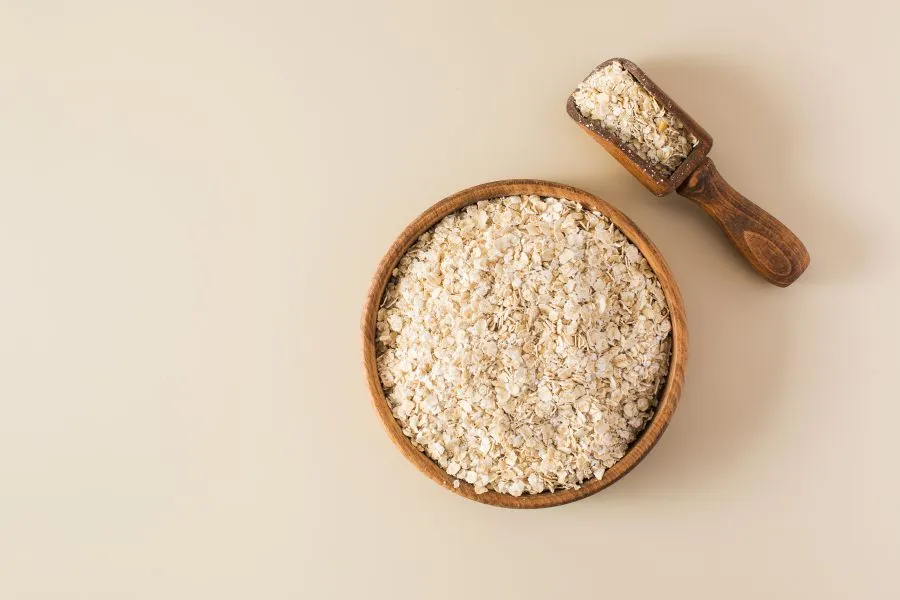 Daoust says that the most direct human evidence involves oat beta-glucan.“Total PFAS levels declined in both the beta-glucan and control groups, but the group receiving oat beta-glucan was the only group to experience a statistically significant reduction in the long-chain PFAS, potentially driven by reductions in PFOA and PFOS. The researchers emphasized that larger, longer, and more tightly controlled studies are still needed.” PFOA and PFOS are chemicals belonging to the PFAS umbrella.
Daoust adds that the proposed mechanism involves enterohepatic recirculation. “PFAS can be excreted from the liver into bile, enter the intestine, and then be reabsorbed into the bloodstream. Viscous, gel-forming fibers such as oat and mushroom beta-glucans may trap bile acids and potentially certain PFAS in the digestive tract, reducing reabsorption and increasing fecal elimination.”
Functional mushrooms would contribute to the excretion of PFAS by providing beta-glucans and other prebiotic fibers that support beneficial gut bacteria, short-chain fatty acid production, and intestinal barrier function, she explains.
Functional mushroom species
At this point, no functional mushroom species can scientifically be described as the most efficient for eliminating PFAS or microplastics, stresses Daoust. She says there have been no comparative human trials measuring toxin elimination after consumption of different mushroom species.
However, she points to different functional mushrooms’ prebiotic potential. “In a 2025 peer-reviewed study sponsored by M2 Ingredients, whole powders of cordyceps, reishi, lion’s mane, and turkey tail, as well as multi-species blends, increased the production of short-chain fatty acids such as acetate, propionate, and butyrate in laboratory models of the human colon. They also stimulated beneficial bacterial populations.”
Cordyceps produced a particularly strong butyrate response in these models, and reishi and a multi-species blend also improved markers of intestinal barrier integrity, although some effects varied among the individual donor microbiomes used in the study, she says.
“A longer Simulator of the Human Intestinal Microbial Ecosystem model study found that cordyceps and a ten-species blend increased acetate, supported butyrate-producing bacteria, and reduced the relative abundance of Bilophila wadsworthia.”
“These are meaningful findings for gut and microbiome health, but they should not be translated into a claim that any particular mushroom has been proven to remove environmental toxins from people,” she stresses.
Focus on fiber
The strongest direct human evidence in the area currently involves oat beta-glucan, psyllium, and high-fiber diets, says Daoust.
“Oats and barley contain viscous, gel-forming beta-glucans, while psyllium is another gel-forming fiber being investigated for its ability to influence substances that circulate between the liver and intestine. However, we should not assume that every type of fiber has the same PFAS-binding effect.”
 A diet rich in fiber, such as vegetables, fruit, chia seeds, flaxseeds, and whole mushrooms, supports regular bowel movements.Fiber is seeing a strong demand, driven by the “fibermaxxing” trend as consumers are becoming more knowledgeable about the macronutrient’s link to gut, cardiovascular, and metabolic health, and overall well-being. As a result, consumers are seeking soluble fibers, prebiotics, and fiber-enriched foods, with grain-based solutions. Raisio previously told us that oats and beta-glucan-rich ingredients are particularly gaining strong momentum.
Daoust explains that a diet rich in oats, barley, beans, lentils, vegetables, fruit, chia seeds, flaxseeds, and whole mushrooms supports regular bowel movements, microbial diversity, and short-chain fatty acid production.
She says these are all important components of healthy intestinal function and normal elimination. “They are not, however, proof that a particular food removes microplastics from the body.”
“The most evidence-based strategy is to combine adequate dietary fiber with practical exposure reduction. That may include limiting unnecessary plastic food contact, avoiding heating food in plastic, and using glass or stainless steel for hot foods and beverages where practical.”
Entering the body
Nutrition Insight recently sat down with experts to discuss what the current science says about the impact of plastic from food packaging on human health. As new evidence emerges, they argued that the scientific landscape needs standardized testing methods, while urging that new findings on increased plastics in human tissue should not be ignored.
Daoust says that the latest research is strengthening the evidence that food packaging and other food-contact materials are sources of human exposure.
“A 2025 systematic evidence map evaluated 103 studies and concluded that microplastics and nanoplastics can migrate from food-contact materials during normal, intended use. However, only seven of those studies were considered highly reliable, which demonstrates how urgently the field needs standardized analytical methods and higher-quality research.”
She points to a human study conducted in 2026, which provided additional evidence that these exposures are modifiable.
“The PERTH (Plastic Exposure Reduction Transforms Health) Trial included a cohort of 211 adults and a seven-day randomized dietary intervention involving 60 participants. Reducing highly processed foods, canned foods, plastic packaging, and plastic contact during food storage and preparation lowered urinary levels of bisphenols and some lower-molecular-weight phthalates.”
Not every chemical marker declined, and the study did not evaluate whether these short-term exposure reductions produced measurable improvements in health, she says.
“This distinction is important. We now have credible evidence that packaging can contribute to exposure, but it is more difficult to isolate how much specific packaging exposures contribute to individual diseases over a lifetime.”
“PFAS exposure more broadly has been associated with immune, hormonal, reproductive, and developmental effects, elevated cholesterol, and increased risks of certain cancers, but food packaging is only one of several potential exposure sources,” stresses Daoust.
Spotting detox marketing claims
Meanwhile, certain brands and companies may claim that their products have a detoxifying effect without proven scientific evidence backing those claims.
Daoust suggests that consumers should ask several basic questions to avoid falling into this marketing trap.
“What specific substance is the product supposed to remove? Was that substance actually measured in blood, urine, or stool? Was the research conducted on humans? Did the study evaluate the same ingredient, dose, and duration being sold? Did researchers demonstrate increased elimination, or only a general effect on antioxidant activity, inflammation, or gut health?”

Daoust suggests that consumers should ask companies several basic questions to avoid falling into this marketing trap.
“Beyond reducing exposure from packaging, increasing your consumption of viscous fiber will support your body’s ability to clear larger microplastic particles that have made it into your digestive tract, as well as removing PFAS from the digestive tract. The evidence is still building, but similar results have been seen with psyllium and high-fiber diets.”Daoust has observed an increased consumer interest in microplastics, PFAS, and detoxification, and marketing often moves more quickly than clinical science, she argues.
“This is one reason the Functional Mushroom Council was established. The Council is bringing growers, suppliers, researchers, and brands together to advance credible research, improve analytical methods, establish clearer industry definitions, and support transparent communication.”
The council’s responsibility is not simply to promote the category, but to ensure enthusiasm for functional mushrooms is supported by appropriate evidence and quality standards, she says.
Distinguishing between plastic and chemicals
Microplastics and PFAS should not be treated as interchangeable, stresses Daoust.
“Microplastics are physical particles, while PFAS are a large family of synthetic chemicals. Microplastic particles may carry chemical additives or environmental contaminants, but an intervention that affects PFAS recirculation would not necessarily remove microplastic particles.”
“Prevention and source reduction, therefore, remain essential. Nutrition may eventually become one part of a broader strategy, but it should not distract from the need for safer packaging, better manufacturing practices, improved environmental controls, and more rigorous human research,” she says.
Daoust details that the next responsible step is to conduct targeted clinical trials that measure defined environmental contaminants before and after mushroom consumption.
She concludes that, until those studies are completed, the scientifically appropriate language is that functional mushrooms may support gut health and the body’s natural elimination pathways, not that they have been proven to detoxify the body from plastics.