



Inside Enbiosis’ AI digital twin platform for precision microbiome formulations

Key takeaways
- Enbiosis Biotechnology uses AI-powered digital twin technology to design precision microbiome formulations for targeted health conditions.
- The company says its dry eye formulation topped standard treatments on tear production and symptoms in a pilot study.
- The “Powered by Enbiosis” licensing framework lets partners commercialize formulations while Enbiosis retains scientific ownership.

As the nutraceutical market is moving toward targeted health solutions, Enbiosis Biotechnology is highlighting its AI-powered digital twin technology to design precision microbiome formulations.
Through its technology, the UK-based biotech company says it identifies condition-specific metabolic targets and designs research-backed, food-grade formulations to support outcomes across various health benefits. Moreover, it says a proof-of-concept study found its dry eye formulation tops US FDA-approved drugs in tear production.
Nutrition Insight explores the AI-powered platform and microbiome science with Enbiosis Biotechnology’s Ozkan Ufuk Nalbantoglu, chief technical officer and associate professor at Dokuz Eylül University, Türkiye, and Esra Sensez, scientific content and research associate.
Nalbantoglu says that Enbiosis Biotechnology’s platform starts its nutraceutical development process with a biological target, instead of the “traditional approach” of building on an ingredient or compound with a promising safety profile and supporting research.

“For a specific health condition, we build a digital twin of the gut microbiome using genome-scale metabolic models of gut bacteria. We then run simulations across thousands of real human microbiome profiles to identify disrupted metabolic pathways and beneficial compounds that the body is not producing in sufficient amounts.”
“Our AI retrosynthesis engine then works backward from the target compound to identify the minimum number of food-grade precursors that gut bacteria can convert into that molecule. Every ingredient in the final formulation is selected based on its predicted biological role.”
According to Nalbantoglu, this results in a formulation where each ingredient has a defined biological purpose that is established before a clinical study begins.
Sensez highlights that the company’s dry eye formulation is the first proof of the company’s approach, which it validated in a pilot study.
 Nalbantoglu says that Enbiosis uses AI digital twin technology to design precision nutraceutical microbiome formulations.“It demonstrated that a food-grade, gut-targeted intervention could outperform the standard treatment approach for the same condition. That finding matters not just for dry eyes, but for what it suggests about the broader potential of microbiome-targeted formulations across multiple body systems.”
Dry eye formulation
Nalbantoglu says the company’s dry eye formulation was tested in a prospective pilot study with 20 patients with a dry eye condition, while a randomized controlled trial is currently underway to further build on this evidence.
He details that study participants took a food-grade oral formulation once daily for eight weeks, with a follow-up assessment at week 16.
“The most notable finding was the durability of the results,” says Nalbantoglu. “Not only were improvements in tear production and patient-reported symptom scores meaningful at week eight, but they also continued to improve through week 16, even after the intervention had ended. Use of artificial tears also decreased substantially over the same period.”
He adds that the formulation demonstrated improvements in tear production that go beyond what standard treatments commonly achieve for the same condition. “This is notable given that our intervention is food-grade and operates via a different mechanism by targeting the gut-eye axis rather than the ocular surface directly.”
“For clinicians, these findings suggest that modulation of the gut microbiome may be a meaningful approach for patients who do not achieve adequate relief with surface-level treatments,” says Nalbantoglu. “For consumers, they point to the possibility that the root of the problem may lie elsewhere.”
Microbiome science driving innovation
Enbiosis observes that the market is significantly shifting away from generic formulations toward biology-driven development.
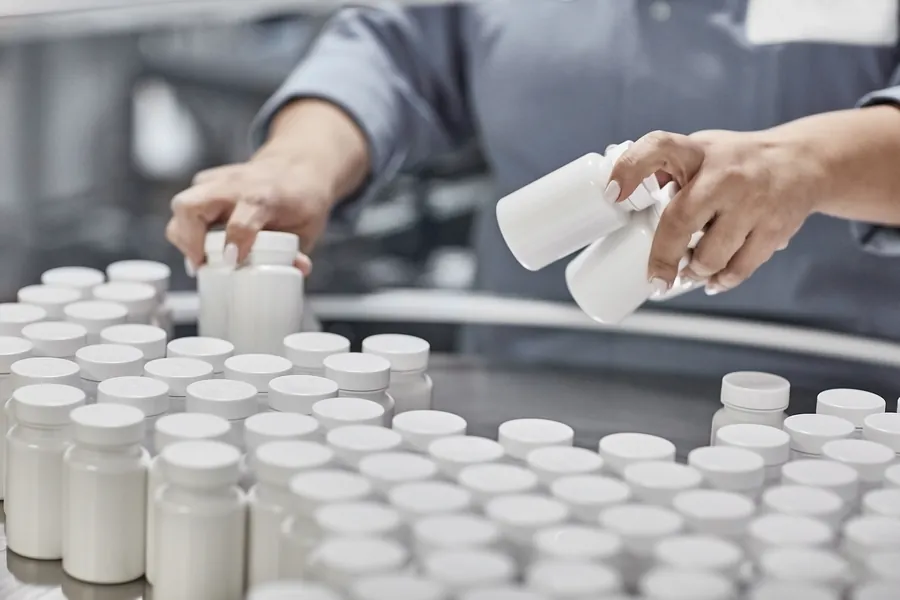 Sensez predicts that the next nutraceutical innovation wave will be designed around an ingredient’s mechanism of action.“For a long time, innovation in nutrition and functional foods meant discovering a new ingredient,” says Sensez. “The next wave of innovation is about understanding the mechanism behind an ingredient and designing around it.”
She highlights several areas within this shift. “One of the most active spaces is metabolic health, including blood sugar regulation and weight management. Research into the gut-brain axis is gaining momentum, with findings suggesting meaningful connections between microbiome composition and mood, cognition, and neurological health.”
Moreover, Sensez says that immune modulation, skin health, and ocular health are emerging as areas in which microbiome science is producing credible, clinically relevant findings.
The format is changing as well, she continues. “Microbiome science is no longer confined to probiotic capsules. It is entering the world of functional foods, fermented products, and precision oral formulations. Brands and manufacturers are beginning to consider not just what a product contains, but also its intended biological function.”
Biology first
According to Nalbantoglu, Enbiosis operates at the intersection of food science and clinical medicine. The company targets evidence-based formulation development with scientific publications, an active patent portfolio, and an ongoing clinical program.
Enbiosis designs formulations around the specific biology of a health condition, rather than a generic ingredient list, he adds. As such, resulting formulations are built around that biology, not a population average, and are validated computationally before clinical work begins.
“That distinction matters because the gut microbiome varies significantly across individuals, geographies, and populations. A formulation designed without accounting for that variability is, at best, an approximation.”
 Enbiosis’ licensing framework lets partners commercialize formulations while the company retains scientific ownership.In addition, Nalbantoglu notes that all formulations are developed exclusively from food-grade ingredients permitted by the FDA and deemed safe by the European Food Safety Authority (EFSA).
“AI plays a central role in this process, from simulating microbiome behavior to supporting the selection of food-grade inputs required to address specific biological targets. Rather than replacing scientific judgment, it enables a level of biological modeling and formulation precision that goes beyond what conventional approaches can offer.”
Licensing framework
The biotech company has also developed a licensing framework, “Powered by Enbiosis,” that is built on its expertise. “We develop the science, our partners take it to market,” says Sensez.
“Enbiosis contributes the formulation concept, the scientific rationale, the technical dossier, and the commercial positioning,” she explains. “The licensed partner manages manufacturing, distribution, and market execution. This allows brands and manufacturers to access clinically validated, food-grade formulations without having to build the underlying science themselves.”
In addition, the company offers an ingredient supply option, Sensez adds. “Once a company licenses a formulation, we can work with global contract development and manufacturing organizations to produce and supply the active blend directly to our partners.”
She says that this removes the need for Enbiosis’ partners to manage ingredient sourcing or active blend production independently.
“What makes this work in practice is the way scientific integrity is embedded into the structure from the start,” adds Sensez. “Every formulation commercialized under the Powered by Enbiosis framework has been developed through the same computational process, with biological targets defined specifically for each health condition.”
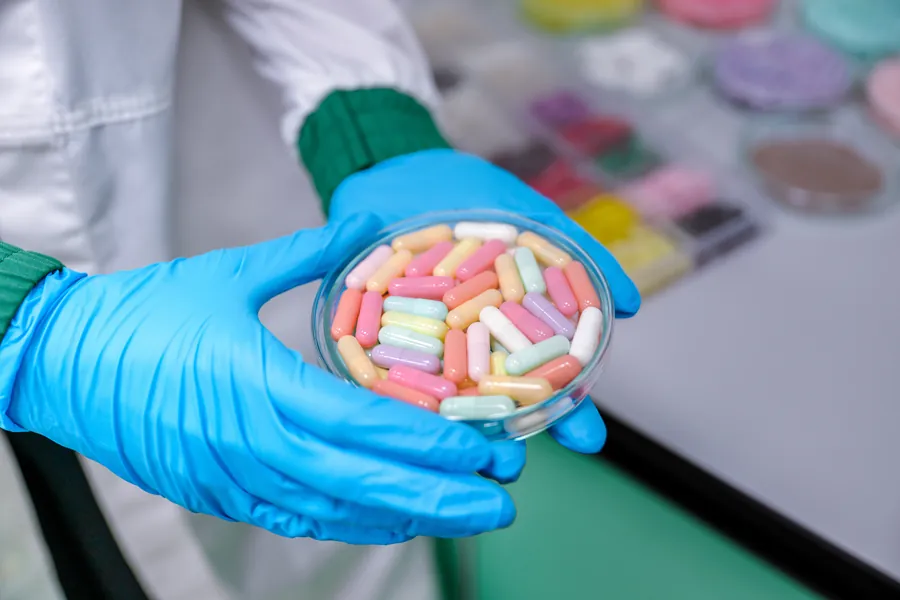 Sensez highlights metabolic health, gut-brain axis, immune modulation, and skin health as active Enbiosis research areas.Moreover, she underscores that the structure of the licensing arrangement maintains scientific integrity, as Enbiosis retains ownership of the formulation logic, the platform, and the technical dossier.
“Partners manufacture and distribute to agreed specifications, but the underlying science remains with Enbiosis. Commercial use is governed by clear licensing terms, including how the product can be positioned and what claims can be made, ensuring consistency across all markets where Enbiosis formulations are available.”
What’s next?
Although dry eye was Enbiosis’ first formulation, Sensez notes that the company’s platform was built to operate across a broader range of areas. “The same computational framework can be applied to any condition where the gut microbiome plays a clinically relevant role.”
“The gut microbiome communicates with almost every major system in the body. As the science around those connections matures, the number of areas where microbiome-targeted formulations can make a meaningful difference continues to grow.”
Sensez notes that the company is conducting clinical studies across gastrointestinal, metabolic, urological, dermatological, hormonal health, and neurological conditions.
“Beyond active clinical work, our platform supports formulation development across metabolic, cognitive and mental, immune, cardiovascular, skin and autoimmune health, as well as wellness areas including longevity, oral health, and hormonal balance.”
She observes that the nutraceutical industry is at an “inflection point,” as formulation development used to primarily rely on ingredient selection based on general population data.
“The assumption has always been that what works for most people will work for everyone. As our understanding of human biology deepens, that assumption is becoming harder to sustain.”
Enbiosis aims to challenge that assumption through its Digital Twin and AI technology, based on the belief that “the body has the capacity to produce what it needs, when given the right inputs,” adds Sensez. Instead of managing symptoms, she says the company aims to support the body and gut microbiome in generating beneficial compounds.
“The science is moving quickly, the clinical evidence is building, and the industry is beginning to ask the right questions. Our vision is a future where long-term health is built not on symptom management, but on understanding and supporting the biology that underlies it,” Sensez concludes.