


Promotional banner with text about biosolutions for gut health, featuring a smiling person and a “See all products” call-to-action.
Home
Webinars
The fourth frontier:...

The fourth frontier: Performance and sleep with Affron

13 Oct 2021 | Pharmactive

Athletes of all standards are susceptible to poor sleep, characterized by a short sleep duration and poor sleep quality. This has been shown to reduce performance and impact general health and well-being. In this Pharmactive webinar, the company explores how its Affron solution can address sleep and active nutrition.

Hello and welcome to today's nutrition insight webinar.

I trust everyone tuning in from around the world has been enjoying their week so far.

I'm Gaya Selby, and I'll be moderating your webinar today.

I'm a senior editor at CNS Media, which is the publisher of The World of Food Ingredients, Food Ingredientsfirst.com, and NutritionInsight.com.

Before we get started, I'd like to let you all know that you can submit your questions through the Q&A engagement tool.

Any questions that we don't have time to respond to during the webinar will be answered via email afterwards.

Additionally, this presentation will be available on demand on nutritionInsight.com, and a link to this will be emailed to you.

Today's webinar is presented by FarmActive and is entitled The Fourth Frontier Performance and Sleep with Affron.

I'm sure the need for a good night's sleep is something that we can all relate to, but it's even more crucial for athletes, as a night of tossing and turning can have a major impact on performance.

Unfortunately, elite athletes are particularly susceptible to inadequate or disturbed sleep.

In fact, 50% to 78% of elite athletes experience sleep disturbance, whilst 22% to 26% suffer highly disturbed sleep.

Pharmactive is addressing this need with its affron ingredient, which can also help improve mood, relieve stress, and occasional sadness, and support relaxation.

That's all to come, but first, let's meet today's speaker.

Nick Morgan is the managing director and consultant at Nutrition Integrated.

He works closely with companies in sport, active, and lifestyle nutrition regarding regarding their approach to strategy and innovation.

His primary focus is understanding how the science, the consumer, and the market integrate.

So Nick, why don't you take it away?

Brilliant, thanks Gaynor.

I really appreciate the introduction, to talk on what is a really cool topic in terms of performance and the influence of sleep.

We've called it the fourth frontier, that will become obvious.

For those that are listening, why that is, because it is such an important area that I think everyone listening can benefit from and of course all the different types of consumers that we will interact with, and particularly those engaged in a sport and active lifestyle, and who just love performing on a daily basis.

So again, thanks Gaynor and also to of course Farm Active, who really have put this presentation on with yourselves and whose ingredient really is the star of the show.

Now I've had that nice introduction, so I don't really need to repeat that, but we do spend our time on a daily basis really unearthing.

The, the, the really interesting things that exist within ingredients and of course other areas and the benefits they can offer, consumers with regards to this kind of growth of areas and functional foods.

Now in terms of Farm Active, they're a leading Spanish company, they have a number of, exciting and premium branded ingredients to which we're going to discuss the role of Affron today.

And I think this presentation should do a really good job, I hope, of emphasizing their approach in terms of the credibility that they take and the scientific, angles that they ensure all ingredients are underpinned by, to ensure that the messages here are relevant and of course, proven.

But with no further ado, I really want to get stuck into the 4th frontier.

So I'm gonna follow this sort of agenda for the following 20 minutes where we'll look at performance, recovery, and sleep.

Of course we need to define what the need for sleep is and how that affects athletes, and then principally what is the role of nutrition.

What is the role of Afron within that?

What opportunity does it present everyone here listening?

And of course we'd like to present a few concepts to try to bring this to life.

They are by, by no means the only concepts that you could ever create, but they are there to try to whet the appetite of what.

Everyone listening could potentially create in terms of how you could innovate and bring Affron and sleep and performance into the market to resonate with consumers.

We'll of course try to conclude with some key messages and and hopefully at the end of this you'll have a really nice overview of this topic area and the opportunities that exist for you.

So, to get started, when it comes to sports nutrition, it is possibly one of the most interesting, engaging markets that we could possibly discuss.

And I think that's because everyone is besotted with it because it's just become more relevant to more people.

Now this isn't a new statement, but it's always worth reflecting that sports nutrition has evolved beyond its original core market, and that is of bodybuilding or aesthetic nutrition.

And very much today's sports nutrition takes on a much broader definition and for me represents all consumers who exercise, not just for performance, so it's not always about personal bests.

But an overall desire to be fitter and healthier.

And I think that's a really important latter point really, because we don't really ever need to discuss COVID, anymore because effectively we've never had such a stop and pause moment quite like it.

Consumers are phenomenally more sensitized than ever to the importance of health, the importance of exercise, and the importance of better nutritional habits.

And that very much underpins and represents the growth within sports nutrition as more people are engaging in a fitter and healthier lifestyle.

And with that, it's not just performing a 5K, playing tennis or playing football for example, it's about engaging in the gym and eating better for the purposes of getting the most out of your life.

Now that's really the premise of where sports nutrition is going and it's very exciting.

And as it stands today, figures from Euromonitor International would place the market for sports nutrition at around about $21.8 billion globally.

Now North America, I think most people will be aware, is the biggest market globally, representing $13.6 billion and then Western Europe is the second largest market.

Within that, the UK is a phenomenal player, close to $1 billion and represents 30% of the Western Europe.

Now beyond that, look out for China, high growth area, and then plenty of other markets globally that got inflections of growth at various points.

And very much this growth is representative of more consumers within that sphere of influence of sport and active nutrition brands.

More people are looking to engage in functional approaches to being better and understanding how they can potentiate and improve.

The benefits of exercise.

And when you get deeper into what this mainstream really looks like, these are really important principles and statistics that we've pulled out from FMCG Gurus, sort of a leading consumer insight company.

If you look at that alone, 80% of consumers have tried sports nutrition in the last 6 months.

That is a phenomenal amount of consumers that have engaged in some form of product.

That can be consumed before, during and after exercise, or to be honest, any other part of the day, but has done so within the mindset of a holistic approach to health and exercise.

80%, also 69% of consumers said that natural is the most important claim in sports nutrition to them.

And again, I think that represents an overarching.

Demand by consumers for improved naturalness.

Now I would normally say that in inverted commas, principally because I think the perception of natural differs between who you are.

And obviously from a regulatory point of view, it can be quite difficult to define.

That said, consumers want things either with a provenance of ingredient that comes and they can see where it's from, the fields, for example, and they're looking for anything else that they believe are hygiene factors to being more natural or conversely, less engineered.

Which I think the original market sports nutrition was always very much about engineered products.

Now I think there's very much a movement towards inclusivity.

And I think that's my point here in the top right of the slide, and that's to say that sports nutrition now has never been more inclusive.

And they're offering solutions for consumers no matter who they are, what they do, and when they want it.

Very much 24 hours a day.

And within this I also include naturalness or plant-based and vegan based foods also, which people like to hear as a core trend within this market, and that's absolutely correct.

I think though if you put the lens of the consumer through this, it means that the more plant-based or vegan you can offer some sort of products within a portfolio, then you're just more inclusive as a brand to more consumers.

Certainly you're not alienating anybody who prefers that dietary approach.

Now you can see the primary trends are plant-based, greater focus on benefits related to everyday performance, so it's a really exciting area.

Obviously the definition now is far broader, but at the same stage I think that represents some really interesting thoughts.

And the images there underneath, things I use a lot actually, it's just to try and emphasize just where brands have taken this.

And so these are three major brands within Europe.

I think what you have is my protein bulk bulk as opposed to bulk powders now of course, and PhD.

They represent some of the pictures there and you can see how, you know, powders are not so aggressive and shakers anymore, you can see the influence of colors and fruits and taste.

You've still got emotive imagery based in the gym, but you've also got a greater target towards females and a lot more around convenience and foods that taste good and can be used any part of the day.

That is sports nutrition in 2021.

And actually, I like to describe this more as an active nutrition market now.

I have my own definition, which is this really in terms of, it's the combination of, physical fitness and mental wellness that impacts our health today and also for tomorrow.

Very much the overriding theme of sport and active nutrition is a healthy body, healthy mind, and you can play that in any way you want.

Now, you know, people reviewing or watching today can take these slides away and, and review the sort of circle of trends and how I've pulled it together, but if you work from the middle and then work out, you know, consumers inherently want healthy body, healthy mind.

They might want it for joint or bone or immunity, gut or brain.

But they ultimately want something that's a bit more natural, plant-based, proven, and then delivered through, formats or experiences that are more personalized, convenient, and experiential.

And then you will have a spectrum of whether people are just about health, they want to keep active, they want to fuel performance, or maybe there's a touch of inner beauty in there in terms of look good, feel good.

But that is effectively what the 21 definition of active nutrition feels to me.

And that's really interesting because when you go into the brain, you start to realize that 4 of the areas or one of the major areas within the brain is very much sleep.

And we can't move away.

In fact, I think everyone listening will have had times when they've slept and of course they've had times when they've had disturbed sleep, and we all know the impact that can have on how we feel, not just our mood, but also the ability to perform physically or cognitively in terms of at work or even with our family.

As.

And when you delve into the research, and there is some really lovely kind of review articles out there and, and also some new evidence around different ingredients or different approaches, it's unequivocal when you look at it that poor quality sleep over a long period of time is known to reduce athletic performance.

But more importantly, it's also impacting athlete health and general wellbeing.

And so that's affecting mood, learning, memory, cognition, pain, immunity and inflammation, to name a few.

So what are we saying?

Something we take so much for granted, the ability to go up to bed at night and hopefully sleep , but the downstream effect of not protecting that sleep.

Point in our lives has such a profound impact on so many other areas that we really want to try and avoid.

And from an athletic point of view, clearly the impact on performance is significant, but the way anybody can provide or define performance, the impact is going to be quite important.

So it just, you know, beggars belief that we might not be more proactive as individuals, myself as a consumer also.

That we wouldn't be more proactive in ensuring we have better sleep habits and hygiene as as potential nutritional approaches, better diet in effect, that can help us sleep better, cos we will absolutely wake up in the morning with a better smile on our face if we do sleep better than if we don't.

So what does this look like at a performance level?

Athletes of all standards, of course they want an advantage, and recovery aims to restore, you know, the physiological, psychological processes to an optimum level.

And two of the most important areas that people look at from a from a recovery point of view are nutrition and sleep, which is why we believe it's the 4th stage of performance, the 4th frontier, if you remember the title of this presentation.

Because you have to prepare, perform, recover, and sleep.

And to be honest, sleep is inherently linked to recovery, but almost you could call it a distinct area, because recovery post exercise might be about fueling or replenishing fuel, regenerating muscles, rehydrating, but the promotion of good, restful sleep is very much an area in itself, and I think that is absolutely crucial.

It is the fourth frontier, and I know.

You know, trends are very much looking and, and really supporting that notion.

We know it's essential for the brain and body, and you know, we would naturally say 7 to 10 hours of sleep a night to function optionally.

I think everyone listening needs to put hand on heart and say, do they sleep 7 to 10 hours a night peacefully without any disturbance, and I think you'll all then think to yourself, if you don't, and I would argue the majority probably don't.

Then multiply that by the many thousands and millions of consumers that are out there that will be the same and not realize with that the indirect commercial opportunities there is to find a way through this, because if people have poor quality sleep, as I've said, the downstream effect is quite significant.

And when you look at the, the, the statistics, I think Gay, you mentioned this in your, in your introduction, so thanks again for emphasizing those because it is quite important that even in an elite level, 50 to 78% are seeing sleep disturbance.

If you look at elite athletes, they're very much 22 to 26% disturbed sleep as.

And that's absolutely quite staggering that that's the level of impact it has.

And again, it's just the same for anybody, no matter what level of performance you define yourself at.

And when you look down and think, what is the role of nutrition, it has a huge role, of course, you know, in terms of many processes, but just look at that again from FMCG gurus.

3 in 10 global consumers say they currently find it difficult to fall asleep at night.

No even if, no matter what the statistic is there, 3 out of 10 for me should not be underestimated for being really quite significant.

There is a problem here to help people solve, and given how important sleep is to our daily routine, restorative and recovery processes, it is as an obvious occasion for people to target that it seems almost strange that we've not had a more direct impact or focus on it, and particularly through the lens of people's sensitivity to being healthier and more active sport and exercise, then of course this all starts to add up.

And there's a really lovely visual here, again provided through the study of actually Neil Walsh in 2020 that just emphasizes from the context of both lifestyle factors and sporting factors that can impact sleep.

So whether it's high training loads, unfamiliar sleeping environments, that could be travel, for those that are going to go starting to go to trade shows, just we know what it's like to start traveling, early morning training, the night before competition, sort of tight nerves, long haul travel.

But.

Outside of that, we're all subject to lifestyle factors, family commitments, I can say that for myself, two young children, social demands, we're now getting out and about a little bit more, attitudes and beliefs, and all of these characteristics impact the way that we sleep.

Ask yourself again, do you think you all have a good standard routine, and maybe that's a bit boring to have the same routine every night.

We like to go out, maybe socialize, do different things on different days of the week, whatever it may be.

But all of these factors will impact the quality of your sleep.

And I suppose again anything we can do to impact that would be really positive.

And because of that, it is an evolving landscape.

There are a few images of some brands here, My Protein, Science and Sport, Motion, Nutrition, Redcon One in the US, innermost, OK, in the UK, a lot of people targeting sleep.

That can be in powders, can be in gels, can be, in capsules, tablets, and it can be in different types of propositions, but people are targeting.

Sleep.

They're targeting the pre-bed occasion.

And when I've written in brackets here, they're brands with a core or contemporary approach, I suppose in some respects, you can stereotype my protein or Red Con to a core approach of, you know, real, you know, very sort of sporting type consumers and then motion on the right there looks a little bit more contemporary and representative of the more modern brand.

Let's describe it.

And what you're seeing is brands already responding to it.

And that leads us nicely into the role of affron, and that is the historical use of saffron.

It's a really lovely ingredient.

Many of you will already be familiar with it.

A lot of it, people refer back to it from a, sort of a cuisine and a cooking point of view, but it's all about its historical use, that dates back a long, long time, where it was used as a nervous sedative and an adaptogenic agent.

And actually you know the evidence and the history of its use dates back some significant period of time with some really lovely evidence to demonstrate the impact it's having.

And of course today, Farm Active with Affron, they have that use and great engagement within the industry, helping both product development and therefore the consumers with mood and the occasional stress and sleepiness on a on a daily basis.

Nearly 1 million people worldwide and depending on your familiarity of.

Affron and with Affron in particular, then for those that know it, then brilliant, then let's have those conversations about its opportunities.

For those that don't, then this is the perfect time for you to get to know it better because it really is a really interesting ingredient and you know, if you're thinking about it, then you should try it yourselves also, for the purposes of trying to sample the impact it can have.

When you bring Saffron through and with Affron particularly, you know, in this environment, one of the most important things is, standardized extracts and understanding the quality of the company providing them and you know, that's for you to very much learn from Pharmactive on their approach to that.

But Affron is a standardized extract.

I think that's really important and it has been proven in 8 clinical studies around mood.

In healthy consumers with stress, low mood, and sleeplessness, very much in adolescence, it does have, good bioavailability, rapid absorption, relatively low dose at 14 mg twice a day, standard, and you can track its provenance all the way back into Spain, and they will absolutely enjoy telling you all about that.

In terms of the evidence that goes behind it, then they continue to drive scientific empirical work, and they'll work with you as closely in a partnership to help you find the best avenues through.

So please, this is Afron that you should get to know.

In terms of some of the areas from a, from an evidence point of view, there's two really nice studies that they've funded and brought and communicated from sleep.

Now the first one is shown here in 2020 where you have 40 mg of Afrin which is taken twice daily over 4 weeks in, in relatively healthy individuals.

And when taken over a 4 week period, those taking Afron versus those that didn't saw a reduction in parameters related to insomnia, which would effectively almost be the clinical diagnosis of poor sleep.

Not everyone gets there, but it is something that people would understand, and that that's very simply consumers that, you know, have a real sleep issue.

Decreased sleep latency or accelerating falling asleep.

And decreased number of awakenings after onset of sleep.

So again, that's effectively sleep disturbance.

In general, people get to sleep quicker and sooner, and that period of sleep is more restful and less disturbance.

That enables the body to recover better and that enables people to perform better and you will feel better.

Now this was done on 2 doses of 40 mg twice a day.

The latest study presented and published actually recently in 2021 earlier this year, is all looked at the single dose, which for innovators out there is quite important for you in terms of how you might provide guidance on Pack and also how you might reduce the barriers to habituation of a consumer taking this product on.

So this is very much a single night dose, 14 mg pre-bed over 4 weeks and again showing quite interesting and staggering improvements in sleep quality, a reduction in the insomnia classification amongst those participants, and again an increase in melatonin concentration.

People will be familiar probably with.

Melatonin and the importance of that within the natural sleep cycles with this single dose, which gives people a huge degree of product flexibility in terms of how you could bring this alive.

So some really nice evidence here within the sleep domain controlled.

The important thing about this is, you know, these are active and healthy participants.

Again, the ability to translate this into the sport and active environment is, is, is absolutely there and I think gives a great platform in which to engage in positive conversations.

The results effectively offer you an opportunity to target the sleep, occasion, the sleep, , problem that I think exists with consumers who are reporting any form of sleep disturbance.

I think there is a proactive approach.

Here as.

So for people with a high training load, maybe they do normally sleep , but they're going through periods or about to embark on periods of high training loads or anything that they think might cause sleep disturbance.

Then there's also the proactive consumption ahead of time might be worth considering all of these things the brands.

Listening will probably want to research, of course, but there's some great, really interesting opportunities.

We've placed on this slide and for everyone to review post really the opportunity to make, claims and specific wording, whether in Europe, in Canada or Japan, and also we've touched upon here the importance of knowing the sort of influence of the mechanistic, approach that defines how our Afron is actually working and that is very much around.

The role of, of melatonin in the body, and that's a, a really important area from us scientifically.

The ability to formulate for success, because it's not just knowing that the opportunity is good, it's not just knowing that the evidence behind an ingredient is, is, is there, but you have to be able to formulate with a flexibility to be able to create products of different formats, with a dose that is relevant and applicable.

One in terms of the different formats is absolutely crucial.

Mainstreaming of sports nutrition is driven not just by more consumers but also an accessibility.

So the ability to offer them products that they believe, you know, are easier to consume, they're more experiential, they're more tasty, so you've got powders, you've got stick packs, you've got different types of liquids, and of course you can do traditional consumption as through capsules and tablets.

So there is a real opportunity here to create a different breadth of type of products.

And I think you can see here as that actually when you look at sports nutrition, it's very much still coined by a before, during and after type approach to when products are innovated for or when consumers consume them.

But there is this real interest in sleep as a 4th need state or a 4th frontier.

It is offering a really huge, huge commercial opportunity and when we're asking the consumers, as we alluded to the stats earlier, then we definitely know that they recognize an issue and they are interested to provide problems or provide find solutions that will help them.

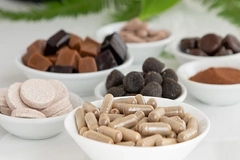
Where we get to next, then I think where we've offered two really interesting concepts, then you can be quite traditional in a capsule or tablet, and that might be easy for consumption pre-bed.

I think that's really good.

You know, we've kind of described it here as life can be stressful, exercise can take it out of you.

These sort of capsules, they contain research-backed ingredients that help reduce stress, promote relaxation and get you the good night's sleep that I think you deserve.

Relax, reset and regenerate.

You know, 28 mg of Afron maybe taken twice daily.

You could add any other, supporting ingredient in there, by the way, in this instance we've referred to Valerian root, but you could choose something else.

And of course in a capsule like this, you'd probably want to emphasize 100% natural and plant-based, and then here you can see, the importance of the formulation and the capsules used.

So it can be quite straightforward in terms of the product concept, but then you can see it being brought to life.

Also we've a second one which I think is really interesting for sport and active nutrition, which is the ability to combine it with protein and so developed by some experts, this is almost product descriptions that you can imagine brands bringing to life.

The overnight protein conveys the power of plant protein with 28 mg of Afron.

Again, maybe look at the single dose if you like to promote sleep by helping you to relax and feel good.

Overnight regeneration has never tasted so good.

We could talk at length about whether it should be vegan or plant-based protein.

That's obviously the decision for the innovators out there listening.

Probably believe it makes sense to be more of a plant-based route, given that's where we see the growth in the category.

But these are all, of course, to to stimulate the thoughts and the ideas to bring this to life, and I actually think this could be a really lovely product within a repertoire to people to consume pre-bed.

Just as an element to conclude, I just, honestly, when I take stock of.

The post COVID era, the interest in health and exercise, the increasing awareness to being healthier and for everyone to perform at their best, both on a daily basis and through the avenue of sport, then sleep becomes one of the most important areas for us to improve and be better at to the best of our ability.

There are areas of products, but there's definitely a dearth of evidence around various ingredients, and I think the emerging evidence behind saffron and Affron in particular from from active offers something for everyone listening.

To have a good discussion about in terms of its relevance to innovate with because the timing and the occasion is ripe.

I think good quality ingredients like Affron is, is there to be used to their maximum er capacity, and I think there's some really lovely opportunities now as we look to take advantage of what is really quite a defining moment in our category, to bring the best products to consumers.

And with that, I just want to say thank you for listening.

I hope it's been of interest, of course the key people to follow up with will be the team at Farm Active.

I can follow up as , so individually, but it's a phenomenally interesting area, and I think I'd be surprised if anyone out there didn't have sleep and the pre-bed occasion for the purposes of recovery on your agenda because it very much is the 4th frontier.

So with that, thank you very much and back to you, Gaynor.

OK, thanks, Nick.

Thanks very much for a very, informative and insightful presentation.

So this is going, Sylvie again from CNS Media, and I'm back to host the Q&A session.

We're ready to head straight into it because I already see a few questions coming in.

So let's start with this one, Nick.

Some listeners are asking, is Affrin a doping-free ingredient?

I think that's a really on point question.

Yeah, very on point, important of course to sports nutrition for the purposes of elite athletes who are performing at the highest level and are therefore subject to anti-doping regulations.

Afron is subject as a raw ingredient to, anti-doping, kitemark, called Dopingure.

So it has that within the supply chain and so the ingredient supply to anybody listening, should they want to do so would come with a doping-free certification.

So I think that's really important.

I don't think it changes actually the importance of a brand testing the final product because I don't think you can ever provide a doping free.

Sort of, communication on the product point of view without doing some final product testing, but for the purposes of confidence and quality of the raw ingredient, there is a doping-free certification, with Affron.

OK, makes sense.

Alright, I know you spoke in your presentation about dosage and so on, but we have a few questions asking what's the recommended daily dosage for Afron.

So can you detail that a bit more, please?

Yeah, just to, I, I, I guess refer back, there were 2 studies presented and the.

Recommendations from Pharmactive have always been, 14 mg taken twice daily, so a total daily dose of 28 mg, that's the way it's consumed in, in categories related to mood and also in sleep.

Of course, conversations like that are always back to can we innovate around a single dose, and that's what that most recent study emphasizes is that the benefits are also there for those that might want to look at the consumption of Aflon on a single pre-bed or evening consumption moment at 14 mg.

So I think the opportunity or choice is there for both.

In terms of for the, for most people who've engaged with Afronnovo used to 28 mg, but more recently, the evidence is also there to underpin maybe a more applicable consumer consumption moment of 14 mg per day, which can impact innovation in lots of different ways.

So that would be, the core message that those listening need to take away.

OK, good stuff.

Right, we have some more questions coming in from our listeners.

So why does Farm Active include Affron in the sports category?

Yeah.

I guess why wouldn't they?

I would be a, would be a place I'd like to start on that.

I think the key thing for me is, sports nutrition in its definition is evolving so quickly and very much never before has it been more relevant to anybody exercising because I think everyone, just like other brands do, you know, talk about that anybody can be an athlete, and.

Performance and the ability to perform has always gone beyond the acute periods immediately before, during or after exercise.

So we've always traditionally consumed things to energize us before we exercise, to maybe fuel us during, to keep us going to the best of our ability, and of course promote recovery immediately after.

But every other part of the day, the 23 hours of the day when you're not exercise are going to underpin performance, and as I've detailed, and I hope it has come through from the presentation.

Sleep is of profound importance in that, and so the ability to offer an ingredient with the evidence here in sleep immediately makes it relevant to the sports category, and as we know it's a growth area, I think it makes sense, and so for everyone listening, it, it's actually just good now that there is more opportunities to innovate within the sport and active nutrition category, and Afron is a perfect opportunity for them to bring something new.

And interesting and I think innovative to kind of break through the sea of sameness or the fact that they need to cut through the noise because there's a lot of people interested in this area.

Yeah, for sure.

So is there any specific targets suitable for thron in sports?

I think in it, the, the obvious one is for those that are performing at a really high level because with a high level you, if you link back to one of the slides earlier that sort of talked about what factors impact or could disturb sleep, then, you know, a high level of exercise, or engagement at a performance level where high training loads, travel related to competition, maybe pre-competition stress, for example, that's where there's a huge increase in disturbance risk, to sleep.

So at that level, anybody, you know, doing something at, you know, the highest level of potentially competition or that they're just they're exercising particularly.

Within that, I think you've always got subsections, you will have people no matter what their level who already have existing sleep related problems, so clearly you could brands out there could segment their consumer base to those already demonstrating or you know, confirming they have sleep disturbance or some form of, of symptom within that space, and I think that could be really important.

In terms of any particular sports over other types of activities, then I don't think there's anything there particularly people would want to worry about in terms of diff one sport over another.

I generally believe it's those that are engaged in sufficient exercise that, you know, is great for health, but of course what what that brings is maybe just a little bit of higher risk for disturbance of sleep.

So that would be the way that I would view it.

Although of course the more I get into it, the more I, I can't I can't get away from the fact that I think we would all benefit no matter how we individually and it defined performance to us.

Yeah, yeah, interesting.

OK, so I know you've spoken about the studies, clinical studies, but people are asking how many clinical studies have there been related to Afron?

Does PHARMA plan to do research in the sports category?

There's 8 studies already on, on Affron.

The two that we presented there are on, on sleep particularly, and there will be a continuation of that.

There is also some work that they're engaging with in terms of Affron and recovery within sport too.

I think that's close or currently being completed, and, and from a trial sort of in elite sport point of view, then Afron will and is being used in.

Case studies within some elite sport environments as , so there's a lot of real-time feedback and case studies coming back into the brand.

So I think the simple message there from, from active point of view is that there is a continuation to support the ingredient with high quality evidence, both within the laboratory environment and also within the applied environment and almost at that latter point is more important now than ever.

To be working with and having ingredients tasted, tested and, and sort of proven at that ecological valid validity area like elite sport.

Yeah, sure.

OK, I think we've got time for just one more question, so let's finish off with this one.

Can Afron be mixed with protein?

Yes, in fact, it was one of the one of the, the concepts that were presented.

In truth, I think it's actually a really, lovely potential combination.

Protein has traditionally always had a pre-bed consumption moment, whether you would go back into the days of, whey or, or more particularly caseine consumption.

I think people are aware that, you know, high protein diets, I'm not saying super high, but just, you know, a protein rich diet is important to enable the body to, to fuel, er, if you're engaged in high intensity exercise or high training loads and also potentially as we age I think it's really important.

And so the, the proactive consumption I think is nice, and the ability to offer consumers a convenient solution of protein intake with, ingredients to be consumed pre-bed has lots of really interesting opportunities for versatility and flavors, maybe to bake with, desserts and so on.

So in terms of combining protein, I think it's a really obvious combination.

And I think it offers really interesting, sort of innovative opportunities for different types of products and making them, if I think back to my slide at the beginning about, you know, making products as experiential and convenient as possible, then I think, that's a really lovely area to go and almost brings the best of two worlds together, in terms of protein intake and of course Affron for sleep, and, and they'll complement nicely.

OK, great stuff, thanks very much Nick.

That's all the questions that we've got time for today.

So I'd like to thank everybody for tuning in to today's webinar brought to you by Farm Active and thanks again Nick for your insightful presentation.

But before we head off, I'd also like to let you know that all questions that we didn't have time to answer today will be answered by email.

And you can also check your inbox for an on-demand version which will be sent to you shortly.

So, finally, all I want to say is thanks again and that you can keep up with the latest developments in nutrition news at nutritioninsight.com, where you can also sign up to our newsletters.

Thanks for joining.

Have a good day.

More webinars

Image