
- Industry news
Industry news
- Category news
- Reports
- Key trends
- Multimedia
Multimedia
- Journal
- Events
- Suppliers
Suppliers
- Home
- Industry news
Industry news
- Category news
- Reports
- Key trends
- Multimedia
Multimedia
- Events
- Suppliers
Suppliers
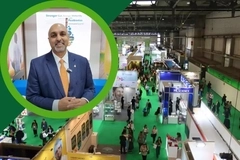
At the recent Demo Day for the MISTA Growth Hack for Healthy Nutrition, Alexandre Bastos, head of Front End Innovation at Givaudan, discussed emerging food technologies, start-ups, and their alignment with Givaudan’s mission. He highlighted Every, a precision fermentation company for egg alternatives, as having strong scalability and impact potential. Bastos emphasized taste, texture, and nutrition as central to Givaudan’s innovation, focusing on weight management, fiber, and protein. Bastos pointed to biotechnology and fermentation as key to reducing environmental impact. Looking ahead, he believes personalized and precise nutrition will become a key food innovation trend in the next decade.
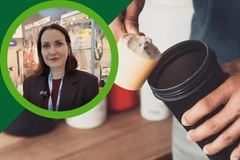
This is Yolande van Gaal from Nutrition Insights, and I'm here today at the Mr.
Demode for healthy nutrition with Alexander Alex Bastos from Gaudin.
Thank you for joining us today.
And I'm really curious.
We have lots of innovations here, lots of startups.
Can you say which one of these you think has a strong potential to scale and impact the food system in the next few years?
OK, yeah, that's a big question.
So great to be here and, you know, one that I really like and we are somehow very close to them is Avery.
I think they are very much at scale already.
They're like in the last mile, and I think if they go to it impacting the world of eggs, I think this is going to be, you know, a great impact for society from a nutrition, but also from an experience standpoint, animal welfare, you name it, I think they are the ones that could bring it back to the, to the food system.
Awesome, interesting.
And I'm also curious how some of the innovations that you've seen already here and I'm sure we'll see many more, how they align with your company's priorities in health, sustainability, or consumer experience, if you can highlight some.
Yeah, so.
As a, as I, I, we are a taste company at the core, right, and we added a few things into our portfolio and expanded into colors but also into health and texture preservation but everything.
That Gibadon does is about the experience of the consumer with the food, how it tastes, how it looks, how it bites, and what it does to your body.
And I think this is the part that connects more with this team this year with MA, you know, the healthy nutrition.
It's like what are some of the other ingredients we should be looking at to bring more solutions to consumers and bring the experience to their body, right?
So we are very much into like you know things around weight management, things around fiber, things around you know some of of the the the the the elements related to protein as.
So I think this is the alignment between what they do here this year and what Ggodon does.
OK, interesting.
And I'm also curious if you can highlight some solutions that you think have a great potential to reduce environmental impacts in the food industry.
Yeah.
I think all these alternative, you know, ingredients, let me put it that way, I think they have this, possibility, right?
Are they there already?
I don't think they still have to do more.
I mentioned the case of, every that, you know, they play into the precision fermentation.
But you also have like the biomass fermentation that maybe to scale is a bit easier than the precision fermentation.
I think you know everything around biotechnology, fermentation, biomass fermentation, it's a place that I want to believe that we will be there at some point, and I think this can.
A lot of good points for sustainability and climate change as and emissions, you name it.
OK, interesting.
And I'm curious, did you see any technologies that could challenge your company's current business model and how do you approach if there's a tension, how do you approach that?
Yeah, our industry is very specific and let's say to come to to the place where you do flavors, you know, you have the whole creativity part but also the supply is not easy so the the barriers are quite high right?
Yet we do see many companies, you know, invest in that space, let's say.
Now we see a lot of unhealthy nutrition and all this, and you know like there are companies now trying to see, OK, how can we enable all this nutrition into the food product so that at the end the consumer likes the product not only because of what it does to their body but also you know the experience they have with the product.
And I think here we see some of the companies playing into that like taste modulation, you know, there is a company I can't name again.
They are actually also from Switzerland.
They called Taste Omics, and they are playing that space, right, how they can modulate the flavor to mask stuff and bring like great let's say taste experience, and I think those are OK.
What is our approach with them?
We look for partnerships.
We are like there.
We want to see how we can work together.
We have the access to the market.
We have the experience.
We have the whole baggage in that industry so we can help those guys to accelerate their innovation and bring it to market.
OK.
And then a final question, I'm really curious if you had to pick one theme from today from these innovations that you think will dominate food innovation over the next decade, what do you think that will be?
We were talking about this before and I'll mention this again.
You know, one that I personally like and that I, I really want to see more is this.
Precise nutrition, right?
Some people call it personalized nutrition, but it's like how can we bring what happens today in the supplement industry into like the food we eat every day and how can I actually have options and diversity, you know, for things that I actually need?
I think there are already some of the things out there, but then, you know, with the advancement of.
Ingredients, hardware, how you can make products, how can you decentralize every food today is like done in big factories.
Can I decentralize and I think we have the technology to do that.
We have the technology to do like food that is known for me, and I think that's one that I really believe it's gonna come, you know, in, in the next few years, and I really want that to happen because I think this is is gonna be really a game changer.
Awesome, thank you so much.