




Brain health supplements expand into digital overload and menopause brain fog

Key takeaways
- Brain health supplements now target digital overload in youth and menopause brain fog, according to industry players.
- Innovation is shifting away from traditional capsules toward functional delivery formats such as ready-to-mix powders, ready-to-drink beverages, gummies, and stick packs.
- Ingredient suppliers are expanding clinical science behind choline, carotenoids, probiotics, and bioavailable curcumin.

Brain health is rapidly evolving beyond traditional memory care for seniors, expanding into proactive cognitive support across all life stages, driven by generational consumer concerns, such as digital overload among younger generations and life-stage transitions including menopause.
Nutrition Insight speaks to Balchem, Saanroo, Probi, and Kemin Human Nutrition and Health about trending functional formats, new clinical trials, and the growing demand for targeted neuronutrition. All studies cited were funded or conducted by the respective suppliers.
For years, brain health supplements were largely associated with older individuals. However, Tyler Holstein, global product manager at Kemin Human Nutrition and Health, says that one of the most interesting opportunities emerging now lies at the other end of the age spectrum.

“Younger generations aren’t necessarily thinking about maintaining memory as they age, but they are looking for ways to support their focus, attention, and cognitive performance today.”
He adds that this shift is reflected in wider cultural conversations around the impact of digital lifestyles on mental performance. “The popular term ‘brain rot’ — although a colloquial phrase rather than a scientific one — highlights growing awareness of concerns around digital overload, endless scrolling, and staying focused in an increasingly connected world.”
 An interest in neuronutrition among younger consumers is driven by the impact of digital lifestyles on mental performance.In terms of trending formats, Thomas Druke, senior marketing and business development manager at Balchem, highlights that functional beverages have become a promising application for brain health innovation, particularly ready-to-mix powders and ready-to-drink options.
Maggie McNamara, VP of global marketing at Saanroo, adds that gummies, stick packs, and powders are increasingly popular formats for brain health.
“Brain health is moving out of the capsule aisle and into foods and drinks people already have every day. Trending right now are: creatine for the brain in snack and drink formats; brain support blended into energy and hydration; mushrooms in fun, flavor-led formats; liposomal packets and squeeze pouches; nootropic pouches and sublingual formats; and morning and evening pairs for specific life stages.”
Balchem’s VitaCholine
Balchem highlights the emerging research behind its VitaCholine choline brand as one of the key developments in its brain health portfolio. The company says the ingredient serves as a precursor to acetylcholine, an important neurotransmitter in the human nervous system that facilitates essential cognitive functions like memory and muscle control.
“What’s interesting to us is how new science is advancing our understanding of choline’s role at specific life stages, with women’s health as a particular focus,” says Druke.
“We recently joined forces with the University of Vermont, US, on an industry-first functional magnetic resonance imaging (fMRI) study investigating choline’s effects on women after menopause, when hormonal changes can affect cognition, emotional well-being, and mental clarity. The findings revealed that choline supplementation can influence working memory-related brain activation and functional connectivity in this specific demographic.”
The Balchem-funded pilot crossover study, published in Nutrients in April 2026, gave 20 healthy postmenopausal women aged 50–65 a single 1,650 mg dose of choline or a placebo three hours before an fMRI scan. Choline did not improve performance on the working memory task itself compared with placebo.
 Affron, a standardized saffron extract from Saanroo’s partner Pharmactive Biotech Products, showed potential benefits of the ingredient against markers of mood, self-esteem, and sleep.Druke adds that VitaCholine salts provide water solubility and can be used across a wide range of beverage applications.
“Choline chloride is particularly suitable for high-potency liquid formulations, while choline citrate performs especially well in acidic beverages such as ready-to-drink beverages, hydration products, and energy drinks. Yet, tableted multivitamins can be more challenging due to the ingredient’s hygroscopic nature.”
“We’ve solved this problem with VitaCholine Pro-Flo,” notes Druke. “By coating choline in a protective membrane through patented particle science, it flows smoothly, compresses efficiently, and integrates seamlessly into existing multivitamin formulations.”
Saanroo’s PEA and curcumin solutions
For the brain health category, Saanroo’s McNamara points to benefits of the company’s bioavailable palmitoylethanolamide (PEA) ingredient, Levagen+, which was examined in a 2024 study assessing memory and other cognitive measures in healthy young adults.
Thirty-nine participants completed the placebo-controlled crossover study, which evaluated 700 mg/day of Levagen+ over six weeks per intervention. The study found that daily supplementation increased circulating brain-derived neurotrophic factor (BDNF) levels and improved memory performance, specifically reducing errors on paired associates learning tests.
Additionally, Saanroo highlights its HydroCurc curcumin formulation specifically designed to increase the bioavailability of curcuminoids in the body for maximum benefit. McNamara says co-administering HydroCurc with iron increases BDNF.
In a 2020 study on the curcumin ingredient, funded by Gencor (now Saanroo), 155 healthy adults took iron at 18 mg or 65 mg a day, with or without HydroCurc, for six weeks. BDNF rose significantly only in the group taking HydroCurc with the lower iron dose. The study did not include a curcumin-only group.
Additionally, a June 2026 study in Frontiers in Nutrition on Affron, a standardized saffron extract from Saanroo’s partner Pharmactive Biotech Products, showed potential benefits of the ingredient against markers of mood, self-esteem, and sleep. The study included 86 women aged 50–70 with low mood and poor sleep, comparing 28 mg/day with placebo over 12 weeks.
Probi’s HEAL9 proprietary strain
Probi’s mental health offering includes its proprietary probiotic strain Lactiplantibacillus plantarum HEAL9 for the gut-brain axis. Research on this solution spans four clinical trials, including findings related to cognition, stress resilience, mood, and exploratory work in older adults.
“Our focus is on translating this strain-specific evidence into relevant mental well-being concepts. A key clinical study, published in the journal Nutrients in 2023, was a 12-week randomized, double-blind, placebo-controlled trial in moderately stressed, healthy adults,” says Daniel Ramon, marketing manager EMEA at Probi.
“It randomized 132 participants, with 129 completing the study, and evaluated a daily dose of 10 billion CFU [colony-forming units] of HEAL9. The study reported significant improvements versus placebo on four cognitive tests covering information processing, working memory, learning, and word recall, as well as significant improvements from baseline for awakening cortisol, mood, and sleep.”
In the study, awakening cortisol and perceived stress also fell significantly over time in the placebo group, and the authors described the trial as exploratory.
A separate four-week trial in healthy adults exposed to an acute stress test found reductions in two inflammatory markers linked to stress versus placebo. “Together, these studies help us investigate both cognitive outcomes and potential biological pathways,” says Ramon.
“Our latest work has focused on extensive preclinical research aimed at further elucidating the mechanisms of action behind HEAL9’s clinical effects,” he details. “Findings to date have included changes in tryptophan metabolism and butyrate absorption and transport, as well as decreased central nervous system plaque formation and inflammation.”
“These findings contribute to our understanding of the potential biological pathways through which HEAL9 influences the gut-brain axis and support our clinical findings.”
Kemin’s carotenoid portfolio
Kemin has been building the evidence for nutritional carotenoids’ benefits across ages through its own research with FloraGlo lutein. “For example, our research has demonstrated benefits of lutein and zeaxanthin supplementation for memory, reasoning, and complex attention in young adults, and we’re now expanding the evidence base to younger populations,” says Holstein.
“Our LuTeen study, in which healthy preadolescents and adolescents were supplemented with a low dose of FloraGlo over six months, showed improvements in the ability to focus on relevant information despite competing distractions, along with increased macular pigment across the macula, improved eye comfort, and reduced eye strain.”
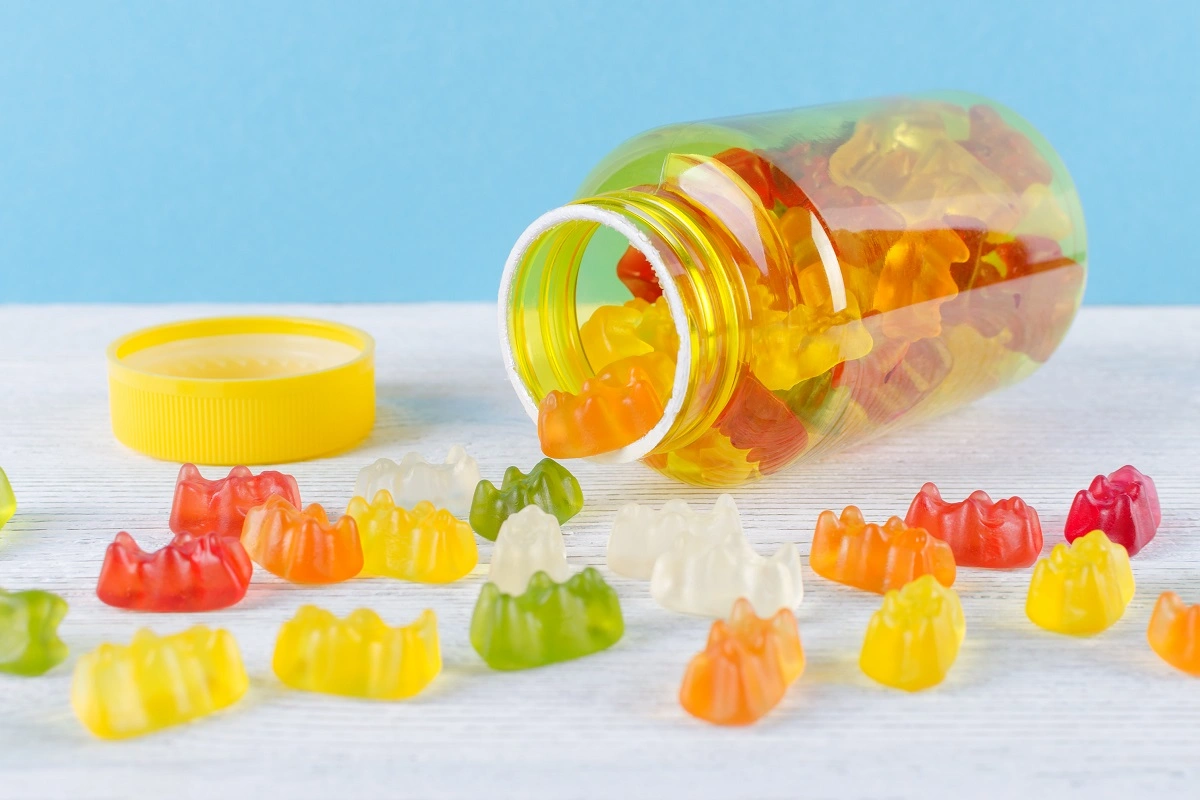 Brain health is jumping into daily foods and drinks, leading with trending formats like creatine in snack formats, functional mushrooms in fun flavors, and life-stage morning/evening pairings.The six-month, placebo-controlled trial, conducted by Kemin, included 59 healthy children aged 8–16 with at least four hours of daily screen time, who took a daily gummy with 5 mg of FloraGlo lutein or placebo. The findings were presented as conference abstracts and have not yet been published in a peer-reviewed journal.
“For me, the significance of these findings goes beyond the individual outcomes,” says Holstein. “The results highlight the growing potential of ‘neuronutrition’ — an approach that considers how nutrition can support brain health and cognitive performance throughout life.”
Rather than focusing solely on maintaining cognitive health as people age, Holstein says there is an opportunity to explore how a proactive approach to nutrition at every age, including in childhood and adolescence, could help lay the groundwork for positive brain health throughout life.
What’s next for brain supplements
Looking at the next big trend, Druke at Balchem expects cognitive well-being to become less of a standalone category and more of an intersection with other health segments. “We’re already starting to see this in the crossover with sports nutrition,” he notes.
“Today’s athletes are not only measuring performance by muscle gain, but also split-second reaction times, sustained focus through a hard leg day, and the coordination to nail a new personal best. To support fitness pros with this, brands such as our partner Ghost are already using choline in a variety of pre-workout formulations, including ready-to-mix formulations.”
In other category evolutions, McNamara at Saanroo anticipates menopause brain fog becoming its own segment, alongside products that pair the brain with muscle or metabolism, and calm focus over high-stimulant energy.
“I also expect gut-brain and sleep-to-brain claims will increase, while branded, clinically studied ingredients pull ahead of generic blends,” she adds. “I also firmly believe that gummy and drink launches that can’t prove their dose will face growing regulatory and reputational risk over the next 12–18 months.”
At Probi, Ramon believes that concepts built around daytime cognitive performance, evening well-being routines, and healthy aging will continue to grow in popularity. “Biotics paired with relevant micronutrients offer interesting possibilities, provided each benefit has evidence and permitted positioning.”
“Consumer interest does not establish technical suitability: for example, hot-drink applications would require specific validation of live-bacteria survival. Ingredient compatibility, moisture protection, and packaging remain central.”