


Targeted solutions and personalized nutrition drive innovations in active aging

Key takeaways
- Personalized nutrition is crucial for meeting the diverse needs of the active aging consumer, with a focus on cellular health, cognitive support, and longevity.
- Dairy ingredients, such as collagen-rich proteins and hydrolyzed proteins, are gaining attention for their ability to support muscle, bone, and joint health in aging adults.
- Ingredients such as magnesium, creatine, and collagen are emerging as essential for active aging, offering benefits in muscle, bone, cardiovascular, and cognitive health.
In an evolving active aging market, the nutrition industry highlights the importance of targeted, science-backed solutions to support a wide range of consumer needs. The market is shifting toward innovations that support “agelessness,” targeting the hallmarks of aging to support gut health, cognition, mobility, and beyond.
Nutrition Insight meets with Lactalis Ingredients, Valio, Lycored, Sirio, and Lonza Capsugel to explore key health benefits for aging consumers and longevity ingredients like collagen, dairy ingredients, minerals, and botanicals.
Elodie Macariou, senior product manager at Lactalis Ingredients, tells us how the concept of “agelessness” is redefining aging, shifting conversations from fear to personal fulfillment.

“Innovations are now targeting cellular health — ingredients that address hallmarks of aging, such as mitochondrial function and senescence, are gaining traction.”
“This shift combines science-backed claims with emotional storytelling to resonate with consumers. Personalized formulations using AI-driven data are also trending, offering tailored solutions for longevity and cognitive support,” she outlines.
Linda Kronseder, business development manager at Valio, adds that the active aging consumer is a heterogeneous group.
“Their needs, lifestyles, and health priorities vary widely, which means ‘one-size-fits-all’ solutions simply won’t work. Looking ahead, optimal nutrition for aging well will increasingly rely on personalized approaches: products tailored to specific needs, preferences, and health goals.”
In addition, Kronseder notes that gut health is gaining “fresh momentum” as a pillar of healthy aging. “This opens meaningful opportunities for dairy manufacturers looking to develop microbiome-supporting solutions for senior consumers. These dynamics point to a future where personalization, protein quality, and gut health form the foundation of innovation in the active-aging category.”
Looking for eternal youth
Macariou at Lactalis Ingredients notes that consumers are increasingly shifting from aging well to pursuing eternal youth or agelessness, seeking measurable results and science-based solutions for longevity.
 Macariou says the hallmarks of aging are becoming a central focus in active aging research, in addition to biological age reversal.“Demand is growing for products that combine inner beauty, cognitive support, and cellular rejuvenation. High-quality proteins like whey and casein are increasingly recognized as essential for preserving lean mass and preventing sarcopenia.”
As the next major trend in this space, she points to healthy lifespan optimization, where supplements improve quality of life through ingredient-focused solutions based on the science of longevity. Moreover, she says that women’s health and menopause support will remain strong sub-trends.
The hallmarks of aging are becoming a central focus in active aging research, adds Macariou. “Studies explore how nutraceuticals — including polyphenols, omega-3 fatty acids, bioactive peptides, creatine, and collagen — support cognitive health, musculoskeletal integrity, and immune resilience.”
“There’s a growing focus on biological age reversal and gut-brain axis modulation, with brands investing in peer-reviewed evidence to differentiate in a crowded market,” adds Macariou.
The biology of aging
Elizabeth Tarshish, Ph.D., head of Product and Science at Lycored, similarly notes that research is shifting toward building precise biological understanding, building on the hallmarks of aging, such as mitochondrial function, oxidative and inflammatory stress, and cellular senescence — a state where cells stop dividing.
“These areas are strongly linked with energy production, tissue recovery, and long-term resilience,” she details.
“Carotenoid research is progressing quickly, especially around cellular-level protection. Key health areas include cardiovascular strength, metabolic wellness, cognitive performance, immune balance, and skin health.”
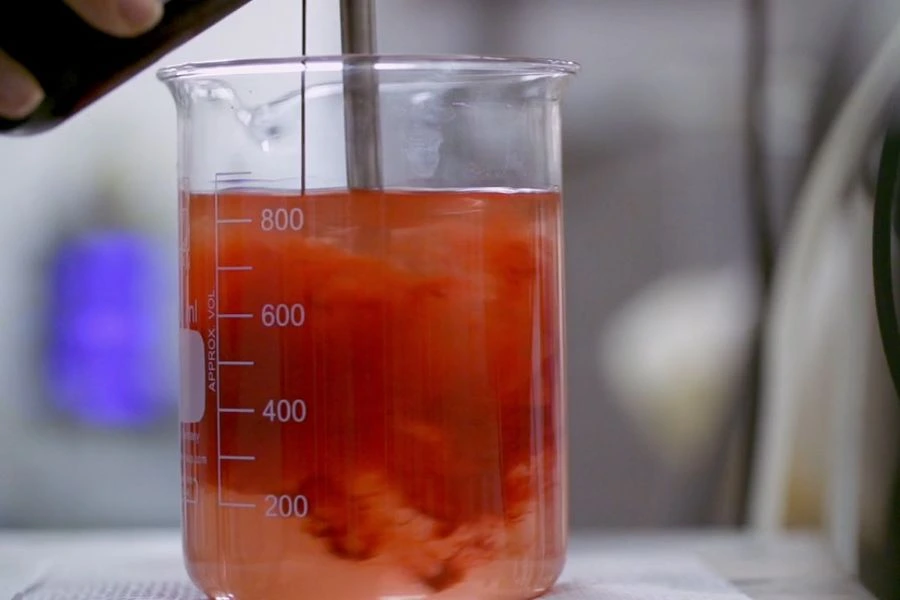 Tarshish says that encapsulation advances enable lipophilic compounds like carotenoids to remain stable and active in beverages (Image credit: Lycored).Tarshish notes that Lycored is expanding this work with its lycopene-rich tomato extract Lycomato, investigating longevity markers, stress responses, and cellular aging models to “better understand how a natural tomato complex may influence longevity-related pathways.”
“One of the main challenges is translating very complex biology into clear and responsible value statements that consumers can understand and trust. The science of aging involves many interconnected pathways, and companies need to communicate benefits in a responsible and evidence-based way.”
Meanwhile, she notes that a key opportunity lies in this complexity. “Brands that invest in strong clinical programs and detailed mechanisms of action research can stand out. A well-substantiated story that explains how a specific natural complex supports several dimensions of cellular wellness has much more impact than generic claims about antioxidants or vitality.”
Multifunctional dairy proteins
Anu Turpeinen, Nutrition Research manager at Valio, highlights the potential of dairy-based ingredients as more senior consumers seek optimal nutrition that is “natural, familiar, and trustworthy.” She highlights that dairy ingredients are naturally rich in high-quality protein, phospholipids, vitamins, and minerals that support health throughout the aging process.
“Collagen is a great example of an ingredient currently generating significant interest,” she emphasizes. “What many people may not realize is that milk proteins can stimulate the body’s own collagen production by supplying the key amino acids needed for synthesis. This creates exciting opportunities to use well-known, widely accepted dairy ingredients in new and innovative active-aging applications.”
Turpeinen notes that technology plays an increasingly important role in enhancing the delivery and effectiveness of nutrition for active aging.
“One example is protein hydrolysis, which improves absorption efficiency — a key benefit for older adults whose digestive capacity may naturally decline with age. Hydrolyzed proteins can also help reduce the gastrointestinal discomfort that some people experience with higher-protein diets.”
 Turpeinen highlights the potential of dairy-based ingredients as senior consumers seek natural and familiar nutrition options (Image credit: Valio).Moreover, she points to a strong potential for innovation in the lactose-free segment, which can expand consumers’ access to dairy’s nutritional advantages.
“While milk and dairy products are widely recognized as excellent sources of nutrients that support muscle, bone, and joint health, lactose intolerance remains a significant barrier: a majority of the world’s population cannot consume regular dairy due to lactose malabsorption.”
Hero ingredients
In addition to dairy, Sara Lesina, general manager of Sirio Europe, highlights other key ingredients for active aging, such as magnesium. She says that this mineral remains on top of active aging innovation due to its role in muscle, bone, cardiovascular health, and energy production.
However, she notes that its diverse benefits can make it difficult for consumers to identify the best sources. For this reason, Sirio recently expanded its Sirio X Mg portfolio to include six ready-to-launch concepts with options that combine magnesium taurate, citrate, and glycinate sources for a “maximum range of health-supporting benefits.”
Creatine is also attracting more attention in the active aging market, says Lesina. “Well researched and widely used in broader active nutrition supplements, creatine has also been found to benefit aging muscle and bone when combined with exercise.”
She continues: “Ingredients like krill oil, astaxanthin, and omega-3/vitamin D combinations are particularly interesting and well-researched in the context of active aging. Their benefits to joint, cardiovascular, muscle, cognitive, metabolic, and cellular health — all fundamental aspects of active aging — are well-documented.”
Moreover, Lesina points to nicotinamide adenine dinucleotide (NAD+) as an emerging focus area. Although most NAD+ research is conducted on animals, Lesina notes that there are early indications that the compound may also benefit humans.
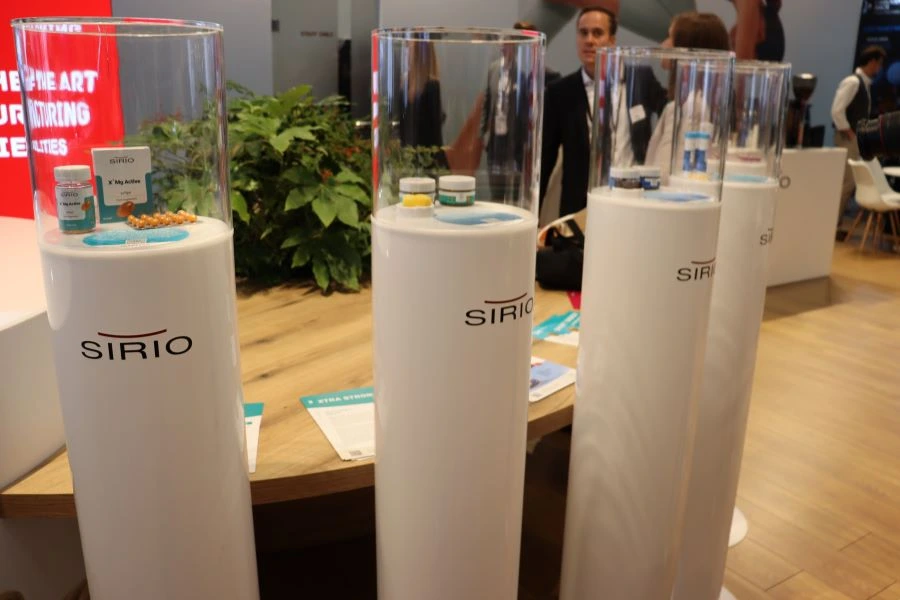 Sirio presented its extended magnesium portfolio at this year’s CPHI trade show, with options for a maximum range of health supporting benefits.“Scientists are increasingly studying more objective cellular or molecular models of measurement to assess the impact of these nutrients in older, active consumers. For instance, the ‘Vital’ trial results published this year looked into the effects on telomere length attrition of vitamin D3 and marine omega-3 supplementation in women over 55 and men over 50.”
The Sirio Institute of Healthy Aging takes a similar approach, collaborating with longevity experts to develop an evidence-based framework that validates nutritional biomarkers, co-creates industry gold standards, and transitions claims from marketing to robust, measurable science. Lesina adds that inflammation markers (inflammaging) and mitochondrial support are two of the institute’s early focus areas.
Collagen for joint health
Shelby Linville, associate director of Global Product Marketing at Lonza Capsugel, adds that mobility is a “fundamental piece of the active aging puzzle.”
“The ability to move well is intrinsically linked with active lifestyles and overall health and well-being in the long term. As such, joint health — which supports the maintenance of mobility and flexibility — has emerged as a key area of innovation in the active aging space.”
Although she observes strong growth in products with collagen for joint health, Linville underscores that not all collagen is created equal. She highlights Lonza Capsugel’s UC-II undenatured type II collagen ingredient, which requires a small daily dose of 40 mg to improve joint flexibility.
“Type II collagen is the main structural protein in cartilage, the tissue that cushions joints, and there are two main forms on the market — hydrolyzed and undenatured. Hydrolyzed collagen has been broken down or denatured into smaller molecules, called peptides, that function as building blocks for the formation of joint tissues.”
“Undenatured type II collagen is a form of collagen that retains its native, triple-helix structure,” she explains. “This collagen works through a unique mechanism of action that triggers the immune system to help support the body’s natural cartilage repair process and promotes building of new cartilage.”
Linville recommends nutraceutical brands to tailor their products to fit consumers’ diverse active lifestyles and preferences.
“This can present challenges for formulators, as many key ingredients require large daily doses, limiting delivery format innovation. The requirement of large doses for efficacy also limits the ability to create holistic health solutions for consumers looking to address a variety of active aging wellness priorities.”