




NAD+ may shield brain from degenerative effects of Alzheimer’s disease

Key takeaways
- Boosting NAD+ levels may protect the brain from Alzheimer’s disease by correcting mistakes in RNA splicing, improving gene functions that are crucial for brain health.
- The neuroprotective effect of NAD+ helps the protein EVA1C in correcting the RNA splicing issues caused by toxic tau protein.
- NAD+ supplementation benefits were validated in animal models, showing improved RNA splicing, restored brain function, and enhanced memory performance.
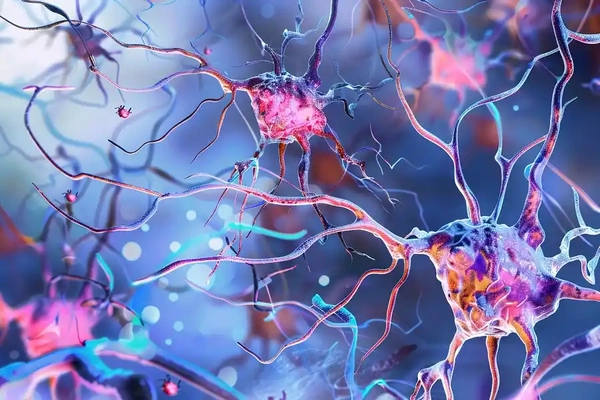
International researchers have uncovered how boosting NAD+ may help protect the brain from the degenerative effects of Alzheimer’s disease. As a vital metabolite in energy metabolism and neuronal resilience, NAD+ in the body naturally declines with age, especially in neurodegenerative diseases.
The tau protein plays a major role in neuronal dysfunction in Alzheimer’s disease, according to the study. It typically keeps the internal structure of neurons stable, similar to how railways keep trains on course, as the researchers highlight.
However, in some diseases, tau undergoes abnormal changes and begins to aggregate, disrupting this “transport system,” leading to neuronal damage and memory loss.
The researchers discovered that when NAD+ levels are increased, a protein called EVA1C corrects mistakes in RNA splicing more effectively. This restoration process improves hundreds of gene functions, many crucial for brain health, which can help reverse the neurodegenerative damage caused by tau.

“Notably, we found when the EVA1C gene was knocked down, these benefits were lost, confirming that EVA1C is essential for NAD+-mediated neuroprotection,” associate professor Evandro Fei Fang-Stavem says.
“We propose that maintaining NAD+ levels could help preserve neuronal identity and delay cognitive decline, paving the way for combination treatments to enhance RNA splicing,” says study first-author, Alice Ruixuei Ai.
They first identified age-related changes in RNA splicing in a specific type of worm. They found that adding NAD+ could correct the splicing issues caused by the toxic tau protein.
In mice with tau-related mutations, NAD+ supplements improved RNA splicing, restored brain function, and enhanced memory performance.
Investigating NAD+ precursors
The research team behind the paper, published in the journal Science, involved partners from Norway, China, Portugal, the UK, Japan, Greece, and Spain.
They highlight that previous studies support that supplementation with NAD+ precursors, such as nicotinamide riboside (NR) or nicotinamide mononucleotide (NMN), can offer therapeutic benefits in Alzheimer’s disease animal models and early clinical trials.
“However, the molecular mechanisms behind these benefits remain largely unclear,” says Ai.
The new study reveals that NAD+ works through a previously unidentified RNA-splicing pathway.
The EVA1C protein, which plays an essential role in RNA splicing, regulates this pathway. RNA splicing enables a single gene to produce multiple isoforms of a protein, and each isoform may exhibit distinct effects compared to the others. The dysregulation of this system is among the most recently acknowledged risk factors for Alzheimer’s disease.
AI tools to study brain proteins
To investigate the impact of this mechanism, the researchers used a comprehensive approach that included computer predictions and validation in various animal models, including worms, mice, and human brain samples.
In mice with tau-related mutations, NAD+ supplements “improved RNA splicing, restored brain function, and enhanced memory performance.”
“Notably, we found when the EVA1C gene was knocked down, these benefits were lost, confirming that EVA1C is essential for NAD+-mediated neuroprotection,” explains associate professor Evandro Fei Fang-Stavem.
Aligning with these animal studies, EVA1C levels were significantly reduced in brain cells from people with early Alzheimer’s disease.
To further examine how EVA1C functions, the research team used an AI-driven platform to predict protein interactions, analyzing structural, sequential, and evolutionary data from millions of proteins.
This analysis revealed that NAD+ promotes a specific form of EVA1C that efficiently binds to essential proteins, which are essential to protein folding and clearance.
“This connection links metabolic homeostasis, RNA splicing processes, and protein management — three processes that are critically impaired in Alzheimer’s disease,” summarize the researchers.
Dietary interventions for Alzheimer’s
By establishing the connection between NAD+ and EVA1C, the study points to potential new therapies and optimization of NAD+ strategies in humans. These have been gaining ground as longevity supplements are trending.
Alzheimer’s disease is the leading cause of dementia and affects nearly 40 million individuals globally, underscore the researchers. Despite extensive research over the past decades, no treatments have been found that can halt or reverse the progression of this devastating disease.
However, advances in dietary research around Alzheimer’s continue to support preventative therapies. Japanese scientists recently uncovered that oral arginine, a naturally occurring amino acid, may significantly reduce a precursor to Alzheimer’s disease. In their experiment involving mice and fruit flies, arginine lowered amyloid β plaque formation.
Another study from the UK supports that omega-3 fatty acids may help protect women against Alzheimer’s disease, potentially more than men. Women with the disease exhibited a noticeable loss of unsaturated fats in their blood samples, such as those containing omega fatty acids.
Meanwhile, a report in Nature Medicine revealed that people with the highest genetic risk for Alzheimer’s disease tend to benefit more from following a Mediterranean-style diet.