






UC Davis to advance healthier, sustainable food systems with Scotts Miracle-Gro

Key takeaways
- UC Davis’ IIFH is partnering with Scotts Miracle-Gro to explore soil health and its connection to better food quality and human well-being.
- The collaboration combines microbiome science, advanced analytics, and plant biology to improve soil health and enhance plant nutrition.
- The partnership aims to develop sustainable, science-backed products that improve soil quality, increase crop resilience, and promote healthier food systems.
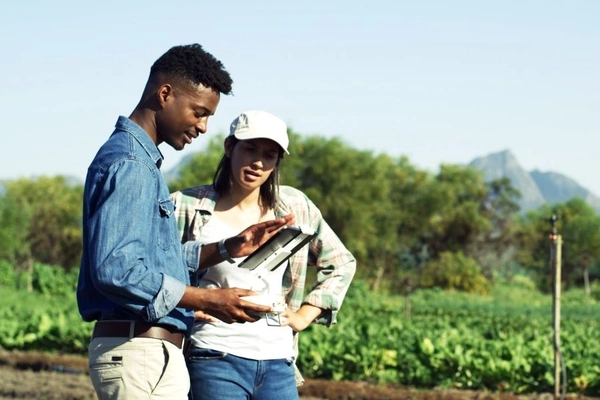
The University of California (UC) Davis Innovation Institute for Food & Health (IIFH) is partnering with ingredient supplier ofi and Scotts Miracle-Gro, a marketer of garden products. With both partnerships, IIFH aims to advance science-driven innovation across the food system to make healthier products for people and the planet.
IIFH notes that, with these partnerships, it takes a systems-level approach to food and health innovation, leveraging Scotts Miracle-Gro’s expertise in soil and crops and ofi’s knowledge of functional ingredient innovation.
In this first installment of a series on the partnerships, Nutrition Insight speaks with Shaun Berry, VP of Innovation and Growth at Scotts Miracle-Gro. With IIFH, the company aims to accelerate research connecting soil ecosystems, crop performance, and human well-being.

“The health of the food we grow and eat is inextricably linked to the health of the soil in which it is grown. The soil is often the unseen, unknown, neglected part of the growing process,” Berry tells us.
“We’d like to learn more about this soil ‘black box’ and develop ways to improve soil health, which will then translate to better plant health, better food, and ultimately better human health. It all starts with the soil.”
Understanding the soil microbiome
IIFH and Scotts Miracle-Gro will explore the scientific foundations of soil health, plant biology, and the nutritional potential of garden-grown produce.
The partnership will combine UC Davis’ microbiome science, multi-omics technologies, AI, and translational health research with Scotts Miracle-Gro’s lawn and garden innovation experience.
Justin Siegel, IIFH faculty director and professor of Chemistry, Biochemistry, and Molecular Medicine at UC Davis, highlights: “By integrating advanced analytics, microbiome research, and nutritional profiling, we can generate actionable insights that help improve plant health and enhance the nutritional quality of food.”
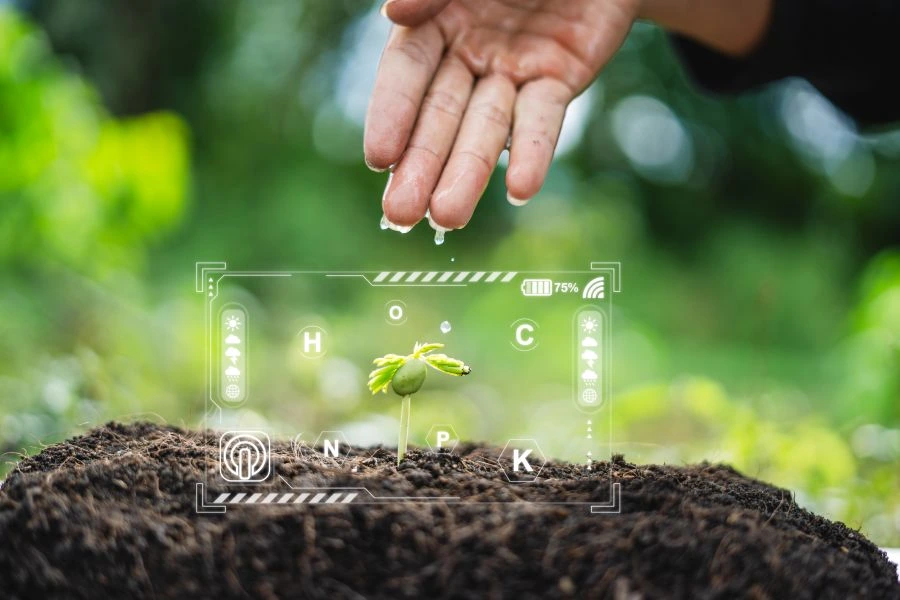 Berry says that the health of the food we grow and eat is inextricably linked to the health of the soil in which it is grown.Berry tells us there is no full understanding of all the soil microbiome profiles and their impact on the overall health of lawns and gardens. “We’d like to measure these, generate a baseline, and see how it differs between various soils and plants.”
“We can then measure the effect of adding various nutrients or other inputs to improve the health of the soil while simultaneously enhancing plant and lawn health. This will help inform our product development as we further hone and create future solutions that consumers can use to tend to their gardens and yards in safe and high-performing ways.”
Berry highlights that with this information, the partners will be able to gauge which products have an effect, which don’t, and the type of effect they have.
“We can then provide our consumers with scientifically proven products that actually benefit their soil, leading to a healthier harvest and more nutritious food.”
Advancing soil health
Previous research has linked soil health to crop nutritional value. For example, last year, scientists created a microbial map revealing how food system actors should restore and protect shrinking gut, soil, and food microbiomes to boost both human and planetary health.
Moreover, research suggests that micronutrients shaped human evolution through genetic adaptations in metabolism and regulation, while the study authors warned that soil depletion and climate change may increase the risk of deficiencies or toxicities across populations.
Berry says that soil health and functional ingredients align in several ways to create more nutritious foods and support human well-being: “Think of the chemical and physical components of your soil as the conventional, basic building blocks of soil providing nutrition and structure for the plants to grow.”
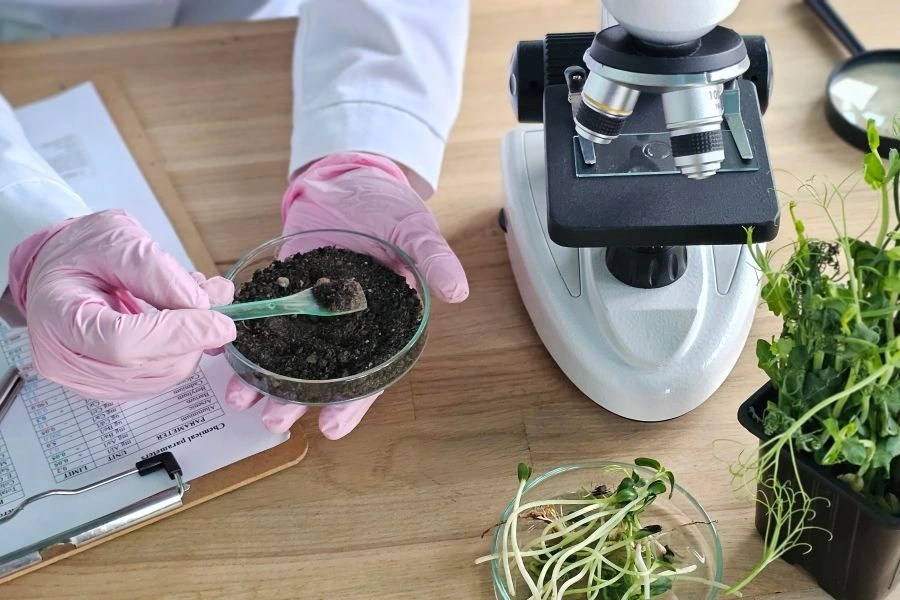 IIFH notes that the partnership with Scotts Miracle-Gro could translate laboratory discoveries into scalable solutions.He adds that the soil microbial population could also be thought of as additional functional ingredients that offer “greater stability, provide longer-lasting nutrition for the plant, increase resilience to adverse conditions, and make nutrients more available.”
Scalable solutions for sustainability
IIFH notes that the partnership with Scotts Miracle-Gro has the potential to translate laboratory discoveries into scalable solutions to support growers and gardeners through the company’s consumer reach and product innovation capabilities.
“This translational approach strengthens the partnership’s ability to convert scientific insight into practical applications that deliver measurable environmental and nutritional benefits,” states the UC Davis institute.
Berry highlights several key challenges that limit the health and sustainability of food systems, which the partnership aims to address.
“The biggest challenge with soil is that it is ‘out of sight and out of mind.’ We walk on it. We dig into it. We use it to grow plants. But we don’t know much about it. We take it for granted. We may or may not add fertilizer, and we think that’s all we have to do. Yet, in reality, there is so much more we can do to keep our soils healthy, well-balanced, and thriving.”
“In one teaspoon of soil, there are approximately five billion microbes. Almost the number of the entire Earth’s population in one spoonful of soil,” he details.
He highlights several unanswered questions, such as how to identify good and bad microbes, what constitutes a good or bad soil microbiome, and how to influence the soil to be healthier and produce more with fewer resources.
“That is the ultimate challenge and a way to make our soils more sustainable,” Berry concludes.