



Canine cognition: Spirited Paw on designing pet brain health supplements for aging dogs


Key takeaways
- Spirited Paw’s new pet supplement uses farm-grown nutrients, phosphatidylserine, and MCT oil to support memory and energy metabolism in aging dogs.
- Cognitive decline is surprisingly common in pets, with over 25% of dogs aged 11–12 affected and some shifts beginning as early as age six.
- The brand focuses on high palatability and “human-quality” ingredients to meet rising demand from North American and European owners for proactive brain health tools.

Spirited Paw, a pet nutrition brand by Standard Process, has released its latest innovation, Healthy Mind — a new brain health supplement for aging dogs showing signs of cognitive and behavioral changes.
The product offers support for memory health, featuring organic, nutrient-dense beets, brussels sprouts, buckwheat, and Swiss chard.
Nutrition Insight speaks to Katrina Verdeur, who leads Standard Process’ product development for pets, about the launch, its formulation design, and her insights on the emergent consumer segment for pet brain health.
“When designing supplements for cognitive health, I review published scientific literature, information on traditionally used herbal remedies, and nutritional components supportive of cognition to help formulate a base of ‘must-have’ ingredients,” she details.
“Once the base of ‘must-have’ ingredients is formulated, the addition of organic farm crops is incorporated.”
Spirited Paw sources its ingredients from a more than 850-acre farm based in Palmyra, Wisconsin, US.
“Farm ingredients that provide the most relevant nutrient profile supportive of cognition and healthy aging are selected,” continues Verdeur. “Other ingredients to encourage palatability, provide additional nutrients, and help with manufacturability of the supplement are also important to complete the design.”
Canine cognitive symptoms
Aging dogs display symptoms of cognitive decline such as difficulty following previously learned cues, reduced interest in play or affection, and more frequent house accidents, according to Spirited Paw.
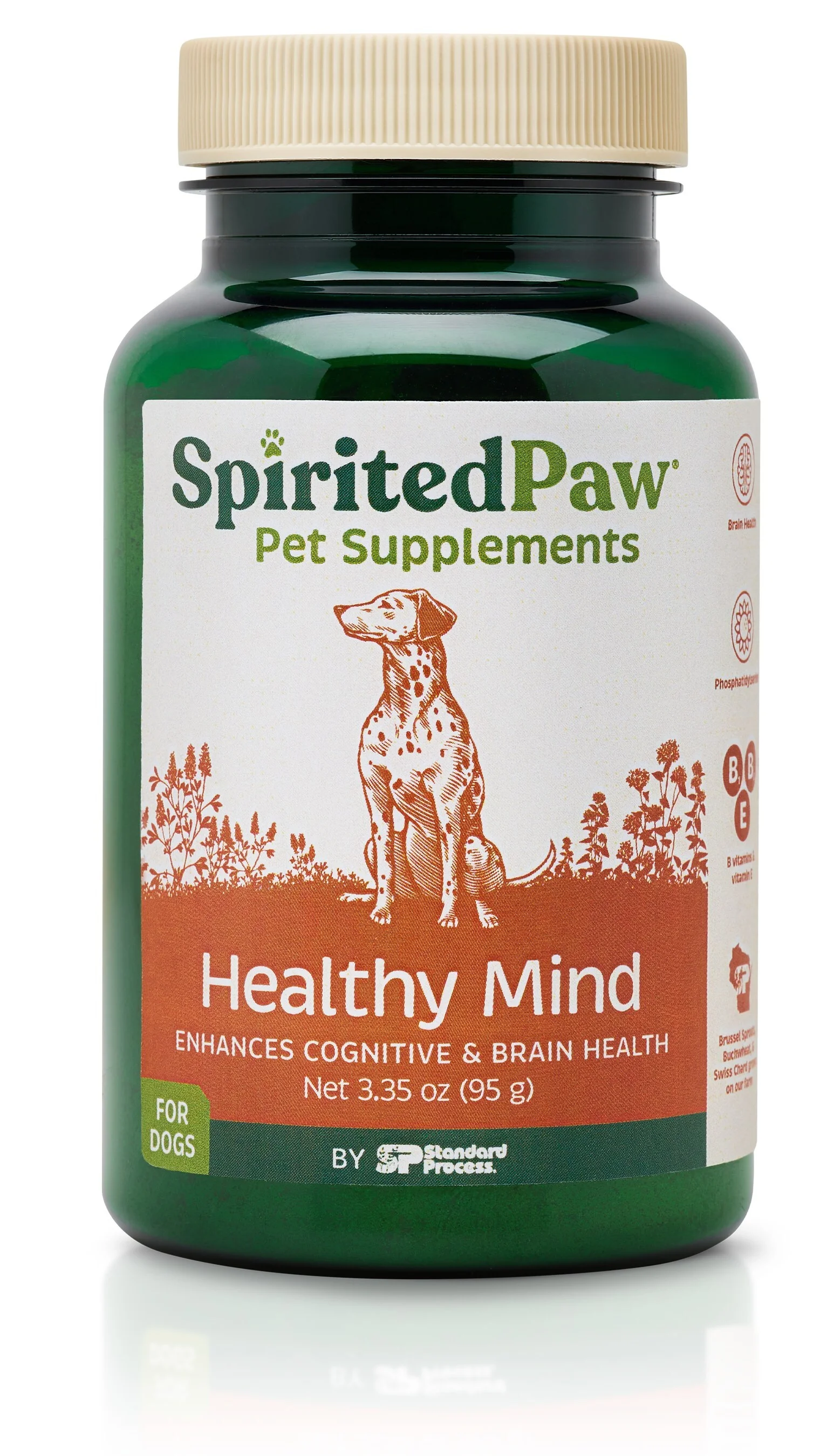 Spirited Paw canine cognitive and brain health supplement (Image credit: Spirited Paw).While these are concerning, research shows these shifts are quite common, with over a fourth of canines aged 11–12 years experiencing brain health issues. One study found that these shifts can begin as early as age six.
Healthy Mind is formulated with phosphatidylserine, essential B vitamins, and vitamin E. According to the brand, these “human-quality” ingredients offer nutritional support for memory health, benefit mood and stress response, and promote overall cognitive health.
“Phosphatidylserine is an important phospholipid in the brain, showing a natural reduction in prevalence as dogs age,” Verdeur highlights. “Adding it into the diet helps to increase or contribute to the phospholipid pool in the brain.”
This inclusion influences cellular communication and protects against free radical oxidation and helps maintain neuronal health in dogs, she notes. “A study in dogs showed supplementation of phosphatidylserine benefited signs of canine cognitive dysfunction.”
Healthy Mind also contains organic medium-chain triglycerides (MCT) oil, which is a type of fat often used in cognitive supplements for humans and contributes to energy supply in the aging dog brain. Emerging research backs this ingredient’s promising support for canine cognitive health.
“Glucose utilization decreases in the brain as pets age. Adding MCTs to the diet of dogs provides a source of energy without affecting glucose utilization, which is crucial in older animals,” says Verdeur.
Meanwhile, the product’s B vitamins are touted to support canine cognition in multiple ways, such as serving as coenzymes for neuroprotection, supporting neurotransmitter production, and supporting energy metabolism to support mood and memory.
Emerging market niche
Verdeur comments on global markets that are currently most receptive to pet mental health products and what will help drive broader adoption. “North American and European markets of pet owners and veterinarians are receptive to tools that can help support their pets with signs of canine cognitive dysfunction (CCD).”
“As more pet owners become aware of the signs of CCD, their demands will push for broader adoption of supplemental health products for pets.”
Looking ahead at future trendy product formats for cognitive ingredients, Verdeur expects chews to continue being popular among pet owners. “Any format that encourages pets to willingly eat or consume supplements, making them seem like a treat, can help any health supplement category expand.”
“If it is highly palatable, any format has the potential to expand further use and application in other animal categories. A nutritious, palatable base serves as a good foundation to incorporate various actives supportive of different animal health and wellness conditions.”
Verdeur also comments on what other niche target health areas for animals could be expanded in future product launches. “I’m interested in emerging health topics for early spay/neuter support, metabolic support, additional antioxidant support, natural flea/tick prevention, and fresh food toppers. Many of these types of supplements can help support the longevity and health of pets, making a difference in their quality of life.”
Targeted pet health product development
In other new product developments targeting emerging health areas for pets, ADM’s gut health supplement Priome recently demonstrated metabolic health benefits in a trial with pet dogs. The findings include a reduction in post-meal blood sugar, as well as improved digestibility and gut hormone levels.
A representative from ADM, who spoke with Nutrition Insight, elaborated that growing consumer awareness around the benefits of pre-, pro-, and postbiotics for humans is being reflected in pet products. According to a company-backed survey, most pet owners have purchased biotics for their pet at least once.
Meanwhile, the growing use of GLP-1 supplements and pharmaceuticals among humans is being reflected in pet health research. Biotech pet nutrition specialist Akston recently spearheaded clinical research to assess how its once-weekly GLP-1 protein helps cats regulate their appetite for better weight management.