





International review challenges protein satiety, quality and weight loss assumptions

Key takeaways
- International experts say that science does not firmly establish protein as the most satiating macronutrient, as fullness levels do not always predict actual food intake.
- Animal protein rate is higher in quality due to their amino acid scores, but individual amino acid composition and digestibility matter just as much as total quantity.
- Maintaining a steady, usual protein intake provides the primary benefit during weight loss, though older adults likely require higher amounts to preserve muscle mass.
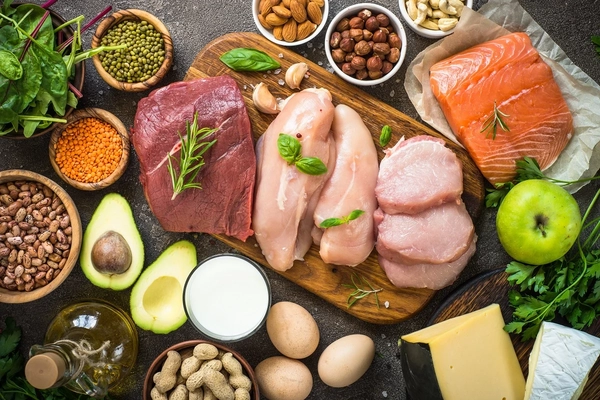
A new paper authored by over 20 international protein researchers critically reevaluates common claims about dietary protein needs and benefits. Funded by the US National Pork Board, the report debunks the belief that protein is uniquely satiating, while arguing that animal proteins offer better quality than plant-based options. On weight loss, it reveals that a steady protein intake may be more beneficial than simply boosting intake.
The paper reviews evidence on protein quantity, protein quality, essential amino acid adequacy, digestibility, satiety, aging, muscle mass, weight loss, chrononutrition, and protein leverage, ranking the strength of evidence for each proposition on a scale. The paper covers the proceedings of a scientific workshop designed to explore beliefs about dietary protein.

“Protein science has advanced significantly, but despite thousands of published studies, in some instances there is still a lack of publicly available quality data,” says first author Mitch Kanter, Ph.D., principal at Mitch Kanter Health & Nutrition Insights and adjunct associate professor at the University of Minnesota, US.
“The significance of this workshop was rooted in bringing together the leading protein science experts to clarify what we know, identify what we still need to learn and encourage a more evidence-based discussion about dietary protein and human health.”
Animal-sourced versus plant-based
The peer-reviewed paper published in Critical Reviews in Food Science and Nutrition concludes that animal-sourced proteins rate higher than plant-based proteins on quality, relying on evaluations using the widely adopted digestible indispensable amino acid score (DIAAS).
However, critics have previously cautioned that an overreliance on such methods may limit understanding of protein quality, as these do not measure amino acid bioavailability or the impact of protein combinations on nutrient absorption.
The new paper builds on a body of meat industry-funded research advocating that this food group is not linked to a higher risk of death. However, compelling scientific literature finds that consuming these foods comes with the risk of raising saturated fat levels, which can lead to cardiovascular health issues. Research also supports that plant proteins can help fill the global fiber gap.
Another key finding in the current paper is that protein quality matters as much as quantity, because protein-rich foods differ in amino acid composition, digestibility, and bioavailability.
Moreover, the authors note that individual essential amino acids have specific biological roles, as leucine, methionine, threonine, and branched-chain amino acids (BCAAs) each affect specific metabolic pathways.
They add that the Current Recommended Dietary Allowances (RDAs) for individual essential amino acids may underestimate true physiological needs for functions beyond basic protein synthesis.
Supporting satiety
Protein may support fullness, but the authors say the science around this is more nuanced than common messaging suggests.
While protein is widely considered a satiating nutrient and some studies show higher-protein diets can modestly increase fullness, the experts argue that current evidence does not firmly establish protein as “uniquely or consistently the most satiating macronutrient.”
They also note that appetite is difficult to measure and that feelings of hunger or fullness do not always predict food intake in real-world settings. Additionally, protein’s effects may depend on the food source, eating occasion, diet pattern, and individual context.
The report highlights that protein timing and distribution across the day show early promise. “Distributing protein more evenly across meals, particularly increasing protein at breakfast, may support muscle mass,” suggest the authors.
Weight loss and kidney health
The evidence cited in the paper supports a higher protein intake during weight loss, but with some nuance. The authors suggest that while people losing weight may need more than the standard daily recommendation, the real benefit comes from keeping protein intake steady, rather than just packing on extra grams.
The paper also cites strong experimental and observational evidence that diets low in protein relative to fat and carbohydrates drive increased total calorie consumption that can contribute to obesity.
Older adults likely need more protein than current guidelines recommend, add the authors. Evidence suggests protein intakes of 1.2–1.6 g/kg/day or more may be needed to preserve muscle mass and function with aging.
High protein intake did not appear harmful to healthy kidneys, note the authors. For example, a systematic review of randomized control trials found no adverse kidney effects at intakes up to 1.5 g/kg/day or 20% of energy.
When is protein harmful?
The paper does not establish a threshold above which protein is harmful. The review found no adverse effects of protein intake above the RDA for healthy adults across several disease categories, such as cardiovascular disease, type 2 diabetes, and sarcopenia.
It identifies several priorities for future protein science, including larger, longer randomized controlled trials with clinical endpoints instead of surrogate markers like muscle protein synthesis rates.
Additionally, the authors flag a gap in data about protein needs across diverse populations, including children, adolescents, and people using GLP-1 receptor agonists for weight loss.