



Research affirms polyphenols’ long-term heart health benefits

Key takeaways
- Long-term consumption of polyphenol-rich foods is associated with a slower increase in cardiovascular disease risk as people age.
- For the first time, the researchers analyzed a wide variety of metabolites in the urine that are produced when the body breaks down polyphenols.
- Measuring overall dietary patterns (beyond only total intake) offers a more accurate prediction of heart and neurological health benefits.
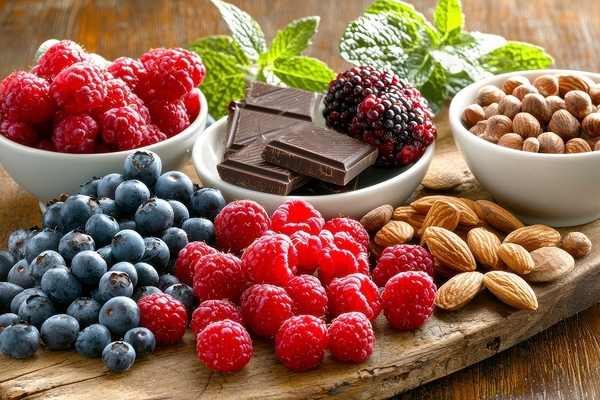
Consuming polyphenol-rich foods and drinks — including tea, coffee, berries, cocoa, nuts, whole grains, and olive oil — may have improved long-term heart health, according to new cardiovascular disease research.
The study, led by King’s College London, UK, found that participants who aligned their diets rich in these foods had a lower predicted cardiovascular disease risk. For over a decade, the study tracked more than 3,100 adults from the TwinsUK cohort.
“Our findings show that long-term adherence to polyphenol-rich diets can substantially slow the rise in cardiovascular risk as people age. Even small, sustained shifts toward foods like berries, tea, coffee, nuts, and whole grains may help protect the heart over time,” says senior author Ana Rodriguez-Mateos, professor of Human Nutrition at King’s College London.

The researchers note that while cardiovascular risk naturally increases with age, higher polyphenol intake was associated with a slower progression of risk over the 11-year follow-up period.
Potent polyphenols
Polyphenols are natural compounds found in plants that are linked to various health benefits, including improved heart, brain, and gut health.
The study in BMC Medicine found that diets rich in specific groups of polyphenols were linked to healthier blood pressure and cholesterol profiles, contributing to lower cardiovascular disease risk scores.
For the first time, the researchers also analyzed a large number of metabolites in the urine that are produced when the body breaks down polyphenols.
These biomarkers confirmed that individuals with higher levels of polyphenol metabolites — particularly those from specific groups of polyphenols, flavonoids, and phenolic acids — were at lower risk of cardiovascular disease.
These participants also had higher levels of HDL cholesterol, known as “good” cholesterol.
Heart-healthy foods
Using a newly developed polyphenol dietary score to capture intake of 20 key polyphenol-rich foods commonly consumed in the UK, the researchers examined foods and beverages ranging from tea and coffee to berries, olive oil, nuts, and whole grains.
The score better captured cardiovascular health associations than total polyphenol intake because it measured entire dietary patterns instead of specific compounds.
The findings suggest that considering a person’s whole diet offers a more accurate picture of how polyphenol-rich foods work together to support long-term heart health.
“This research provides strong evidence that regularly including polyphenol-rich foods in your diet is a simple and effective way to support heart health. These plant compounds are widely available in everyday foods, making this a practical strategy for most people,” concludes Dr. Yong Li, first author of the study.
The researchers underscore the need for future dietary intervention studies to further validate these associations.
Polyphenol research highlights
In other research highlights, scientists in Spain recently discovered that applying high heat to fruit and vegetable smoothies increases the absorption of beneficial polyphenols in the human gut microbiome. This is in addition to the usual benefits of preservation and increased shelf life.
In commercial R&D, a recent study revealed that daily supplementation with 740 mg of Euromed’s high-polyphenol pomegranate extract Pomanox leads to a small but statistically significant boost in insulin-like growth factor-1 (IGF-1) in older adults. IGF-1 supports normal cell growth and repair and typically declines with age.