


Kerry launches Safeguard Ashwagandha platform to address botanical safety concerns


Key takeaways
- Kerry launches Safeguard Ashwagandha to centralize evidence and counter misinformation on ashwagandha safety.
- The company performed over 15 clinical trials and various preclinical studies that show Sensoril ashwagandha is safe, with a new study confirming safety at doses 19 times higher than standard.
- The initiative aims to inform regulators and the public with peer-reviewed data, supporting responsible, evidence-based policy decisions.

Kerry has unveiled Safeguard Ashwagandha, a campaign and online platform aimed at addressing prevailing myths and misinformation on the safety of the botanical (Withania somnifera). With the launch, the company wants to put peer-reviewed research and clinical trial data at the heart of policy discussions on ashwagandha, as European regulatory authorities have taken precautionary positions.
Ashwagandha products have come under increased scrutiny regarding their safety in recent years. Denmark has banned the botanical in food supplements, and Dutch and French authorities advised against its consumption in specific population groups, back in 2024.
Kerry says the Netherlands and the UK are expected to finalize their safety assessments of ashwagandha soon, noting that the UK Committee on Toxicity is expected to finalize its assessment on May 19.
Jordan Dow, global VP at Kerry, tells Nutrition Insight it is crucial to balance the facts to counteract misinformation on the market. “What we stand behind is the science that goes into our products, the safety that we can prove, and the fact that we produce in India and Europe.”
He notes that Kerry has run 15 trials on Sensoril in the last ten years, the company’s standardized combination of ashwagandha root and leaf.
“Thousands of patients have gone through these trials, and we’ve had zero adverse events. We’ve actually run these trials on 19 times higher dosing than the standard Sensoril that we recommend from the preclinical work, and still, there were no adverse events in any of those.”
“This is an important point for us to make clear,” Dow reiterates. “We stand behind where we make it. We stand behind the safety that goes into it.”
 Dow says Kerry has run 15 clinical trials on Sensoril, with a 19 times higher dose than the recommended level, and found no adverse events in any of those.Safeguard Ashwagandha will serve as a repository for ashwagandha science, with analysis of the available scientific data on key topics and a detailed bibliography of supportive studies. It will also address concerns around root and leaf safety, liver risks, and other reported issues, linking to peer-reviewed scientific data.
Safeguard Ashwagandha
Kerry highlights that ashwagandha has been used for thousands of years in Ayurvedic medicine, and the safety and efficacy of the root and leaf have been substantiated in over 130 human clinical and preclinical studies.
Moreover, the company says international food safety authorities in Australia and Canada have concluded the botanical is safe for the general population.
Laura Collins, Ph.D., Research, Development, and Application director in Cognitive Health at Kerry, comments: “It is quite unfortunate we’re in an area of misinformation.”
“We’re really seeking to ensure that people have access to the correct information,” she details, noting that the site will “speak to the facts.”
She also highlights that the company and the program work with independent advisers, such as Thomas Brendler, Ph.D., an expert in medicinal plant use and regulation.
Brendler previously spoke to Nutrition Insight about ashwagandha’s safety record. He told us there is a “massive safety dossier,” with enough data to address concerns from food safety authorities in Europe.
Safeguard Ashwagandha is seeking supporters from academia, industry, public health, and consumer representative groups. Moreover, the campaign plans to partner with an independent scientific adviser who will support Safeguard Ashwagandha in scrutinizing the latest ashwagandha research and in supporting policymakers to develop sustainable, evidence-based policy frameworks.
Product safety update
Last month, a study published in Phytotherapy Research demonstrated that ashwagandha leaf is non-toxic and non-genotoxic. The study established a no observed adverse effect level of 4,000 mg/kg/day of Sensoril in rats. Kerry notes this is 19 times higher than the standard Sensoril dose of 125 mg.
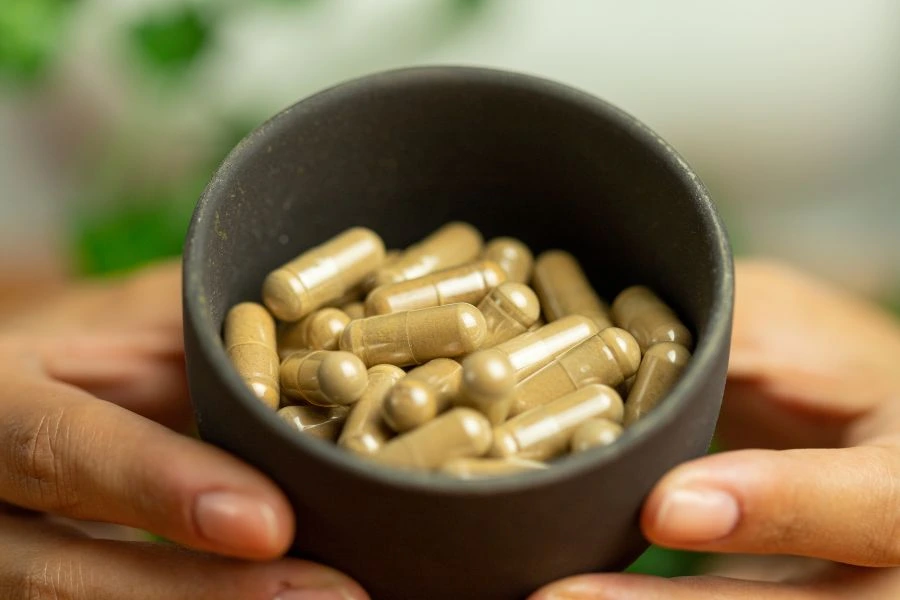 Denmark has banned ashwagandha in food supplements, following concerns that the botanical harms thyroid or sex hormones and may cause miscarriages.The study was led by Kerry’s global director of toxicology, Dr. Mukesh Summan, founding member of Safeguard Ashwagandha. The team tested doses up to 4,000 mg/kg/day on rats over 90 days and found no mortality, morbidity, adverse clinical signs, or test item-related changes in “weekly body weight, food consumption, ophthalmology, hematological, or biochemical parameters.”
The researchers used three tests compliant with the Organisation for Economic Co-operation and Development (OECD), UK, showing that Sensoril is non-genotoxic. Kerry notes that the study delivers toxicology data “that has been largely absent from the public domain when compared to the volume of clinical-trial studies available.”
Summan says the research landscape into ashwagandha’s safety is evolving rapidly. “We have modern science demonstrating its safety. Gold-standard clinical trials, OECD-compliant pre-clinical studies, meta-analyses, and systematic reviews have been published in peer-reviewed journals on the topic, with the overwhelming consensus being that ashwagandha is safe when dosed responsibly.”
“This study adds rigorous, OECD-compliant data to that evidence base,” he comments. “We have invested in generating this data and making it publicly available because we believe science, not precaution, should drive regulatory outcomes.”
What’s next for ashwagandha?
Summan says the launch of Safeguard Ashwagandha comes at a critical time for the botanical.
“While the weight of the scientific evidence stands in our favor, we face a serious situation in which myths and misinformation risk shaping policy outcomes. It’s vital that regulatory discussions focus on the science and evidence-based risk management processes.”
Alexandra Boelrijk, global VP of R&D in Proactive Health, Food Protection and Preservation at Kerry Group, adds that “dozens of clinical trials clearly demonstrate the safety of ashwagandha.”
 Previous research found that Sensoril boosted symptom management for postmenopausal women at 250 mg/day.Based on the Netherlands 2024 safety assessment, the country proposed adding ashwagandha to a list of banned plants in 2025 due to case reports on negative impacts on the liver, thyroid hormones, and cortisol.
While these effects have not been confirmed in clinical studies, the Dutch safety assessment concluded that people sensitive to ashwagandha may experience these effects. However, the assessment noted that it is unknown who is sensitive to the botanical. The assessment also refers to the WHO finding that the botanical was used to induce a forced abortion and advises not to use herbal preparations with ashwagandha, especially during pregnancy.
The consultation process on this proposal has been closed, but the Netherlands has yet to announce the ban publicly.
“The proposed ban overlooks the vast body of real-world scientific evidence showcasing its safety and numerous health benefits,” comments Boelrijk. “It also sets a concerning precedent for the treatment of the wider food and ingredients sector.”
She underscores that ashwagandha has been used in traditional medicine for centuries. “It helps thousands of people in the Netherlands to boost their brain health, ease anxiety, and support sleep. It is particularly important for women’s health, helping to reduce menopause symptoms and osteopenia.”
“We firmly stand by these studies and will be urging the Ministry to perform a complete risk assessment,” she concludes.