



International Women’s Day 2026: WIN urges gender equity across nutraceutical industry

Key takeaways
- WIN argues that gender equity is essential to innovation, credibility, and long-term growth in an industry where women drive healthcare decisions but remain underrepresented in senior leadership and investment roles.
- Despite greater visibility, structural barriers continue to restrict women’s progression to C-suite and board positions.
- WIN aims to expand mentorship, strengthen leadership pipelines, engage male allies, and embed accountability into corporate strategy.

Today’s 115th annual International Women’s Day celebrates the social, economic, cultural, and political achievements of women, but also marks a call to action to advance gender equality. Women in Nutraceuticals (WIN) urges for measurable progress within the nutrition sector.
Although women drive a significant share of healthcare decisions, WIN says they remain underrepresented in the nutraceutical industry’s senior leadership, investment, and scientific roles. The international non-profit organization aims to create an environment where women have an equal place in the global nutraceutical industry.
Rebecca Takemoto, WIN’s executive director, and Dr. Sybille Buchwald-Werner, board director at the organization, tell Nutrition Insight that closing the gender gap is a strategic imperative to boost innovation, governance, and business success.

“On International Women’s Day, I want to emphasize that gender equity in the nutraceutical industry is not just about fairness; it is essential to innovation, credibility, and impact,” says Takemoto.
“Our industry is dedicated to improving health and well-being, yet women remain underrepresented in senior leadership, investment decision-making, and scientific research roles. This gap matters.”
Buchwald-Werner adds: “This is not about reinforcing stereotypes. It is about aligning leadership representation with market reality and integrating complementary strengths.”
Why women’s leadership matters
Takemoto highlights that women drive a significant share of healthcare decisions globally, noting that diverse teams ask better questions, design more inclusive research, and identify unmet needs that might otherwise be overlooked.
“At WIN, we believe progress requires action — equitable access to capital, mentorship and sponsorship, and clear pathways to leadership. When women thrive in our industry, science improves, businesses grow, and we move closer to achieving better health outcomes for all.”
Buchwald-Werner adds: “The question is not whether women are inherently different — it is whether diverse lived experiences influence how problems are framed and solved. In health and nutrition, that influence is significant.”
 Rebecca Takemoto says that gender equity in the nutraceutical industry is not just about fairness; it is essential to innovation, credibility, and impact.For example, she says that broader representation in research and product development can shape the questions being asked — from lifecycle health and hormonal transitions to symptom patterns that have historically been under-researched.
“Gender equity also strengthens business performance,” continues Takemoto. “Companies with diverse leadership are more resilient, more innovative, and better positioned for long-term growth. Just as importantly, consumers increasingly expect brands to reflect their values and demonstrate meaningful inclusion.”
Buchwald-Werner agrees: “In business, diversity of perspective strengthens strategic decision-making, risk assessment, and consumer insight. Numerous studies show that diverse leadership teams outperform more homogeneous ones across innovation, financial performance, and governance quality.”
Economic and social equality
Takemoto says that WIN was founded to achieve economic and social equality in the global nutraceutical industry. The organization exists to strengthen the industry by ensuring women’s voices, expertise, and leadership shape its future.
“Our mission is to support, elevate, and advance women in nutraceuticals through education, mentorship, leadership development, and strategic networking opportunities. We are committed to fostering meaningful connections, increasing visibility for women experts, and creating pathways to executive leadership and board representation.”
She adds that WIN also works to drive systemic change, partnering with companies, investors, and industry leaders to champion policies and practices that promote diversity, equity, and inclusion. “By cultivating community and accountability, we aim to create measurable progress.”
Gap in female leadership
According to Buchwald-Werner, female leadership has become more visible in recent years, particularly at scientific conferences and within entrepreneurial ecosystems. However, this visibility does not automatically translate into structural power.
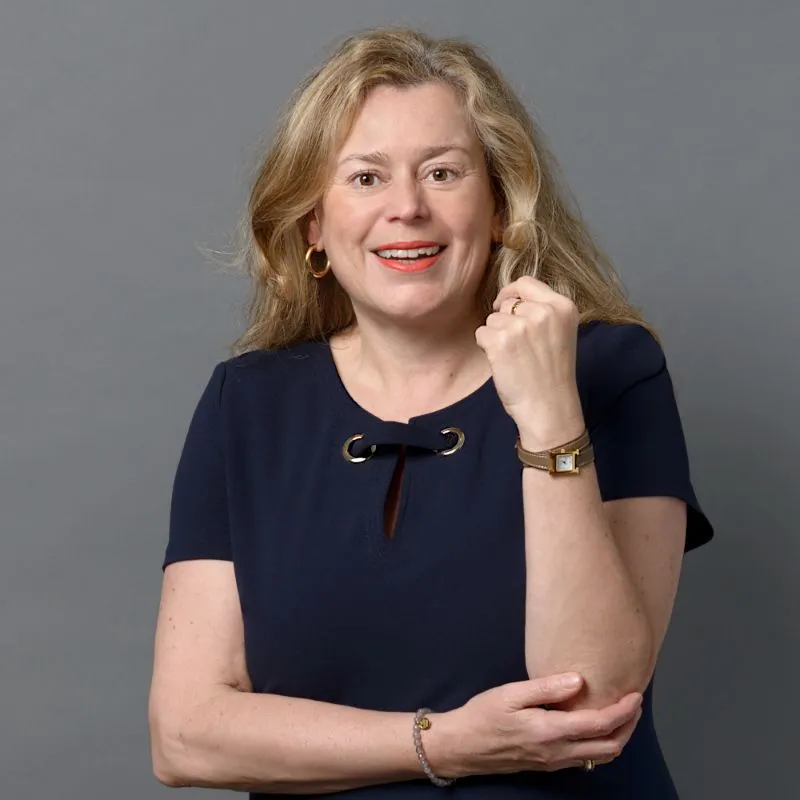 Dr. Sybille Buchwald-Werner notes that while female leadership has become more visible, this visibility does not automatically translate into structural power.“According to the World Economic Forum, women hold only around 29% of senior leadership roles globally. In health-related sectors, the gap is even more striking: while women represent roughly 70% of the global health workforce, the WHO reports they occupy only about 25% of senior leadership positions.”
She says that the nutraceutical industry reflects a similar imbalance, particularly in CEO, CFO, and capital allocation roles.
“What has shifted in recent years is awareness. Companies increasingly recognize that leadership diversity is linked to innovation quality, stronger governance, and long-term performance.”
Buchwald-Werner notes that WIN has played a catalytic role, shifting the conversation from visibility to structure. Through mentorship, sponsorship, leadership development, and international expansion, she says the organization is not simply building a network; it is strengthening a pipeline of women prepared for the C-suite.
Overcoming challenges
As structural barriers to advancing women to leadership roles, Buchwald-Werner says that access to capital remains uneven, and executive career paths are not always transparent.
“Women are frequently overrepresented in operational or functional roles yet underrepresented in line management and profit-and-loss responsibility — experience that C-suite positions typically require.”
Buchwald-Werner underlines the need to close the visibility-authority gap, where women may be visible as experts or speakers but not necessarily positioned in decision-making or capital allocation roles. Over time, this misalignment can slow progression.
“WIN addresses these challenges through structured mentorship, peer networks, leadership development, and its Entrepreneur Program, which supports female founders in preparing for funding and scale.”
 WIN aims to achieve economic and social equality in the global nutraceutical industry, ensuring women’s voices, expertise, and leadership shape its future.She underscores that strengthening governance literacy and financial fluency is equally important. “Leadership advancement increasingly depends on understanding capital structures, risk oversight, and strategic accountability. Equipping women with these competencies accelerates readiness for executive responsibility.”
The role of men and allies
Advancing equity requires shared ownership, highlights Buchwald-Werner. Male leaders and allies play a decisive role by ensuring diverse candidate slates, embedding equity into promotion processes, and reviewing pay transparency and representation metrics.
“Within WIN, male mentors in our one-to-one programs have described the experience as eye-opening. The structured setting creates a safe space to better understand hesitation patterns, prior workplace experiences, and communication dynamics that may otherwise remain unspoken. That mutual learning is powerful.”
“Gender equity is not about excluding men from the conversation — it is about equipping all leaders with the awareness and tools to lead more effectively,” Buchwald-Werner underscores. “WIN is proud to have been founded by women and men united by the same goal: elevating female leadership and, in doing so, strengthening the nutraceutical industry as a whole.”
What’s next?
Over the next three to five years, WIN aims to translate momentum into measurable impact.
Takemoto details: “We aim to significantly increase the representation of women in executive leadership, board seats, and investment roles across the global nutraceutical industry.”
She says this means expanding WIN’s mentorship and sponsorship programs, strengthening leadership development initiatives, and building a stronger pipeline of women ready to step into senior decision-making positions.
“We also plan to deepen our global footprint — growing our network across regions, increasing industry partnerships, and creating more opportunities for visibility and collaboration.”
She explains that data and accountability will be a key focus as the organization works with companies to benchmark progress and embed gender equity into corporate strategy, not just culture.
“More broadly, we envision shaping an industry where diverse leadership drives better science, stronger governance, and more responsible innovation. By advancing women and engaging allies across all genders, WIN will help build a more inclusive, future-ready nutraceutical sector that delivers better outcomes for businesses and for global health,” Takemoto concludes.