


Infant Milk Formula Does Not Reduce Risk of Eczema and Allergies, Research Shows


09 Mar 2016 --- A special type of infant formula does not reduce allergy risk – despite previous claims to the contrary – according to British research led by Imperial College London.
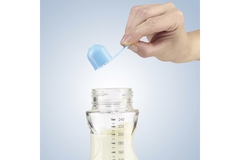
The study, published in the British Medical Journal (BMJ), reviewed data from 37 different trials into hydrolyzed milk formula - a type of infant formula treated with heat to break down the milk proteins. The idea is that giving this formula to children at risk of conditions such as milk allergy and eczema, instead of standard formula, can reduce the chance of infants developing the conditions.
The US Food and Drug Administration (FDA) have previously approved a manufacturer’s claim that a partially hydrolyzed formula may reduce risk of eczema in some infants, and a Cochrane review in 2006 found limited evidence that feeding an infant hydrolyzed formula may reduce risk of milk allergy in babies and children.

However, the new research showed there was no statistically significant reduction in risk of these conditions amongst babies using hydrolyzed formula. The paper also revealed conflicts of interest in many of the studies - due to financial links with infant formula manufacturers.
Dr Robert Boyle, senior author of the study from the Department of Medicine at Imperial College London, said: "Despite parents being advised these hydrolyzed milk formulas may reduce the risk of conditions such as milk allergy and eczema, we found no evidence to support these claims."
In the paper, which was funded by the UK Food Standards Agency, the team analyzed studies that included over 19,000 participants. This new study is the most complete and robust assessment of all the evidence to date, says Dr Boyle.
The study found there was no significant reduction in risk of developing eczema, wheezing, or food allergy (including cow’s milk allergy). Some of the trials also investigated risk of developing Type 1 diabetes, but no link was found. "Not only did we find no evidence of reduced risk from hydrolyzed formula, but we found very few studies which were methodologically sound and without a conflict of interest. For instance, in some of the studies all babies were started on the formula at birth, or a few days after. This raises questions about whether enough was done to promote breastfeeding to the mothers in those studies.”
Professor Jo Leonardi-Bee, senior statistician on the study from the Division of Epidemiology and Public Health at the University of Nottingham, UK, adds that the results may not be representative of all studies conducted in this area. "Our research suggests that there was evidence of publication bias, where some studies that showed formula milk didn't actually reduce allergies may not have been published."
She says further studies into infant milk formula must be more robust. “We need to ensure future studies are carefully designed, so that our guidance to parents is based on reliable evidence.”
The trials analyzed by the team mostly investigated whether hydrolyzed milk formula could reduce the risk of allergies or eczema in children considered at a high risk of the conditions. This usually meant the youngster had a first-hand relative, such as a sibling or parent, with allergies or eczema.
The trials compared hydrolyzed formula to standard formula, and some trials made comparisons with breast milk or between two different hydrolyzed formulas.
All content and features on this website are copyrighted with all rights reserved. The full details can be found in our privacy statement