


Nutrition in medicine: Plant-forward diets top supplements against chronic disease


Key takeaways
- ICNM 2025 featured 25 experts presenting evidence that plant-based diets rich in lycopene, whole grains, and fiber lower cancer risks, while dairy and UPFs elevate them.
- Lifestyle medicine lowers prostate cancer, Alzheimer’s progression, and cellular aging, outperforming supplements in sustainability and cost.
- Some experts warned against supplement over-reliance, validated plant-based meat alternatives, and called for ethical human-specific nutrition research over animal testing.

A new summary of the presentations at the 2025 International Conference on Nutrition in Medicine (ICNM) has been unveiled. It includes the latest findings by 25 leading nutrition experts on health issues, such as breast and prostate cancers, menopause, and Alzheimer’s disease.
The annual conference, conducted by the Physicians Committee for Responsible Medicine, presented ideas on how nutrition can be integrated into clinical practice. Experts came from leading US universities, such as Stanford University and Harvard T.H. Chan School of Public Health, and also health hubs like Pink Lotus Breast Center.
The three-day meeting, starting August 16 in Washington, D.C., also touched on the importance of a food-first approach, warning of over-reliance on dietary supplements, while discussing cholesterol management, skin health, vegan diets, and omega fatty acids.

The summary is published in the International Journal of Disease Reversal and Prevention.
Nutrition power against cancer
Based on large prospective studies, Dr. Edward Giovannucci, M.D., Sc.D., of the Harvard T.H. Chan School of Public Health, shared evidence suggesting that diets high in lycopene (tomato products) and whole-grain fiber are linked to a lower risk of prostate cancer. He presented the role that nutrition plays in prostate cancer.
On the other hand, higher consumption of dairy products, especially low-fat dairy, is linked to increased risk. “What’s on your plate matters. Plant-based foods, especially whole grains, leafy greens, fruits, tomatoes, and coffee, are linked to a lower risk of fatal prostate cancer,” said Giovannucci.
Medical director Kristi Funk, M.D., from the Pink Lotus Breast Center, discussed how diet and lifestyle choices can affect breast cancer risk and outcomes. Its incidence continues to rise, suggesting influences beyond just genetics.
She pointed out evidence linking animal protein, dairy, alcohol, and ultra-processed foods (UPFs) to elevated estrogen, insulin-like growth factor-1, and vascular endothelial growth factor.
Whole foods, plant-dominant, and high-fiber diets have been found to lower these mediators, while also supporting microbiome diversity and estrogen elimination.
“Exercise, restorative sleep, fasting, and stress reduction further activate tumor-suppressive pathways, including p53 and sirtuin signaling. Collectively, these lifestyle factors alter ‘the water in which cells bathe,’ influencing tumor initiation, progression, and recurrence,” reads her paper.
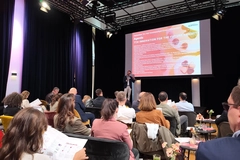
At ICNM, experts showcased plant-based nutrition’s role across cancer prevention, Alzheimer’s, menopause, and lifestyle medicine.Other presentations looked at the associations of cancer and plasma omega-3 and omega-6 fatty acids by Yueqi Lu, Ph.D., and Kaixiong Ye, Ph.D., from the Department of Genetics, University of Georgia, US.
They suggested that omega-3 and omega-6 are inversely associated with cancer mortality. Their study looked at data of over 500,000 participants followed up for nearly 20 years, suggesting that these fatty acids contribute to long-term cancer prevention.
Another presenter, Dean Ornish, M.D., explained that lifestyle medicine can impact the progression of prostate cancer, Alzheimer’s disease, cellular aging, and coronary heart disease.
Interventions include eating a more whole-food, plant-based diet, managing stress, regular physical activity, and psychosocial support.
These are shown to improve certain biological mechanisms of several chronic diseases. Ornish suggested these are also sustainable alternatives to high-tech interventions amid rising health costs.
Furthermore, Akash Patel, M.D., and Urvi Shah, M.D., from the University of Miami Miller School of Medicine discussed that dietary interventions in cancer are necessary and can boost patient empowerment and health. They see fiber as if it were the “original immunotherapy.”
“Cohort evidence, mechanistic data, and early clinical trials together suggest that diet can influence cancer prevention, treatment efficacy, and survivorship,” their paper reads. The scientists also noted that dietary interventions can reverse metabolic dysregulation that drives malignancy risk.
Nutrition support in medical therapies
Dr. Gemma Newman of the National Health Service, UK, discussed what supplements patients really need.
“With the rapidly expanding market of dietary supplements, it’s crucial to separate fact from fiction and provide clinicians with a framework for a targeted, safe, and effective plan within a food-first, lifestyle-medicine model.”
ICNM highlights food-first approaches over supplements, with Harvard data linking whole grains and tomatoes to lower fatal cancer risk.She stated that dietary supplements should play a limited but supportive role in patient care because they are only effective if people are deficient or are addressing a specific life stage. Instead, Newman advised clinicians to prioritize high-quality whole foods, focus on plant-heavy diets, and adopt healthy lifestyle habits to help prevent and treat disease.
Meanwhile, Vanita Rahman, M.D., clinic director of Barnard Medical Center, presented major randomized controlled trial findings on GLP-1 agonists for weight management. She showed that while this treatment aids weight loss temporarily, nutrition-centered interventions are the most sustainable, cost-effective, and physiologically restorative approach.
Healthful approaches
Neal D. Barnard, M.D., President of the Physicians Committee for Responsible Medicine, argued that the Plant-based Diet Index (PDI) should be renamed. He said it causes confusion, as it also rates the healthfulness of vegan diets when it was created to rate omnivorous ones. He adds that the PDI’s scale skews findings, suggesting its limitations of use.
Moreover, also from the Physicians Committee, Hana Kahleova, M.D., Ph.D., examined the association of PDI, healthful index, and unhealthful index with weight loss. The findings suggest that minimizing consumption of animal products and oil may lead to weight loss in overweight adults, postmenopausal women, and people with type 1 diabetes, even if diets include “unhealthful” plant-based foods.
In other presentations, Christopher Gardner, Ph.D., the American Heart Association’s scientific advisory board member, gave an overview of UPFs, as they are an increasing public health concern. He called for identifying high-risk UPF subcategories to help balance nutritional goals with the need for affordable food options, since products with fewer UPF ingredients are costlier.
Gardner also encouraged coordinated efforts across sectors, the public, and private players to change the discourse on UPFs and improve the modern food environment.
Moreover, Michael Greger, M.D., founder of NutritionFacts.org argued that “ultra-processed meat alternatives are better than the alternative.” Highlighting that ultra-processed plant-based products are not the same as nutrient-poor snack foods, Greger demonstrated cardiometabolic, renal, and inflammatory benefits of plant-based meat, which can benefit patients and populations to become healthier and more sustainable.
Skin health and aging
Jessica Krant, M.D., assistant clinical professor of Dermatology at the University of New York, US, showed how whole food, plant-forward diets can mitigate inflammation and oxidative stress. These diets can also support microbial balance and altogether improve acne and other inflammatory dermatoses. She said that environmental stressors can also be offset by phytochemical- and antioxidant-rich diets.
“Lifestyle medicine interventions that integrate plant-based nutrition, exercise, sleep hygiene, and stress resilience offer a practical, evidence-informed strategy to enhance skin health and slow biological aging,” reads her paper. “Continued research into the microbiome and exposome will refine future dermatologic guidance grounded in systemic wellness principles.”
On skin aging and overall longevity, Physicians Committee’s medical editor and educator, Roxanne Becker, discussed how daily sunscreen use and dietary antioxidant intake are protective against photoaging. These include carotenoids, flavanols, and polyphenols from fruits, vegetables, teas, and cocoa. While resistance and aerobic exercise enhance dermal extracellular matrix remodeling, adequate sleep promotes collagen synthesis and cellular repair.
Ethical nutrition research
Barnard of the Physicians Committee also presented on the ethics of human nutrition research, as protections for many animals under the US Animal Welfare Act are excluded. He explained that the Institutional Animal Care Committees do not have to encourage scientists to use alternative methods if procedures are not judged as painful. Amid these loopholes, he highlighted that the US FDA and National Institutes of Health are planning to shift focus away from animal testing methods.
Additionally, the Physicians Committee’s acting director of research policy, Janine McCarthy, M.P.H., discussed the need to use human-specific research methods to directly improve health outcomes. She highlighted recent policy and scientific advances that can phase out animal use in human nutrition research.