



US NIH accelerates animal-free research with industry collaborations and new institutes


Key takeaways
- NIH is putting over US$150 million behind human-focused research methods to reduce reliance on animal models, with the first Complement-ARIE awards now underway.
- New centers and networks will help standardize and qualify new approach methodologies for regulatory use across areas like cardiac, neurological, rare, and reproductive diseases.
- Public-private collaboration is central to the rollout, as NIH aims to make animal-free methods more predictive, scalable, and accepted by regulators.
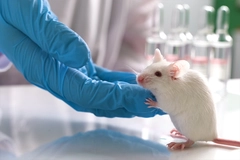
The US National Institutes of Health (NIH) will be developing and scaling research methods that more accurately reflect human biology to reduce science’s reliance on animal models. The institute has received over US$150 million to power this project, which is stated to be a priority under the Trump administration.
This marks the first grant awarded under the Complement Animal Research in Experimentation (Complement-ARIE) program, which develops, implements, and standardizes lab or computer-based methods, otherwise known as new approach methodologies (NAMs).
Across the US, research teams will implement projects that are designed to produce more predictive models of human disease, says the NIH.
“This is an exciting opportunity to create a repertoire of human-focused methods that are so sophisticated and comprehensive that successful clinical translation will rise, and we will be able to answer questions beyond our reach with current research models,” says Nicole Kleinstreuer, Ph.D., NIH deputy director for Program Coordination, Planning, and Strategic Initiatives.
“These new projects are key steps in expanding and strengthening our scientific toolbox. NIH’s investment in NAMs is critical to our mission to carry out gold-standard research.”
The announcement comes following NIH’s notice last year that it will not be issuing funding opportunities that solely involve animal testing to promote human-based research technologies.
Industry-regulatory collab for making NAMs mainstream
NIH shares that the funding will be used to establish technology development centers that will accelerate NAM development to be used for scientific and regulatory needs.
US research teams will implement projects that are designed to produce more predictive models of human disease.Examples listed include, but are not limited to, NAMs to study gynecological disorders, cardiac disease, neurological disorders, and rare diseases.
In other animal-free testing methods, Nutrition Insight recently explored cruelty-free alternatives to animal-based testing for protein digestibility, proposed by nine laboratories. These in vitro assays are noted to align with in vivo benchmarks, outperforming complex systems for routine screening while supporting next-generation alternative protein innovation.
We also spoke with researchers about the organ-on-chip technology, which addresses a major gap in current nutrition research — the limited capacity to capture the complex interactions among diet, gut microbiota, and human organs.
Meanwhile, we caught up with researchers who developed synthetic and natural animal-free gels from bacteria and seaweed, as many nutrition and biomedical studies rely on animal-based materials such as Matrigel and collagen.
A scientist at People for the Ethical Treatment of Animals also called out ethical biases and outdated assumptions in human nutrition research when institutions choose convenience over animal lives.
On the occasion of the country’s oldest taxpayer-supported dog experiments set to expire at the end of this month, the Physicians Committee for Responsible Medicine has sent a letter to urge Health Secretary Robert F. Kennedy, Jr., and NIH Director Jay Bhattacharya to deny continued funding to Wayne State. These experiments have led to botched and painful surgeries on dogs, making it difficult to breathe and requiring staff to put them out of their misery. Over 300 dogs have died as a result. The NIH has spent about $15 million on the experiments. The Physicians Committee underscores that despite its duration over 35 years, the heart experiments have been a failure.
Establishment of VQN
The NAMs data hub and coordinating center will oversee data sharing and standards development. The validation and qualification network (VQN) will use public-private partnerships between industry and regulatory experts to implement and market NAMs.
Complement-ARIE and the Foundation for the NIH partnered to establish VQN, so that NAMs are prepared for regulatory processes and clearance. NIH says it will contribute US$20 million from the funding to this initiative.
VQN has already chosen four pilot projects focused on preterm birth, developmental neurotoxicity, inhalation toxicity, and acute oral toxicity. Plans for expansions have also been set.
The NIH further reveals that its program has launched a US$7 million NAMs Reduction to Practice Challenge, in partnership with the US FDA and the Environmental Protection Agency. Researchers have submitted human-based NAMs to show viability within three years, which they will also deliver to VQN.
Previously, the Humane World for Animals told us about loopholes in the US Animal Welfare Act that allow animals used in testing to go unreported and revealed what it would take for scientists to commit to cruelty-free practices.
The director of Medical Research at the Physicians Committee for Responsible Medicine has also warned that negligence of ethics reviewers on NAMs could cost thousands of lives due to ethics review negligence.




Upcoming webinars

Pure love deserves a pure start: Solutions that give the best start from day one
dsm-firmenich

Magnesium bisglycinate in focus: why full chelation matters
Jungbunzlauer

Bifidobacteria and Healthy Ageing: New Insights into Ageing and Immunity
Morinaga