



Ganoderma and rhodiola formula restores immune function in microgravity rat study


Key takeaways
- A Chinese research team found that the herbal formula GRCP restored immune function in rats subjected to simulated microgravity and bacterial exposure.
- The formula counters immunity loss by suppressing the NF-κB/RelA biological switch to reduce blood and gut inflammation while protecting spleen tissue.
- This team says the finding may offer a nutritional strategy to safeguard astronauts on long space missions and could also benefit bedridden patients, older adults, and sedentary people on Earth.
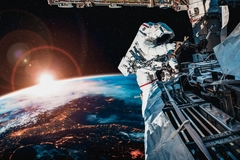
Chinese researchers have found that an herbal formula of three botanicals restored immune function in rats living under simulated microgravity and then challenged with bacteria. The research highlights a potential nutritional pathway to fortify astronaut’s immunity on long spacefaring missions — with the potential to similarly support people on Earth.
Compared with untreated rats, those given the botanical blend — labeled Ganoderma-Rhodiola Compound Preparation (GRCP) — showed a restored immune profile across immune organs, immune cells, and signaling factors. The formula is made from Ganoderma lucidum, Rhodiola rosea, and Paecilomyces hepiali mycelium.
“Traditional Chinese medicine brings a multicomponent, multitarget advantage to protecting against stress-induced injury,” says corresponding author Yu-Lin Deng, professor at the School of Medical Technology, Beijing Institute of Technology, Beijing, China.
“What we designed for the demands of spaceflight rests on a mechanism that is not specific to space — an innovation born for space that may end up helping far more people on the ground.”
Countering the effects of long space missions
The study authors explain that long-duration space missions weaken the immune system, and orbiting crews also face infection risk from microorganisms that behave differently.
They note that Escherichia coli is a normal gut bacterium, and on the ground it rarely causes trouble. However, in low-gravity experiments, bacteria, including E. coli, have been observed to form tougher biofilms and activate genes that are linked to virulence.
Weightlessness weakens the host’s own defenses, and this coincides with the supercharged bacteria, note the scientists.
The study in Model Organisms Research built a “two-hit” model to reproduce this dual effect: rats were tail-suspended for four weeks to simulate microgravity and given E. coli directly to the stomach, while receiving the GRCP daily.
Findings reveal that rats administered the herbal formula had lower markers of inflammation in the blood and in the lining of the gut, while the internal structure of the spleen held up.
A biological switch that drives inflammation, NF-κB/RelA, was held in check. The team suggests this is the likely route by which a single preparation produces multi-target immune regulation. “The effect was clearest at the highest dose tested.”
Spotlight on space nutrition
According to the study authors, the results offer a scientific basis for testing GRCP as a way of protecting crew health on long-duration crewed missions. “The same decline in immune function seen in space also affects long-term bedridden patients, older adults, and people who sit all day,” they conclude.
Space programs are expecting longer off-planet journeys following the successful Artemis II launch, which will present various new health and nutritional challenges for astronauts. As space meals are currently made from dried, shelf-stable items, a separate scientific paper suggested that fortified beverages may help fill nutrient gaps and add variety to astronauts’ diets.
Scientists writing in ACS Food Science & Technology created drinks using emulsions that are stable in Earth’s gravity and microgravity. Their formulas deliver omega-3 fatty acids with customizable sweetness levels and flavors.
Meanwhile, India conducted its first food and nutrition experiments aboard the International Space Station as part of the Axiom Mission 4 to study sustainable human living in space.