



GLP-1 weight regain: Experts debate how many kilos return in one year

Key takeaways
- Patients regain an average of 60% of total lost weight within one year of stopping GLP-1 medications, with regain projected to eventually plateau at 75%.
- While 25% of weight loss may be sustained through habit changes, there is a significant risk that the regained weight consists mostly of fat rather than muscle.
- High discontinuation rates due to side effects and cost underscore the need for patients to prioritize diet and exercise to maintain long-term results after treatment ends.

In a new meta-analysis, UK researchers have found that weight loss patients regain an average of 60% of total lost weight within one year of stopping GLP-1 medications like Ozempic and Wegovy. The study comprises a systematic review of existing scientific literature and 48 relevant studies.
“Drugs such as Ozempic and Wegovy act like brakes on our appetite, making us feel full sooner, which means we eat less and therefore lose weight,” says Brajan Budini, study author and a medical student at the School of Clinical Medicine and Trinity College, University of Cambridge.
“When people stop taking them, they are essentially taking their foot off the brake, and this can lead to rapid weight regain.”

What is novel about this research is that the authors project weight regain to eventually plateau at 75% of total lost weight. However, external experts reacting to the paper are more conservative about this estimate.
“When viewed this way, the weight regain journey looks the same as that for weight loss, just flipped. In other words, weight change happens quickly at first, then slows and plateaus,” says Dr. Adam Collins, associate professor of Nutrition at the University of Surrey, UK.
When comparing this study to the BMJ meta-analysis from earlier this year on the same topic, critics argue that the two studies reach different conclusions because they were based on different math models and focused on different ways to measure weight loss success.
“The BMJ paper estimated an average regain of approximately 0.4 kg per month... and projected a return to baseline weight at around 1.7 years,” says external commenter Dr. Marie Spreckley, who is also a researcher at the University of Cambridge.
Post-medication implications
GLP-1 drugs help control blood sugar and reduce appetite. Clinical trials cited by the study authors demonstrate they can lead to weight loss of 15–20%. However, approximately half of all patients discontinue use within the first year, according to research cited in the meta analysis.
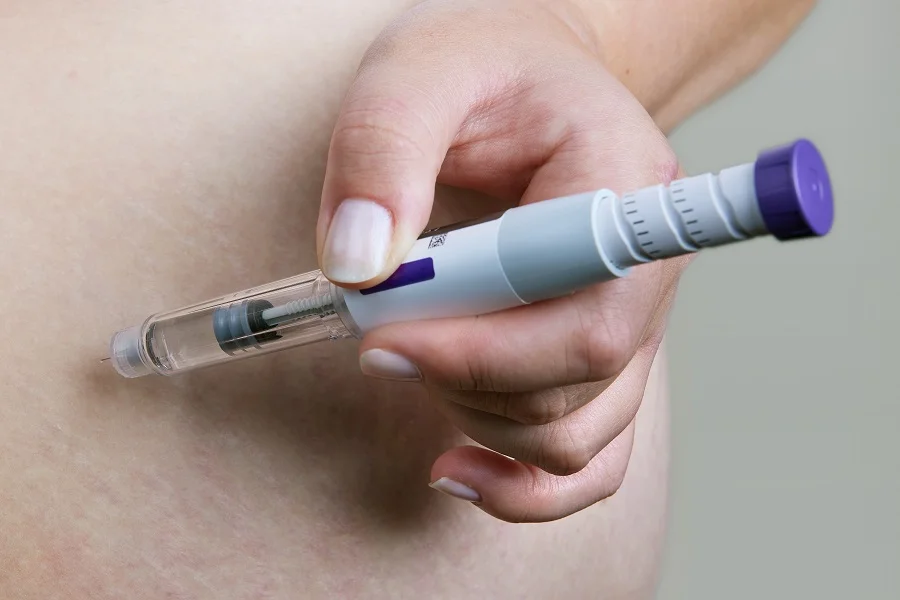 The authors project weight regain to eventually plateau at 75%Moreover, the team found that around three-quarters of patients stop taking the medication after two years. It is likely this is due to their potential side effects and limited access under insurance policies.
Writing in eClinicalMedicine, the researchers observed that by 52 weeks, individuals had regained 60% of their original weight loss. This regain began to plateau around 60 weeks before tapering off at 75%, according to projections.
Notably, the participants were still likely to retain some weight loss — typically, 5% of their original weight — which is clinically meaningful. However, Collins stresses: “I would say this is an optimistic view of the problem. Typical studies or trials are not always reflective of the real world.”
Additionally, he warns that those who present the least regain often have additional support. “We know from other weight-loss studies that some people not only regain the lost weight but also overshoot their original weight.”
Reasons for weight regain
While 25% of weight loss may be sustained through habit changes, the study authors note there is a significant risk that the regained weight consists mostly of fat rather than muscle.
“Our projections show that even though people regain most of the weight they have lost, they still maintain some of the weight loss, but what we currently don’t know is if the same proportion of lean mass is recovered,” says Budini.
“If the regained weight is disproportionately fat, individuals may ultimately be worse off than before in their fat-to-lean mass ratio, which may have adverse consequences for their health.”
Commenting once more on the findings, Collins flags that one primary reason for regain is physiological: “When we start losing weight, our bodies adapt by conserving energy and restoring lost tissue. The body becomes accustomed to artificially high levels of appetite suppressants and may become less sensitive to their effects.”
 While 25% of weight loss may be sustained through habit changes, the study authors note there is a significant risk that the regained weight consists mostly of fat instead of muscle.Furthermore, he adds that coming off GLP-1s and going “cold turkey” may well amplify weight regain. “You cannot presume that just being on the drugs has led the person to establish healthy, sustainable habits.”
Study limitations
The study authors flag several limitations to their study. Most significantly, the trial data used to fit their model only extended to 52 weeks after cessation. They also restricted their analysis to studies reporting at least 3 kg on-treatment average weight loss.
“When stopping weight loss drugs, doctors and patients should be aware of the potential for weight regain and consider ways to mitigate this risk,” concludes study author Steven Luo, a medical student at the School of Clinical Medicine and Trinity College, Ireland.
“It’s important that people are given advice on improving their diet and exercise, rather than relying solely on the drugs, as this may help them maintain good habits when they stop taking them.”
As GLP-1 medications progress into the mainstream, food and beverage innovations are introducing new complementary nutrient-dense options tailored to these protocols. These often feature functional ingredients such as extra fibers, bioactives, and micronutrients. Nutrition Insight previously explored how these inclusions help sustain satiety and muscle mass during rapid fat loss.