



Garmin adds nutrition tracking feature to app to help users achieve health goals


Key takeaways
- Garmin has added nutrition tracking to its app, allowing users to log calories and macronutrients alongside health and fitness data.
- The update includes food search, barcode scanning, AI-powered food recognition, and personalized nutrition recommendations based on user data and goals.
- The move aligns with growing consumer interest in personalized nutrition and wearable-driven health insights.
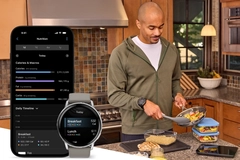
Garmin has improved its Connect app by enabling nutrition tracking for active consumers with health goals.
Details of the wearer’s food intake, such as calories and macronutrients (proteins, fats, and carbs), can be recorded in the app. The wearable technology company’s Active Intelligence feature also provides recommendations to meet nutrition goals.
Users can use the app to search the global food database, scan barcodes, and create custom meals.
“Our Nutrition feature is designed for all users, no matter where they are in their health journey. Whether they’re just starting to build healthy habits, wanting to maintain a healthy lifestyle, or looking to perform at their absolute best, users can now track their nutrition, health, and fitness data in one app — giving them a simplified approach to reach their goals,” says Susan Lyman, Garmin VP of Consumer Sales and Marketing.

Personalized data and detailed advice
Users can use the Garmin Connect app to support health and fitness strategies. The food database includes packaged, restaurant, and regional food options, while the AI-powered image recognition can be used to log foods.
Wearers can create and track personalized foods and meals in the app, which then generates daily, weekly, or annual reports for detailed data on health progress.
Users can also obtain personalized calorie and macronutrient recommendations based on height, weight, gender, activity level, and average active calories, says Garmin. These settings can also be customized based on personal health desires, such as increasing the consumption of certain nutrients.
Additionally, Reactive AI provides insights into how nutrition affects user health and training, including habits such as the impact of sleep quality and late-night eating on progress.
Meanwhile, a U.S. News & World Report survey of 58 experts on 2026 nutrition trends notes wearable technology with real-time metabolic feedback as the “most revolutionary health technology of the future.” However, they urge users to consult with a health professional to help interpret the data and support lifestyle changes.
Nutrition Insight spotlighted the latest advancements in tailored nutrition approaches in tech, jewelry, and hospitality, with insights from Lifesum, Velara Resorts, and Omni Health Ring.
According to Innova Market Insights’ global market overview, by 2025, half of consumers will be eager to try personalized nutrition solutions, with one in three using apps to help create a tailored nutrition plan.
In other developments, Hundred Health consolidated medical history, lab results, and wearable data into a single, unified mobile platform, while Hims & Hers expanded access to preventive, data-driven health care through its new Labs app.