

Large FDA study deems majority of US infant formulas safe for baby health


Key takeaways
- The FDA’s largest study finds most US infant formulas safe with undetectable/low levels of contaminants across samples.
- The Agency pushes Closer to Zero contaminants through manufacturer oversight despite naturally occurring pollutants in soil, water, and air.
- Human milk showed higher detection rates, but results cannot be generalized nationwide.
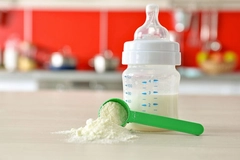
The US FDA’s study of chemical contaminants in infant formula has found that most tested products meet its high safety standards with undetectable or low levels of contaminants like lead and arsenic. The Market Basket Survey is touted as the agency’s largest and most comprehensive examination of pollutants in baby milk products available on the national market.
The agency tested 312 samples, covering several lots of 16 brands. The formats included powdered, concentrated liquid, and ready-to-feed products. Protein sources came from cow’s milk, soy, or amino acids.
“We tested more infant formula than ever before, and the results are clear: most products meet a high safety standard — but even small exposures matter for newborns,” says Health and Human Services Secretary Robert F. Kennedy, Jr. “We will hold manufacturers accountable and give parents honest, transparent data they can trust. Protecting our children’s health is nonnegotiable.”
Kennedy further plans to meet infant formula leaders to discuss improving oversight and safety practices. The FDA encourages manufacturers to further reduce contaminants and continue testing for safety.
Ensuring lowest contamination levels
The research tested for arsenic, cadmium, lead, mercury, 30 PFAS, 318 pesticides, 21 phthalates, and one non-phthalate plasticizer.
The FDA highlights that contaminants naturally enter food as they are present in soil, water, and air. But this does not make the products unsafe.
Although the contaminants were low in infant formula, the agency says it is carrying out additional testing as part of its oversight efforts and will take action if necessary.
“This includes conducting further testing, including for additional contaminants, continuing to engage with manufacturers on measures to reduce the levels of contaminants to as low as possible, and working to establish action levels for contaminants in infant formula.”
FDA Commissioner Marty Makary, M.D., says: “You can judge a society by how it treats its most vulnerable members. That’s why we’re doing everything in our power to make sure our babies and infants have safe, high-quality formula options that are backed by a resilient supply chain. The results of this study are encouraging. We will continue to advance formula innovation and safety for the millions of families who depend on it.”
Pollutant levels
According to the testing, mercury was not detected in 296 out of 312 samples (95%), cadmium was not detected in 106 out of 312 samples (34%), lead was not detected in 61 out of 312 samples (20%), and arsenic was not detected in 18 out of 312 samples (6%).
Additionally, 309 samples (99%) had no detectable pesticides, glyphosate, or glufosinate. Most PFAS compounds (25 of 30) were not found in any samples, while phthalates were not detected in 167 out of 312 samples (54%).
The FDA also tested 110 human milk samples from a single state donor human milk bank for arsenic, cadmium, mercury, and lead. It found 85% of the samples had at least one detectable contaminant.
Mercury had the highest detection rate at 61%, followed by cadmium at 57%, arsenic at 33%, and lead at 30%.
However, the agency warns that these results cannot be generalized to all human milk and breast milk remains the optimal source of nutrition for infants.
“As a father, I understand how important it is for parents to trust the safety of the food they give their children. At the FDA, ensuring the health of America’s next generation is vital,” comments Kyle Diamantas, J.D., Deputy Commissioner for Food.
“Through Operation Stork Speed and our Closer to Zero initiative, this testing — the first of its kind — reinforces that infant formula in the US is a safe option for parents and caregivers who rely on it. We will continue working to drive contaminants to as low as possible through rigorous oversight.”