




Diet quality outweighs food processing for disease risk, Harvard study suggests


Key takeaways
- A research abstract linked a plant-based diet’s quality, not processing levels, to heart disease, type 2 diabetes, and mortality risk.
- The study mapped the diets of more than 200,000 US adults in four quadrants: either healthy or unhealthy, and ultra-processed or minimally processed.
- Independent researchers welcome the findings, although they caution that the study only looked at plant-derived foods and the full findings are not yet available.

Researchers argue that nutrition quality matters more than food processing levels for long-term health. Their study of more than 200,000 people found the strongest association between high-quality plant-based diets and lower risks of heart disease, type 2 diabetes, and death.
When considering food processing levels, these associations did not “appear to substantially differ,” note the study authors.
“While many ultra-processed foods tend to be of poor nutritional quality and should generally be limited or avoided, processing itself is not inherently harmful,” says co-author Xiaowen Wang, Ph.D., a postdoctoral research fellow in the Department of Nutrition at Harvard T. H. Chan School of Public Health, US.
She advises people to focus on what they eat overall, not only whether foods are processed. “A healthy plant-based diet rich in whole grains, fruits, vegetables, nuts, legumes, and healthy plant oils is beneficial, even if it includes some processed foods.”
Although the full study has not yet been published, independent researchers welcome its findings.
“This research suggests that we have placed too much emphasis on processing level, without recognizing that some processing is beneficial to our health, and other processing is not directly harmful to our health,” says Dr. Aisling Daly, senior lecturer in Nutrition at Oxford Brookes University, UK.
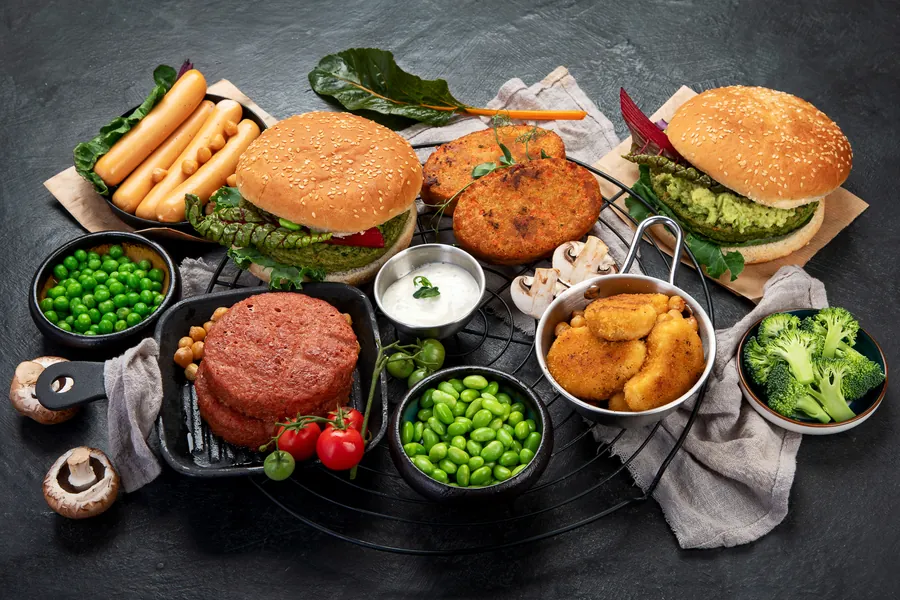 The study of more than 200,000 people linked high-quality plant-based diets with lower risks of heart disease, type 2 diabetes, and death.“There are many processed food products available, which are less nutritious and less beneficial to our health, but applying the idea that ‘all processed foods are bad’ is neither accurate, helpful, nor realistic.”
Plant-based benefits
The team used data from three studies that followed over 200,000 US adults from the 1980s through the 2020s. They assessed the extent to which each participant emphasized plant versus animal food products in their diet, the diet’s overall healthfulness, and consumption of plant-based foods across a wide range of processing levels.
The researchers focused on plant-derived components to “enable consistent comparisons.”
They used the Nova classification system to categorize the processing level of foods participants consumed, categorizing them by their eating habits: healthy and ultra-processed, healthy and minimally processed, unhealthy and ultra-processed, and unhealthy and minimally processed.
The study linked healthy diets with a lower risk of heart disease, type 2 diabetes, or death, while unhealthy diets were associated with a higher risk. Within each category, “the risks were almost identical regardless of whether the diet was ultra-processed or minimally-processed,” the authors underscore.
They note that these findings call into question the use of processing level as an indicator of healthy eating, as the Nova classification does not consider a food’s nutritional value — ultra-processed foods can be healthy and minimally processed ones unhealthy.
“Advising people to universally ‘avoid ultra-processed foods’ can lead to lower diet quality since healthy ultra-processed foods are beneficial and unhealthy minimally processed foods are detrimental,” adds Wang.
“People should prioritize the quality of food rather than focusing solely on the level of processing. Aim for more nutrient-dense, high-quality foods to help lower your risk of chronic diseases.”
Independent researchers respond
Alberto Fiore, professor in Food Chemistry and Technology at Abertay University, Scotland, says this is “exactly the kind of evidence the field has needed.” He was not involved in the study.
 Wang advises consumers to prioritize the quality of food, and aim for more nutrient-dense, high-quality foods to help lower chronic disease risk.“Following over 200,000 adults across three long-running US cohorts for decades gives this study real statistical power, and the four-quadrant design — cross-referencing healthy versus unhealthy with ultra-processed versus minimally-processed — is a genuinely elegant way to isolate the variable that actually matters.”
He says the result is “unambiguous and important,” as health outcomes were almost identical regardless of whether a diet was ultra-processed or minimally processed.
“It confirms directly what has long been suspected: a fortified wholegrain cereal and a can of cola should never have been treated as equivalent health risks simply because both happen to sit in the same processing category, and this study now has the data to demonstrate that error empirically, rather than just argue it conceptually.”
At the same time, independent researchers note that the abstract paper does not include sufficient data to explain how the diet categories were developed, nor does it include animal-derived foods.
Seamus Higgins, associate professor in Food Process Engineering at the University of Nottingham, UK, says that animal-based foods make a substantial contribution to typical US dietary patterns.
Moreover, he cautions that food processing cannot be fully disregarded. “Food structure, formulation, nutrient quality, the sensory characteristics of food — including taste, texture, and aroma — and the biological and psychological drivers of food choice are all closely intertwined, making it difficult to attribute health outcomes to any single characteristic.”
Counteracting previous research
Earlier research has linked high ultra-processed food consumption to a wide range of health risks, including dementia, infertility among women, cardiovascular disease, and other non-communicable diseases. Moreover, a study has found that these foods leave a distinct metabolic signature in the blood that is linked to cellular and lipid disruption.
 Independent researchers welcome the study abstract as it highlights that not all ultra-processed foods are unhealthy.However, many of these studies use the Nova classification system to categorize processing levels, which has been criticized for not considering foods’ nutritional value, only processing levels.
Earlier this year, a Healthy Eating Research report called on exempting healthier ultra-processed food options from policies discouraging people from eating them. The Physicians Committee for Responsible Medicine commented on the report that many plant-based options, such as breads, cereals, and meat alternatives, are “good for your health.”
Dr. Beverley O’Hara, lecturer in Public Health Nutrition at Leeds Beckett University, UK, hopes the new findings may help people feel less anxious about eating affordable, healthy, and convenient processed foods. O’Hara was not involved in the research.
Additionally, she notes that consumer concerns about ultra-processing in plant-based meat and dairy alternatives can slow the dietary shift toward more sustainable diets.
“The health-protective effects of plant-based foods are probably due to the different types of fiber and the various micronutrients and non-nutrient chemicals that can be found in plants (sometimes called ‘nutritional dark matter’).”
“Consuming a wide range of these foods is important for dietary quality,” says O’Hara. “However, achieving this can be challenging, meaning that purchasing them in packaged form may sometimes be a convenient and practical choice.”
She adds that the study abstract appears to be an “important counterbalance” to the large number of poor-quality studies that have led to widespread scaremongering about ultra-processed foods.