





Argentina government seeks to repeal front-of-pack labels, over 300 organizations push back

Key takeaways
- Argentina’s government is proposing to repeal the Healthy Eating Promotion Law, which mandates front-of-pack warning labels for foods high in sugars, fats, or sodium.
- Over 300 civil society and academic groups oppose the repeal, citing strong evidence that the labels help consumers identify unhealthy products and change purchasing habits.
- The government argues the law is overly rigid, duplicative under Mercosur, and burdensome for small businesses, but critics say regional alternatives are less effective than Argentina’s PAHO-based system.

The Government of Argentina is seeking to repeal the front-of-pack (FOP) labeling law, known as the Healthy Eating Promotion Law. In reaction to this, over 300 civil society and academic organizations are rejecting the initiative as it threatens a policy designed to protect public health and access to information.
“We strongly reject this measure, which represents a direct attack on public health. There are no health or scientific arguments that justify repealing the Labeling Law,” says nonprofit Fundeps.
“Moving forward with this proposal would deprive the population of a simple and effective tool for making informed decisions and would constitute a serious setback for the right to health and adequate food.”

If this bill, which entered the Senate last month, is passed, it would result in the removal of warning labels — black octagons on food packaging — warns the Global Advertising Lawyers Alliance (GALA). This would also limit advertising, rules linked to school environments, and bans on using children’s characters on such packaging.
President Javier Milei, Chief of Staff Manuel Adorni, and Minister of Health Mario Lugones, who signed the bill, argue for the repeal on the basis of harmonization within Mercosur (Southern Common Market) and minimizing regulatory and economic constraints.
However, despite seeking a repeal, the government will still require companies to report the nutritional composition of packaged foods, shares GALA.
Reasons for repeal
GALA breaks down several reasons why the government seeks to repeal the Healthy Eating Promotion Law. Firstly, since there is no global standard for FOP labeling, it advocates a less restrictive system.
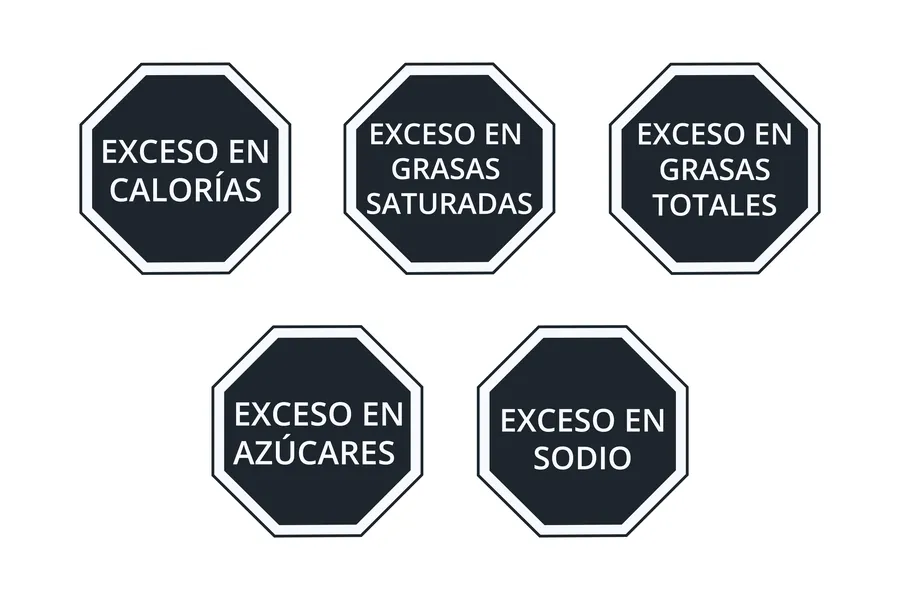 Civil society groups argue that the FOP labeling law protects public health and informed food choices.The law would enact a one-size-fits-all nutritional criterion where the same nutrient profile standards are applied to all food without factoring in differences, such as nutritional density, processing levels, and consumption per serving. This results in traditional foods that are culturally acceptable carrying the same label as less nutritious products, underscores leadership.
Moreover, the government believes that the FOP labeling law could potentially mislead consumers while not providing any incentive to improve products, as the warning system allows for no grey area — products either have a black octagon or do not.
The repeal further argues that the FOP labeling law has improper calculation methods, as it sets limits based on percentages of total energy contribution, which the government says might lead to inconsistent or exaggerated results in some cases.
As Argentina already is part of the mandatory nutrition labeling system under Mercosur — such as declaring energy values, sugars, fats, proteins, and sodium — the government argues that creating a separate FOP system is a regulatory duplication.
Additionally, the government highlights that small businesses would carry heavier burdens of FOP labeling rules since there are costs linked to updating packaging and production lines, for instance. It adds that this might push the market to favor larger corporations, since they can better meet compliance costs.
The leadership also criticized the FOP labeling law for incorporating highly technical and methodological details into the legal text instead of leaving it up to regulations, which the government says makes it difficult to update, as scientific understanding evolves over time.
Lastly, the government believes that the Healthy Eating Promotion Law’s restrictions on advertising, commercial communication, and use of graphics on packaging are too constraining for businesses.
Citizens disagree
Despite the government’s intention to simplify regulations and balance market burdens, Fundeps calls it a “direct attack on the right to information.”
It shares that civil society organizations and the scientific community are deeply concerned, as the passing of the repeal would leave the citizens unprotected.
The Healthy Eating Promotion Law is not just about warning labels but also regulates advertising aimed at children, promotes healthy school environments, and limits marketing strategies for food with excess levels of harmful nutrients, underscores Fundeps.
The nonprofit also highlights that numerous studies by Argentina’s Ministry of Health, UNICEF, and FIC Argentina reveal that the FOP labels work after the law was implemented in 2022.
Fundeps underscores that these studies have found that 90% of citizens agree that black warning labels make it easier and faster to identify unhealthy products. Also, over half of the population has been noted to change purchasing habits due to the labels.
The organization reports that 55.9% of Argentinians use FOP labels “always or almost always” when deciding to purchase foods.
The UNICEF study reveals that after the law was implemented, there was a public change in perception as to what products are healthy, such as yogurt, breakfast cereals, and juice.
Importantly, the 2019 National Nutrition and Health Survey, before the law was enacted, found that only 13% of citizens were able to interpret traditional nutritional information on packaging.
Fundeps adds that experts argue that although the government wants harmonization within Mercosur, the models under discussion in the region are “considerably less effective than Argentina’s current system.”
Argentina’s FOP labeling laws are based on the Pan American Health Organization Nutrient Profile Model, known as the most accurate and protective system in the region. For instance, Argentina’s model flags excess sugars in 68% of yogurts on the market, while the Uruguayan model flags 9% and the Brazilian model 1%.