




Aquatic invertebrates could meet vitamin B12 and selenium needs of five billion people, study finds

Key takeaways
- A study has found that aquatic invertebrates provide high levels of essential nutrients, with bivalves offering high concentrations of iron, iodine, zinc, and vitamin B12.
- Current global aquatic invertebrate production offers enough vitamin B12 and selenium to meet the annual needs of over five billion people, according to the paper.
- Using predictive modeling, researchers mapped the nutrient profiles of over 50,000 invertebrate species to help inform public health guidance.
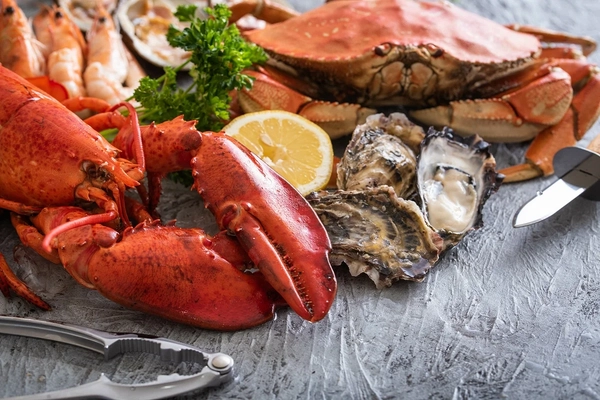
Research has uncovered that aquatic invertebrates such as mussels, crabs, and oysters hold significantly untapped nutritional value that could be a sustainable source of essential daily nutrients such as vitamin B12, iodine, and zinc.
Notably, the research team discovered that current global production of aquatic invertebrates contains enough vitamin B12 and selenium to meet the equivalent annual requirements of more than five billion people.
These sources also supply enough iodine, zinc, copper, and omega-3 fatty acids to meet the annual requirements of more than one billion people, according to the paper.
Additionally, the research notes they hold enough vitamins B2 and B3, iron, manganese, and magnesium to sustain around 100 million people.
The international study underscores the need to better conserve and study the aquatic food supply to support global nutrition security.

“Invertebrates are hugely overlooked as healthy foods,” says study author Dr. James Robinson from Lancaster University, UK. “Bivalves, crustaceans, and gastropods are fished and farmed all over the world.”
Predictive nutrient value modeling
The study authors stress that aquatic invertebrates, such as mollusks and crustaceans, are still overlooked in the context of human nutrition research, despite having long supported human diets.
They add that much of the global population is not consuming enough micronutrients such as vitamin B12, iron, and zinc. Furthermore, aquatic food systems are typically assessed by the amount of food they produce rather than the nutrients they provide.
 The analysis found that invertebrates make up only one-third of farmed seafood by weight, but deliver more than 50% of essential nutrients.In the paper published in Nature, the researchers examined 30 nutrients essential for human health. Using species-specific trait data, they developed a predictive model to estimate the nutrient content of over 50,000 invertebrate species registered in SeaLifeBase, a global database focused on marine non-fish species.
Lead author Jessica Zamborain-Mason, an assistant professor at King Abdullah University of Science and Technology in Saudi Arabia, developed the invertebrate nutrient predictions, drawing on previous research into aquatic food nutrients.
The researchers note that the majority of these species have never previously been assessed in this way, pointing to new opportunities to incorporate nutrition into conservation, fisheries management, and policy decisions.
High-yielding nutrient production
According to the study, invertebrates make up only one-third of farmed seafood by weight, but deliver more than 50% of essential nutrients like iron, iodine, and vitamins B12 and C.
The researchers highlight that processing methods can impact the overall nutritional value of these sources. For example, 100 g of dried invertebrates often contains higher concentrations of minerals than raw tissue.
This points to opportunities to maximize nutritional benefits through product development while reducing waste, note the study authors.
Moreover, different species were also found to offer distinct nutritional benefits. Bivalves had the highest concentrations of iron, iodine, zinc, and vitamin B12, while sea urchins were particularly rich in selenium and magnesium.
“This work provides new nutrient predictions for over 50,000 invertebrate species,” says Robinson. “This provides a knowledge base for researchers working on aquatic foods, fisheries, and global food security.”
The researchers do not encourage harvesting vast quantities of invertebrates from aquatic environments based on their findings. Instead, they believe their insights could help inform public health initiatives that target specific nutrient deficiencies and undernourishment across different populations.
“Our research shows that aquatic invertebrates make a much greater nutritional contribution than many people realize,” says Zamborain-Mason.
“By bringing nutrition alongside sustainability into decisions about fisheries, aquaculture, and broader aquatic food systems, we can better understand the full value of these foods and better protect and sustainably manage them.”
Earlier this year, the Sustainable Markets Initiative spearheaded the Ocean Stewardship Initiative to create one of the largest Marine Protected Areas in Antarctica, which drew support from omega-3 krill oil producers. Founded by King Charles III as The Prince of Wales, the Sustainable Markets Initiative ultimately plans to establish a Marine Protected Area covering 70% of the Antarctic Peninsula.