

The Cycle launches functional beverages to support women’s hormonal health


Key takeaways
- The Cycle launches beverages for different stages of the menstrual cycle, aimed at supporting women’s hormonal health through botanical ingredients.
- The brand focuses on moving hormonal health from supplements to functional beverages, with a strong demand reflected in retail success and increasing sales.
- The company emphasizes the benefits of its sea buckthorn-based formula, highlighting its role in mucosal tissue support.
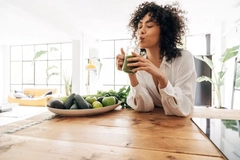
Ready-to-drink beverage brand The Cycle is launching hydration blends tailored to women’s different stages in the menstrual cycle. The Peri Comfort and Meno Comfort drinks are expanding on the brand’s portfolio, now totaling four beverages — one for each week throughout the month’s hormonal stages.
Building on the brand’s existing Pre-Period Comfort and Period Comfort drinks, the new beverages contain botanical ingredients in a juice-based, non-sparkling drink. The brand aims to move hormonal health from the supplement aisle into functional beverages.
“We rely on the published ingredient-level literature for each of our botanicals — black cohosh, maca, sage, nettle, lemon balm, and inositol all have peer-reviewed research supporting their role in hormonal health,” Anastasia Sartan, founder and CEO of The Cycle, tells Nutrition Insight.
“We have not yet conducted a finished-product clinical trial on The Cycle specifically, but we are in early conversations with research partners to run one on Peri Comfort and Meno Comfort in 2027. In the interim, our claims are carefully scoped to what the ingredient literature supports.”
Sartan says that this moment feels larger than one brand, as women’s hormonal health has been under-researched and underserved for decades.
“We are now seeing it move from the margins into mainstream retail. The Cycle being selected for Sprouts’ Forager Finds program nationally is a signal that buyers see this as an emerging category, not a niche. I think we’ll look back at 2026 as the year cycle-support beverages became a permanent set on grocery shelves.”
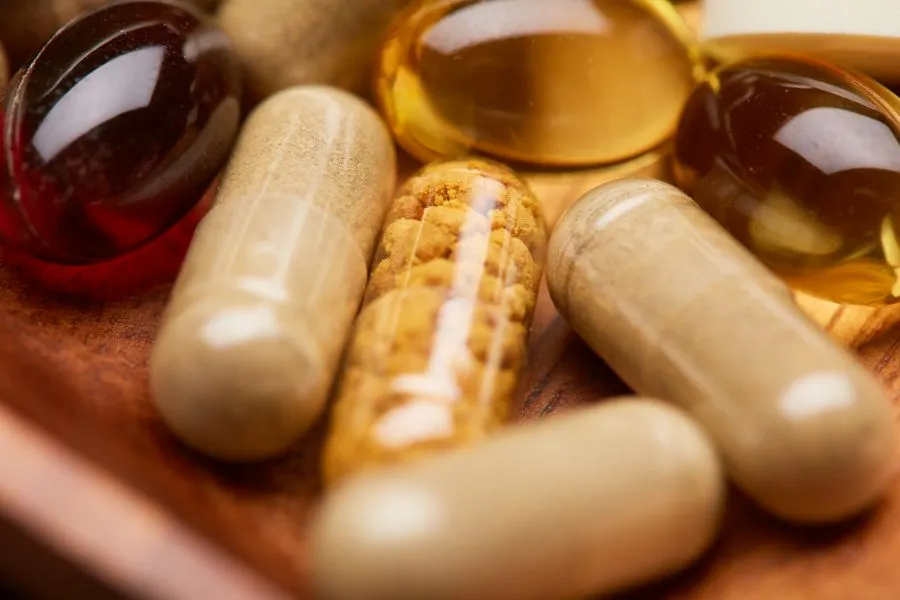 Sartan says hormonal wellness is currently limited to supplements of pills and powders.Globally, 1.8 billion people menstruate. However, Sartan says hormonal wellness is limited to supplements of pills and powders.
“Women don’t experience hormones as a single event; we move through chapters. I wanted to build something that respects that reality. These blends aren’t about fixing women. We don’t need to be fixed. They’re about supporting real transitions with comfort that feels personalized and effective.”
Sartan further tells us about how the brand validates the health benefits, sharing market insights, delivery formats, and the main challenges in entering the women’s functional beverage market.
How do you validate the functional benefits of each blend for different hormonal stages?
Sartan: We validate on three layers. First, ingredient selection is grounded in peer-reviewed literature on botanicals with established traditional and clinical use for each hormonal phase — black cohosh and lemon balm for menopause, maca and inositol for perimenopause, and so on.
Second, every formulation is reviewed by our clinical advisors (OB-GYNs and registered dietitians) for dosing and phase-appropriate fit. Third, we validate through real-world consumer feedback — we track symptom-support outcomes through repeat purchase data and direct consumer reporting across our direct-to-consumer and retail channels.
Is there a big demand for these products in the market, and how did you spot this?
Sartan: Yes — and the signal is now showing up at retail. Women’s hormonal health is a US$50B+ global category, and until now it has been served almost entirely by supplements.
The behavioral shift we spotted is that women increasingly want hormonal support integrated into their daily food and beverage routines rather than added as another pill. Our own data reinforces this: we went from zero to over 600 doors in six months. Sprouts made the national buyer decision within three months of first contact, and we’re seeing over 8.4 cans per SKU per week velocity in natural grocery stores. We sold through our first drop at Happier Grocery NYC in week one.
What makes your formulation with sea buckthorn and botanicals more effective than existing products?
Sartan: The sea buckthorn base is the differentiator. It’s one of the only plant sources of omega-7 (palmitoleic acid), which is studied for its role in mucosal tissue support — relevant across the hormonal arc, particularly in peri- and menopause.
 A beverage fits into a daily ritual, such as morning coffee, without requiring a new behavior.
Why did you choose a beverage format over traditional pills or powders?
Sartan: Two reasons. First, compliance: women take supplements inconsistently, and the friction of pills is a real barrier. A beverage fits into a daily ritual — morning coffee, afternoon break, evening wind-down — without requiring a new behavior.
Second, cultural: pills signal that something is wrong and needs treatment. A beverage signals that hormonal health is just part of daily nutrition. For a category still emerging from stigma, that reframes matters. It’s also why retail placement was strategic — putting these drinks in the grocery cooler next to kombucha and functional sodas normalizes the conversation in a way the supplement aisle never could.
What challenges did you face entering the women’s health functional beverage aisle?
Sartan: Three main ones. First, category creation: buyers don’t have a shelf for “women’s hormonal beverages” yet, so we had to help retailers see it as an emerging set rather than slotting into an existing category.
Second, US FDA-compliant claims language: we can’t say “treats cramps” or “reduces hot flashes,” so the work is in communicating benefit through ritual and ingredient provenance.
Third, formulation: building a clean, shelf-stable, great-tasting drink around potent botanicals like black cohosh and sage is genuinely hard. That said, the cultural moment has done a lot of the heavy lifting on the demand side — perimenopause is finally a mainstream conversation, and period stigma is dissolving.
The beverages will launch this spring and be available in Sprouts stores throughout the US.