


DNA leaves clues to intestinal motility, vitamin B1 may play unexpected role


Key takeaways
- Researchers identified 21 genomic regions — 10 previously unknown — that prove gut motility and “lazy gut” are partially heritable traits.
- Specific genes dictate how effectively an individual absorbs and activates vitamin B1, which directly influences bowel movement frequency.
- This discovery positions vitamin B1 as a target for new clinical treatments and dietary interventions to manage IBS and chronic constipation.

A recent genomic study has found DNA “clues” to intestinal motility, suggesting that specific genes can influence how the human body absorbs and uses vitamin B1 (thiamine), which has a knock-on effect on bowel movement regularity.
The research suggests vitamin B1 plays out this role alongside well-known essential functions, like bile acids and nerve signaling. The trial analyzed a large dataset to pinpoint the genes most associated with stool frequency. Nutrition Insight explores the findings with lead study author Mauro D’Amato, professor of Medical Genetics at LUM University, Italy.
“We were most surprised by the fact that we were able to identify key biological mechanisms from such a simple approach — linking genetics to people’s bowel habits — highlighting both known (bile acids and acetylcholine) and entirely new pathways (vitamin B1),” he tells us.
“A new finding was that intestinal dysmotility is a partially heritable trait, meaning that people may be genetically predisposed to a ‘lazy gut’ and, most of all, that vitamin B1 biology may be important in controlling peristalsis.”
Peristalsis is the progression of coordinated contraction of involuntary circular muscles, such as in the digestive tract. As such, D’Amato suggests the study’s findings may benefit patients with irritable bowel syndrome (IBS) with constipation.
Genomic data analysis
The researchers studied questionnaire and genetic data from 268,606 individuals of European and East Asian ancestry, using computational analyses to pinpoint the genes and mechanisms that are most likely involved.
Their analysis pinpoints 21 regions of the human genome influencing bowel movement frequency, including 10 that had not been reported before.
Several of the genetic signals pointed to pathways and mechanisms already known to affect gut movement, which the researchers say was reassuring because this means the results align with established biology.
For instance, the study highlights bile-acid regulation, in which bile acids help digest fats and also act as signaling molecules in the gut. Another well-known influence is nerve signaling that causes intestinal muscle contractions. This includes acetylcholine-related signaling, which helps nerves communicate with muscles.
Specific genes tied to vitamin B1 biology
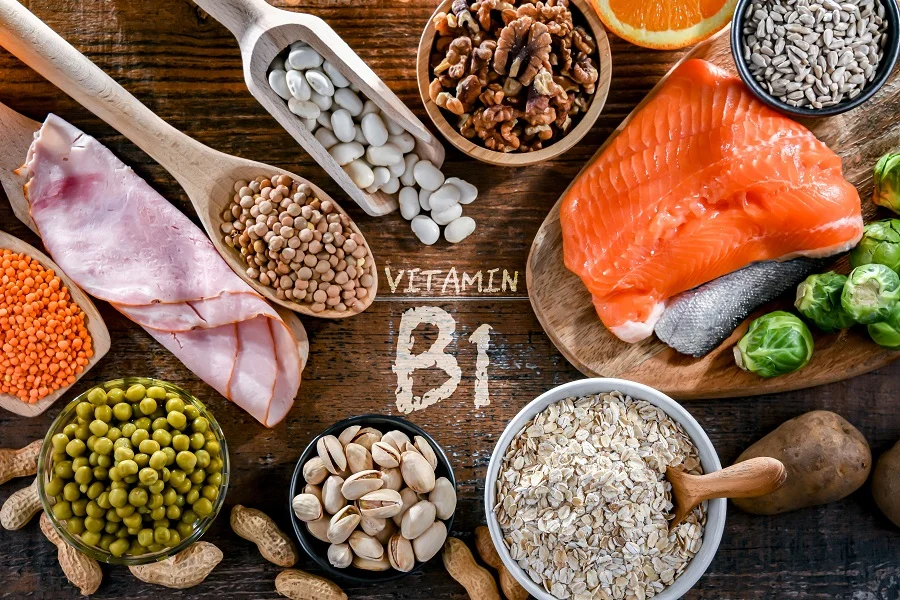
According to the study authors, the “most striking” result emerged after they narrowed their findings down to two genes (SLC35F3 and XPR1) that impact the human body’s use of vitamin B1 — specifically, how it is transported and activated.
The researchers believe their findings may point to a meaningful biological overlap between bowel movement frequency and IBS, which impacts millions globally.
The link between thiamine intake and bowel movement frequency differed depending on a person’s genetic makeup at the SLC35F3 and XPR1 genes, which researchers analyzed together as a combined “genetic score.”“What we found is that these two genes are involved in the absorption and activation of vitamin B1,” says D’Amato. “This suggests that the vitamin B1 we consume may be more effective in some people compared to others because of their respective genetic profiles.”
To find out if this vitamin B1 signal is reflected in real-world data, the researchers explored additional dietary information from 98,449 participants in the UK Biobank. This indicated that higher dietary thiamine intake was associated with more frequent bowel movements.
New IBS solutions
The researchers believe their findings may point to a meaningful biological overlap between bowel movement frequency and IBS, which impacts millions globally.
“Gut motility problems sit at the heart of IBS, constipation, and other common disorders, but the underlying biology is very hard to pin down,” says D’Amato. “These genetic results highlight specific pathways, especially vitamin B1, as testable leads for the next stage of research, including lab experiments and carefully designed clinical studies.”
“We can foresee this leading to experimentation in animal models, such as mice treated with vitamin B1, for example, or well-designed clinical trials to check whether controlled administration of vitamin B1 supplements or via dietary changes has an effect on gut motility.”
In other recent nutrition-led advances for IBS, researchers at the University of Gothenburg, Sweden, unpacked the complex interactions between gut bacteria and IBS. In a paper published in Cell Reports, they revealed how gut bacteria can produce serotonin — known as the “happy hormone” neurotransmitter — which is crucial in overall digestive health and mood.
Meanwhile, BiOkuris’ synbiotic BK002 demonstrated clinical benefits for gastrointestinal symptoms and “significant” anxiety reduction. Nutrition Insight spoke with the company to learn more about why synbiotics are considered superior for IBS treatment.