





Arjuna Natural champions low-dose ashwagandha for cognitive health support

Key takeaways
- Arjuna Natural spotlights a growing consumer demand for clinically validated ingredients, supporting stress management, sleep quality, and emotional well-being.
- The company observes that low-dose ashwagandha extracts are gaining traction among formulators due to being efficient and easy to formulate into convenient delivery formats.
- Botanical ingredients are gaining traction for their multifunctional mind and mood products, with suppliers emphasizing extract-specific clinical evidence.

As consumers are getting increasingly savvy, informed, and educated, they seek multifunctional ingredients supporting cognitive health backed with clinical evidence.
Nutrition Insight speaks with Chase Johnston, VP of Operations at Arjuna Natural, US, about how daily stress is propelling demand for nutrition solutions. He shares that with the constant barrage of news, the day-to-day realities of juggling work, family, school, hobbies, and more, stress is unavoidable for most people.
“When stress becomes a constant state, it can disrupt sleep quality, elevate cortisol levels, affect mood, decrease attention and focus, weaken immune resilience, and contribute to long-term concerns around metabolic, cognitive, and cardiovascular health.”
“Oftentimes, this is when consumers seek dietary supplements for support. Consumers want safe, clinically validated, fast-acting ingredients and products that help manage daily stress for mental clarity, improved focus, emotional well-being, better sleep, and overall quality of life,” he shares.

Deepened understanding
Consumers understand how stress impacts the body and mind as a whole, and they want a product that provides multifaceted benefits, including managing cortisol levels, supporting improved sleep quality, mood, cognitive performance, relaxation, and energy, says Johnston.
“Consumers are savvier and proactively seek clinically studied ingredients that address both mental and physical health across many areas of health. This is where ashwagandha continues to gain momentum, particularly for its support of relaxation, emotional balance, restorative sleep, and cognitive function.”
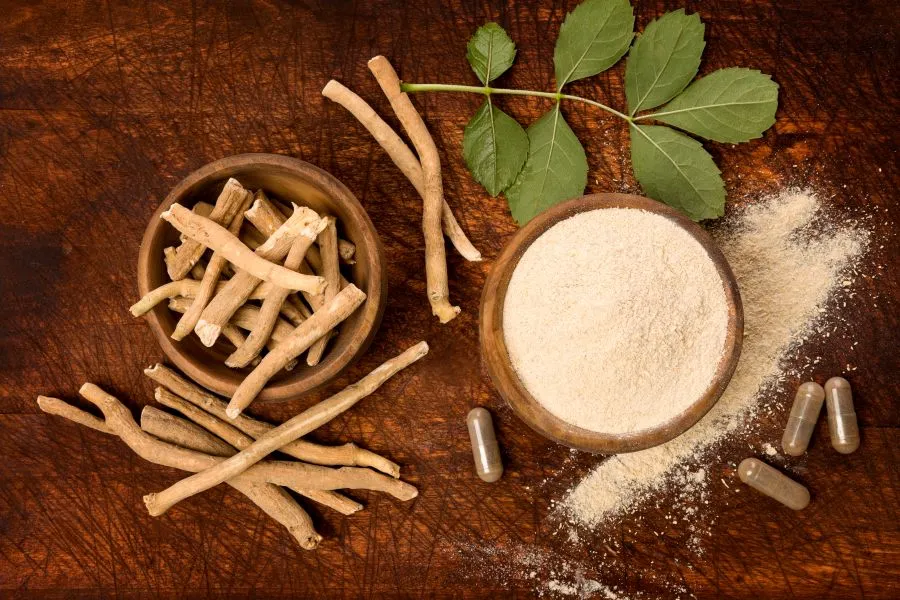 Johnston says ashwagandha is attractive to formulators since the ingredient is easy to formulate into convenient delivery formats.He adds that ashwagandha is also attractive to formulators since ingredients are easy to formulate into convenient delivery formats such as functional beverages, gummies, and capsules.
“Ashwagandha continues to stand out as one of the most promising science-backed botanicals for supporting mind and mood. It has been shown to help manage stress, support sleep quality, and support cognitive health by influencing cortisol balance and the body’s broader stress-response systems.”
By helping reduce the physiological burden of stress, ashwagandha may support more restorative sleep, improved focus, mental clarity, and overall resilience, making it particularly relevant for today’s consumers who are seeking mind and mood support, he argues.
“However, historically speaking, one of the biggest formulation challenges with ashwagandha was the high dosage required for efficacy, often ranging from 500 to 1,000 mg, which limited its use in modern delivery systems.”
Multifunctional for cognitive health
Last year, Arjuna Natural’s Shoden ashwagandha (Withania somnifera) extract was approved by Health Canada as a Natural Health Product. This official endorsement affirmed the botanical composition’s safety and efficacy, the company noted.
Johnston says that Shoden by Arjuna Natural has shown long-lasting benefits for stress, sleep, and cognitive function at doses of just 60 and 120 mg, as reported in 11 internationally published clinical studies.
“It is standardized to 35% withanolide glycosides, making it among the highest concentrations available in the market. This high concentration allows for efficacy at a low dose, and pharmacokinetic work has shown a sustained presence of withanolides in circulation over a 24-hour period.”
In addition, Johnston highlights Arjuna Natural’s root-only format, Shoden-R, which he says is water-soluble, odorless, and easy to formulate into traditional and preferred new delivery formats such as functional beverages, chews, and gummies. For formulators, this makes ashwagandha especially valuable because it addresses multiple areas of health at a low dose with formulation flexibility.
He says curcumin is another botanical worth watching in this space. Known to formulators for joint and inflammatory health, it has also been studied for mood support. “The mechanism is distinct from ashwagandha’s — it acts on neuroinflammatory pathways rather than on cortisol and the hypothalamic-pituitary-adrenal (HPA) axis.”
Arjuna’s BCM-95/Curcugreen is a natural curcumin complex developed to address curcumin’s well-known bioavailability limitations without synthetic excipients.
“What makes this interesting for mind and mood formulators is the combination potential: pairing an adaptogen that modulates the stress response with a curcumin that works on a separate pathway, addresses the same consumer complaint from two directions, and that kind of complementary stacking is where the more sophisticated formulations in this category are heading.”
Differences in ingredient origin
The biggest difference between synthetic and botanical ingredients is how each one engages the body, says Johnston.
“A synthetic compound is typically designed to hit a single target. Botanicals are multi-constituent matrices that work across several systems at once; for example, an adaptogen like ashwagandha can influence the HPA axis, cortisol regulation, and neurotransmitter signaling together rather than pulling one lever in isolation.”
“That breadth matters here, because consumers don’t experience stress as one symptom. They describe poor sleep, low mood, and difficulty focusing all at once, and a multi-pathway ingredient maps to that reality far better than a single-target molecule.”
 The biggest difference between synthetic and botanical ingredients is how each one engages the body, says Johnston.
“Consumers recognize that distinction, and they want to feel like themselves, not medicated. Add centuries of traditional use now being validated by modern clinical research, and botanicals bring a depth of evidence a novel synthetic hasn’t had time to build.”
Meanwhile, he notes that synthetics offer a higher consistency, but he says that this is an argument for choosing the right botanical supplier, not for choosing synthetics.
“A vertically integrated supply chain with control from seed to finished extract delivers the batch-to-batch reliability formulators need while retaining everything the whole botanical matrix offers. Formulators shouldn’t have to choose between consistency and complexity, and a properly standardized botanical gives them both.”
No longer a “standalone category”
When making predictions for the future, Johnston says one trend worth watching is that mind and mood are “no longer a standalone category.” Rather, formulators are building stress and cognition support into products previously positioned for sleep, sports recovery, women’s health, or healthy aging because those consumers describe the same underlying stress burden.
“Low-dose, formulation-friendly ingredients are what make that possible. When an efficacious dose is 60 to 120 mg rather than 500 to 1,000 mg, you can combine multiple actives in a single gummy or beverage without compromising formulation.”
He also observes an increased interest in combining complementary mechanisms, for example pairing an adaptogen that works on cortisol and the stress response with an ingredient that acts on a separate pathway, such as neuroinflammation.
“Those are different levers on the same consumer complaint, and the rationale for formulating them together is getting stronger,” Johnston argues.
“Finally, a note on substantiation. As the category gets more crowded, the burden is shifting from ‘is there research on this botanical’ to ‘is there research on this extract, at this dose, in this population.’ Suppliers who can answer that specifically will do well. Those relying on genus-level literature will have a harder time,” he concludes.