




Aker BioMarine backs krill oil as premium and sustainable alternative to fish oil

Key takeaways
- Aker BioMarine presents krill oil as a premium and sustainable omega-3 alternative as fish oil supply is under pressure.
- The company notes that krill oil offers better absorption than fish omega-3s and is sustainable due to CCAMLR oversight, independent observers on boats, and limited bycatch.
- Aker BioMarine’s Norris says that consumers who switch to krill oil remain loyal and that the category will shift toward value over volume with targeted ingredients.

Amid ongoing pressure on traditional fish oil supplies for omega-3s, Aker BioMarine positions krill oil as a sustainable alternative. The krill oil specialist notes that this omega-3 source offers better user experience, absorption, and targeted health benefits than traditional fish-oil-based solutions.
Nutrition Insight continues its conversation with Ross Norris, general manager for Asia-Pacific at Aker BioMarine, who previously warned that omega-3 demand could outstrip fish oil supply in 2027, urging brands to diversify their sources with alternatives such as algae and krill oil.
In the final installment of this two-part series, Norris unpacks the sustainability and consumer benefits of krill oil as an alternative omega-3 source.
He notes that krill oil is not a volume substitute for natural or 18:12 fish oil, which contains 18% eicosapentaenoic acid (EPA) and 12% docosahexaenoic acid (DHA).

However, Norris warns that krill oil can’t scale sufficiently to meet fish oil market demand. “There’s a small number of vessels operating in the whole of the Antarctic fishing grounds, and the fisheries are on a very strict precautionary 1% trigger point.”
At the same time, he says that krill oil is “a more premium product” because it contains nutrients in addition to omega-3s. “It’s in a phospholipid form, so it provides phospholipids for cell membranes. It also provides choline for liver and nervous system health, and astaxanthin.”
 The UN has rated the Antarctic fisheries as the only global fisheries with 100% of its stocks fished sustainably (Image credit: Aker BioMarine).“It’s absorbed more efficiently in the stomach and the system and delivered to the cells more effectively.”
He adds that krill supply operates under a catch system set by ecosystem science, which gives a more predictable and stable base than other marine-sourced ingredients.
Consumer awareness
Global consumer research by Aker BioMarine indicates that consumers are aware of krill being a source of omega-3, although Norris says there are differences in consumer knowledge between countries.
He says there is up to around 40% awareness of krill in markets such as the US and China, where consumers know it’s a viable omega-3 option.
“Consumers who try it immediately notice the benefit. There is a better user experience; you don’t get the fishy burps or that reflux that can often happen for some people with fish oil. And people say that they feel the benefit of krill more readily.”
Norris links this to krill oil’s phospholipid form, citing research associating krill oil with greater omega-3 absorption than fish oil.
Transparency in the chain
Norris believes that consumers will become more aware of the fisheries that are servicing the products they buy.
“Ultimately, wild-sourced omega-3 products, whether it be a fish or a krill product, will need to deliver more transparency or credentials in the sustainability space, such as clear indications on how companies are fishing,” he adds.
“For example, the krill fishery is regulated under the Commission for the Conservation of Antarctic Marine Living Resources (CCAMLR), which imposes very strict conditions in terms of catch limits, 100% observers aboard all vessels, and practices that reduce bycatch, but also traceability and third-party certifications such as Marine Stewardship Council certification.”
He underscores that the company’s fishing techniques are sensitive to the Antarctic environment. Moreover, he notes that there is a limited fleet in the ocean that is highly regulated by CCAMLR.
 Norris says there is up to around 40% awareness of krill in the US and China, where consumers see it as a viable omega-3 option.Norris highlights that the use of third-party observers on all vessels was initiated by Aker BioMarine.
“We have observers that are independent of our flags, so they’re not Norwegian and they’re independent of our business. Their role is to record catch and record any interaction with wildlife, which is why in the krill fishery you’ve got all this transparency.”
Norris says that everything that happens on a fishing vessel is made available to the public through the CCAMLR website.
However, scientists have previously called for deeper collaboration with the krill industry to strengthen monitoring, warning that current oversight is not enough to protect key predator species.
Krill fishing practices
Norris says that, despite ongoing debates on krill sustainability, in 2025 the UN Food and Agriculture Organization has “rated the Antarctic fisheries as the only global fisheries that have a 100% of its stocks fished sustainably.”
The 2025 documentary “Ocean” from natural historian David Attenborough highlighted the destructive effects of bottom trawling — dragging large nets across the ocean floor that destroy ancient ecosystems. At the third UN Ocean Conference, the British Antarctic Survey warned that krill trawling regulations fall short.
Norris agrees that bottom trawling is an “incredibly destructive fishing practice,” which Aker BioMarine doesn’t use.
“The fishing practice we use, for example, is a proprietary practice we call eco-harvesting. It effectively involves suspending a net under the boat and then trawling at walking speed, rather than hauling nets in — the net concentrates down and vacuums water and krill up onto the boat.”
In addition, at the front of those nets, the company uses specially designed and built mammal exclusion devices. “It’s those techniques that allow us to keep our bycatch down at about 0.2%,” says Norris.
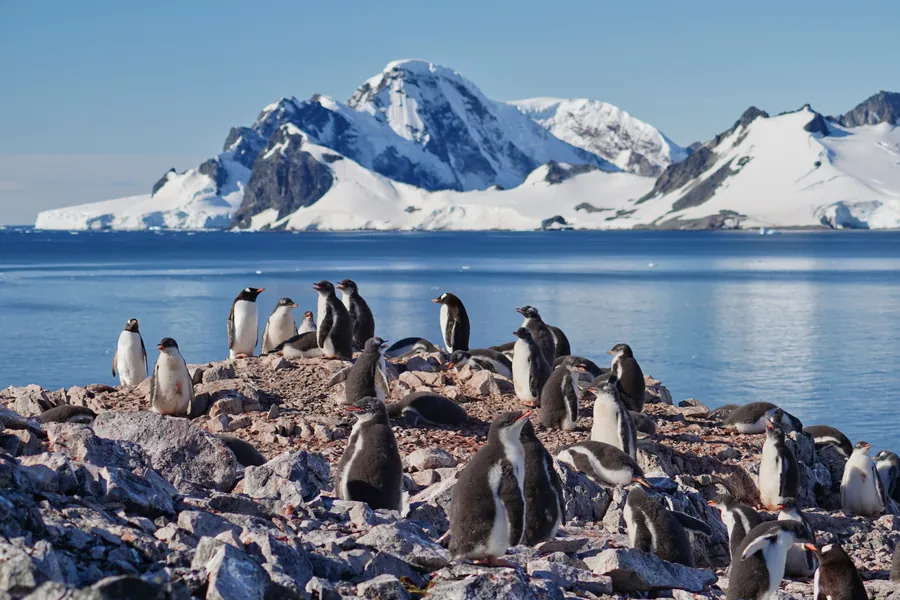 Aker BioMarine has set up an annual voluntary exclusion zone in the Western Antarctic Peninsula during the gentoo penguin breeding season.Casting large midwater nets to capture tiny crustaceans in predator-feeding zones has also been criticized. However, Norris says that through the Association of Responsible Krill Fishing Companies, Aker BioMarine set up an annual voluntary exclusion zone around a specific area of the Western Antarctic Peninsula during the penguin breeding season.
Based on research, the company determined that this area accounts for the breeding of more than 90% of the gentoo penguin population, says Norris. “By staying out of there during the breeding season, we’re now seeing that the gentoo penguin population is thriving, and that’s validated in scientific studies.”
Other sustainability initiatives from the company include campaigning at the 2026 CCAMLR meetings to create a Marine Protected Area in area 48.1 of the fishing grounds.
“This would protect about 460,000 square kilometers of the Antarctic Sea and effectively turn 70% of area 48.1 into a no-go zone marine park,” says Norris. “If you expand that to the whole of the Antarctic, this will protect 12% of the Antarctic waters.”
Switching omega-3 sources
With a growing consumer awareness of krill oil as well as algae oil for omega-3s, Norris suggests brands highlight reasons that consumers should switch from fish oil.
Aker BioMarine research indicates that 98% of users reported that they would remain in the omega-3 category if their existing product was no longer available, he details.
“You’ve got a fairly resilient consumer,” he adds. “What we’ve seen is that consumers who move to krill tend to be more loyal, and as they’re now shopping in a premium part of the market, they tend to spend more money annually on supplements.”
Even though krill oil is a more expensive option than fish oil and requires consumer education, Aker BioMarine positions it highly on the sustainability scale, says Norris.
The company’s consumer research indicates that consumers take a specific omega-3 for its user experience, rather than for its EPA or DHA content or product claims.
“Consumers start taking krill, have a great user experience, feel the benefits, then they see that we’re working hard to make the Antarctic fishery the most sustainable area possible, and they stay; they’re more loyal. That’s why we feel krill is such a strong option,” says Norris.
Future of the omega-3 category
Given consumers’ desire to stay in the omega-3 category, Norris believes that the value of this segment will continue to grow in the future. He notes that volume might fall as consumers move from higher-volume, lower-value products to higher-value and lower-volume options.
 Clinical research indicates that Aker BioMarine’s Lysoveta brain health ingredient supplies EPA and DHA through the brain’s protective barriers.At the same time, he expects the use of fish oil to decline. “I think algae and krill will grow faster than fish oil.”
Norris believes there will still be “plenty of consumers” of omega-3s and users to become more educated about the products they buy. “You’ll see progress toward more specific, tissue-targeted or condition-specific omega-3 ingredients.”
“For example, Lysoveta, a krill-derived ingredient that we’ve launched recently, delivers omega-3 in a very specific, molecular form, one that’s bound preferentially by the blood-brain barrier and transported into the brain.”
He highlights early research which indicates that Lysoveta is better able to improve delivery of omega-3 to the brain “than any other omega-3 ingredient” even in cases where transport is generally deficient, such as in the APOE4 genotype, a genetic risk factor for Alzheimer’s disease.
“Omega-3 remains the most widely understood and known healthy aging ingredient,” adds Norris. “It’s so widely researched and backed by evidence and widely known by consumers. So, there’s still plenty of opportunity for growth within the overall category.”
He points to brain, eye, and joint health as common health benefits associated with omega-3s. “Heart health is one of the tougher ones because people struggle to feel the benefit. But we’re seeing consumers are starting on supplements at a younger age now, and I think, generally, they understand playing the long game with supplements.”
“Unfortunately, Western diets are not as good as they could be. So, supplements will always play a role in helping us maintain optimal health,” Norris concludes.