

Sustainability as key strategy
21 May 2019 | OmniActive
At Vitafoods Europe 2019, OmniActive's Brian Appell discussed the latest updates on their corporate social responsibility initative portion of the OmniActive Improving Lives Foundation, which is a community-level project to support small farming communities, improve nutrition and health, and promote gender equality in rural India.
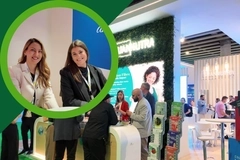
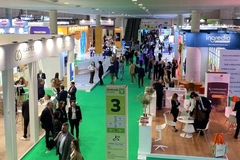
This is Lucy Gunna Phyto Foods Europe 2019 in Geneva.
I'm here at the Omni Active Stand joined by Brian Apel.
Now for Omni Active, a big focus this year is its sustainability program.
What has the progress been for you as a company in this area?
So our sustainability program, Lucy has been built around a couple of focus areas.
One is supporting our farmers.
And supporting farm the farming community in terms of not only just what they produce, but also the community itself.
What we found is that farming in general is a losing proposition for many of the farmers and it has a downstream effect on the community as a whole.
Younger generations don't wanna farm because they don't see it's profitable.
So what we've been focusing on is one, helping our farmers become better businessmen, be more profitable, and to produce better crops.
And that's through a variety of, aspects.
One is helping, provide them with non-GMO seeds, helping them to farm better through, good agricultural practices, and teaching them how to use their products, their equipments, and how to be better businessmen.
So that future generations see this as something that's sustainable for them so that they continue as small farmers because that type of farming is very large in India.
Another key focus for us has been, , gender equality is another big issue in India is, Impacts women.
And what we really focused on is how do we help how, how do we help those sectors within those communities, be more productive within the community.
And a couple of things we focused on was, sanitation, hygiene, and nutrition.
So, iron, iron deficiency anemia is a huge issue in India.
As as, the impact that menstrual hygiene has on women.
So, as an example, when women start having, , menstruating, it often impacts younger women, in terms of schooling, in terms of social context.
Oftentimes they don't go to school for a week.
So if you can imagine if that happens once a month, at the end of that year, it has a significant impact.
So what we really focused on is how do we better, better educate women.
And how do we better educate the communities to understand this process, as as iron, as, as as iron and anemia.
And one thing we focused on is addressing that issue through testing and through nutrition, and teaching the communities how to eat proper foods that are rich in iron.
Again, impacting mostly women, and the communities that they serve.
And then finally, it was, hand washing and sanitation, helping the children and those communities building toilets, and showing them that actually proper hand washing techniques.
I know it sounds foreign to us, but it's really weird that these are big issues in India.
And when you address these key areas within there, it has profound effects not only on the community itself, but also on the productivity of the people that make that community.
So what we found is, and, and obviously, eye health was the other big one that we addressed.
Obviously, we're an eye health, part of our company is, is building lutein immaculatero ones.
So we focused on screening for eye health, and that was everything from corrective glasses all the way to surgery.
And we went to those communities, screening, I think it was several 1000 people and helping again, anything from giving them glasses to actually helping with, surgery.
But how far does your responsibility as a company, reach in that?
You, you speak about communities, but how far reaching should I be thinking here?
So far reaching in terms of how many communities have we impacted?
Yes, and, and is it just your suppliers or how should I see that?
So right now, our this was basically our first kind of jump into the sustainability program from this level.
And we want to look at it again from a context of not just how does this impact our supplier, our supply, our ingredients, but really how does it really have a, that downstream effect on the community.
And it wasn't so much about how do we make a better product per se, but it was really about how do we support those communities because at the end of the day, the sustainability of our company is also built on the resources of these people.
And our first jump into this was really, let's address that first.
So we did this for a year.
We're currently assessing the, the, the success of this, and we, we found a lot of success with it.
Right now, we're looking at how does this, how, how our sanitation and hand washing techniques have impacted diseases or or lessen them.
So right now we're looking at that process and we're continuing to build this.
So now we're into our second phase, which again, we're having ICAs.
We're looking at helping new communities within this phase.
So, How does that kind of impact our supply, you know, how do we, our suppliers and how does it impact our customers?
We really didn't look at it from that perspective right now.
Right now, it was really about how do we actually help these communities first, because, making routines easy, it's really keeping the sustainability of those communities intact.
Now, Back to the show and back to maybe some of your ingredients news.
I know that one area that you are focusing on at the moment is also a big theme at the show itself, namely, busy lifestyles, and, you know, modern lifestyles, just asking active wellness, asking more from consumers, basically, consumers asking more from themselves.
How are you tapping into that as a company?
So we've been looking at the market and we've been looking at consumers and what really their preferences are and really how they're changing to accommodate what you're talking about, that active lifestyle.
Recently, we just finished up some market research on the weight wellness customer, formerly, we, we formerly the weight loss customer.
And what we're finding is that that whole demographic is changing as , that weight loss is almost a four-letter word now.
It's really how consumers want to have products, and ingredients and formulas that really accommodate, as you said, that active wellness, category.
And part of that is, how do they , maintain a healthy weight.
So what we're finding is that, these consumers are looking at new various aspects that encompass a weight wellness type of endpoint.
And that's not just about how do I lose 10 pounds tomorrow.
Now it's about how do I help support my metabolism.
How do I help with my hunger or my desire to snack.
And we're aligning that with our ingredients that we currently have.
One of those is Capsumax.
And it's the research that we've done in the past and the research that we're doing now on Capsumax to support that active wellness customer.
As an example, we recently finished a study on metabolic rate.
Showing that taking Capsoax actually helps to essentially boost your metabolism by about 6%.
That doesn't sound like a big number, but if you do the math on that, that's about 100 calories a day that you essentially, you burn extra just by taking a small dose of.
Of of cap smacks over the course of a month, you can imagine if you take that every day, you know, you're looking at almost 3000 calories a day of additional burn just by, naturally supporting your metabolism, and these are the type of things that these consumers are looking for.
Thank you.