


- Industry news
Industry news
- Trending now
- Category news
- Reports
- Trending now
- Key trends
- Trending now
- Multimedia
Multimedia
- Trending now
- Journal
- Events
- Trending now
- Suppliers
Suppliers
- Trending now
- Home
- Industry news
Industry news
- Trending now
- Category news
- Reports
- Trending now
- Key trends
- Trending now
- Multimedia
Multimedia
- Trending now
- Events
- Trending now
- Suppliers
Suppliers
- Trending now
Nektium balances sustainability with functionality in active ingredient Rhodiola rosea
01 Aug 2023 | Nektium
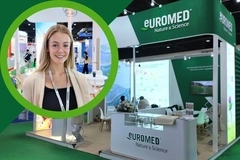
Debbie Thomas, marketing manager at Nektium, shares the company’s strifes in developing more sustainable sources of the plant Rhodiola rosea, the key nutritional ingredient in Nektium’s Rhodiolife. In its cultivation project, the company produces the plant in its natural habitat, maintaining the same phytochemical profile and active compounds as wild-collected sources, which are tested through macroscopic and HPLC analysis and DNA barcoding.
Hello everybody, this is William Bradford Nichols, and I'm here reporting live from Vita Foods Europe for nutrition insight.
Today I'm speaking with Deborah Thoma, the marketing manager for Nectium.
Hello Deborah, how are you today?
I'm very.
We are happy to talk to you today.
We're very excited to hear about Real Life and what you guys have done to.
Sustainably do that before it even came onto the sites.
Can you tell me about Rodeo Life and about the other things that you're featuring in Vita Foods this year?
We're really glad to present our collection product Rodi Life today.
It's a product that we've been working with for the past 25 years, so we've got quite a lot of expertise on it up until now, I would say.
The ingredient is based on Rodeola rosea, which is a plant native to Siberia.
It's commonly.
In Russia, the plant is commonly harvested in the wild, and in recent years there has been a bit of pressure on the plant as such, and in some areas it's actually considered an endangered species already, which has brought us to actually look at a more sustainable source apart from the wild material that we are sourcing.
We have done a lot of efforts on cultivating the Rogula plant for several years now.
That's been an effort that has been intrinsically linked to the company because we do have a strong focus on sustainability.
So we started about a decade ago experimenting with.
Cultivating the plant.
What is most important here is that Other than other efforts which were cultivating the plant in Romania, Ukraine, or Finland, for example, which didn't turn out that , I would say we maintained the plant in its natural habitat, so we stayed in its origin in Siberia and went to really remote areas where the plants grew.
In the wild and we then transferred transferred the plant and cultivate it or used it as a base material to cultivate the plant and that turned out quite successful.
One of the reasons why it went successful was because we were able to maintain the phytochemical profile, so the active levels, the active compound levels were maintained, whereas in other efforts that They didn't succeed in it and I think that's the core of what Neptune's effort of why we turned this project into a success.
So we're really happy that we found a way to have an additional source of rodeola from its natural habitats with the active compounds that Rodeola rosea is known for and that we standardize the ingredients.
That's amazing.
Can you, so the, the polyphenols, can you tell me a little bit about why Rhodesia is important and kind of the benefits of that for people?
So it is quite important.
It's very significant to look at the active compounds, and what's very specific to Roola rosea is the combination of torosevins and salidicide, and that actually is what makes the difference because there's other Rodeola species which don't have the same active compounds.
That's always something to look out for when sourcing an ingredient, look at what the ratio is between the active compounds and make sure that you get authentic material.
That is something that is also at the core of our company.
Working with ingredients for such a long time, actually.
Found a way to have a thorough process of identification for the raw materials and to make sure that we can display that on the ingredients on the extract level so we go through.
Processes like the microscopic analysis, we go through DNA barcoding that's done on an external level just to make sure that we actually get authentic original material.