

- Industry news
Industry news
- Category news
- Reports
- Key trends
- Multimedia
Multimedia
- Journal
- Events
- Suppliers
Suppliers
- Home
- Industry news
Industry news
- Category news
- Reports
- Key trends
- Multimedia
Multimedia
- Events
- Suppliers
Suppliers
Director of the Sustainable Herbs Program talks about the women in the herbs industry that inspire her
08 Mar 2023 | Sustainable Herbs Program
Ann Armbrecht talks with us about the women that inspire her in the medicinal plant industry. She is the director of the Sustainable Herbs Program, a joint program with the American Botanical Council, aiming to raise industry and consumer awareness about issues of sustainability and ethical practices in medicinal plant supply chains. She is the author of Business in Botanicals: Exploring the Healing Promise of Plant Medicine in a Global Industry.
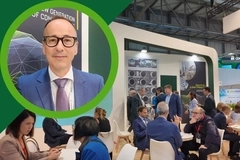
My name is Ya Mahal, and I work at.
I'm a journalist institution insight, and I'm here today with Anne Armbrecht from Sustainable Herbs Program.
The first herb conference I went to, I was finishing my doctorate at Harvard University, and my advisors were women, so, you know, this is where the, and there, Harvard was very rigorous and competitive, and it was all about what you know in your mind, and nobody's talking about their heart.
And then I went to this herb gathering and we stood in a circle and sang songs, and everybody's talking about what they loved and And their children were part of, it wasn't like what you had to leave behind.
There was this inclusiveness and this embrace of my whole self and people's whole lives.
That, you know, just there was this we mean in that, and.
So I was really drawn to that.
And And so then the women, so that was Rosemary, who really created that co-created that with some other women.
And then I also, but the first herbalist who really drew me in was Deb Sewell, who has a small apothecary in Maine, that's quite successful, and it's called the vein of botanicals, and really rooted and connected to the plants and to her relationship with the plants, and her vision has always been as using herbal medicine to steward.
This culture and the ecology of where she's working and the community of people whom she is employing, and yeah.
And So, I think the way she and Rosemary have talked about herbs and what herbal products can do is really What influences my sense of the values and the qualities and other people who have been quite influential.
In sort of my journey, who are mostly men, don't emphasize the same qualities.
They, and so actually in the sustainable for learning herbs program learning lab that I'm creating, I'm really trying to bring these other qualities in around.
That aren't often invited in.
You know, Settings that tend to be more, you know, from the intellect, and it's amazing, it's remarkable the quality of connections and relationships and that people have with each other.
And it, it made me think of When we were in Nepal this fall and we visited this.
This ginger ginger certified organic processing center for ginger, and it was started by this man, Samira Nepali, who's been had spent his career in international development and then got really frustrated with just doing trainings.
You know, for basket making, he said then everybody in the village is making baskets and nobody can sell the baskets, but, because they all have baskets, but he, and so he went into business and he wasn't making it work, and he wasn't making it work until finally he got his wife involved as the co-director, and then he said suddenly everything started working and I don't know, but she now runs the processing center, which is in, you know, it's quite far, it's in the western part of the country and it's a pretty remote area and she'll spend 6 to 10 months there with the women, it's 100 and, I forget the number of people like.
80, I don't know, a number of women, a bunch of women who are working in the processing center, and the way she talked about.
How she evaluates how they're doing is like no other person I've met, and most of the people I've met are men who are the head of these processing companies or who are involved, and she just talks about how she looked at the women's faces as they came into work each day, and if they feel, look anxious, then she'll ask them what's wrong, and she said they usually won't tell her in the moment, so she'll follow up and go to their homes, and then they'll start talking about their problems and And Slotana, this woman's name, she said, I'm a woman and I know, I can feel what that anxiety means for them as people, and, and that's why she knows it matters, she said, because if they're not feeling anxious if they're feeling that anx anxiety, they're not gonna perform at work, and so it has a concrete outcome in terms of the ability of that company to produce high quality ginger.
But no one else I've talked to except her has talked about how anxiety or happiness impacts quality.
Everybody else talks about like moisture content.
Maybe you have an example of Where you've seen, specific challenges for women, either in collecting herbs or in processing or marketing, that this is a really specific challenge for women that men don't necessarily have.
I know, so, so Lana, again, the woman in the processing factory in Nepal, she said that they would have, so they, they're working in this region where there's a lot of outmigration, so men are traveling and working in the Middle East, largely on construction and, and then sending remittances back, and so it's women, mostly left behind, and so they employ these 1617 year old women, because they've Haven't been to school or they've dropped out of school, and so they would train them and they'd work in the factory, and then suddenly they wouldn't come back, and she didn't know why are we losing these women because it's an investment for them as a company.
And so again, she went to their houses to find out and she found out they were home with kids, and there it was different than my wanting to stay home, you know, my wanting to stay home because like I didn't want to go far away, but there it was because they didn't have anyone to look after their children.
And so, what she then did, she said this foreign company came and visited them, and they said, what's your dream?
And she said, my dream is to be able to set up a childcare, you know, sort of creche for these babies, so that the women can come work, cause the women wanted to work, and Cause they wanted the income, because the income is giving them this autonomy that they've never had before.
And so this was the first year, you know, when we visited, the processing hadn't started for the season, but they were setting up.
The daycare was gonna start this past year in hopes that it would help women be able to continue to work.
So that's right, like childcare support, so that women can leave the house.
So, what was happening in the herb world here when I started the sustainable Herbs Program is because of good manufacturing practices, a lot of the smaller herb companies That were started by women, herbalists who'd been at those same conferences that I was at, couldn't grow because there were these suddenly really expensive regulations that they were required to meet in order to get good manufacturing practices and not come into trouble with the FDA.
So, that's our regulatory system here.
So, and, and it was the, the What's the bar to reach those regulations was just more than they had the capacity to financial or just the, the resources, cause there was a lot of stuff you needed to know.
And in the last like 3 years ago, I think these two women who used to work at traditional medicinals, one was in charge of research and really knows the regulatory side, and the other was worked in marketing.
They've created this conference called Emblossom.
And it's mostly women who are at this conference, and it's for kind of small to medium sized herb businesses, mostly, they're mostly in the US because I think there's maybe more creativity coming out of the herb world into the herbal products world, that had kind of been stifled when for that time I said in the beginning, but because they've created this conference, and they bring together, you know, experts in the regulatory or the quality control or all of these.
Things that can be.
Barriers to entry for newcomers.
They're providing those resources and they're building this community.
That's getting stronger, I think.
Of which brings so much more creativity into the industry because I think as there are fewer and fewer companies or there may be a lot of companies, but they're owned by fewer and fewer people, right?
There's just less creativity, less, questioning, less pushing the envelope.
And, and so, Yeah, so I'm thinking of one company peaks, I.
Again, I don't have the name at the top of my head, but she just started with her vision, and when I spoke to her a few years ago, and she was trying to figure out how to source, and she's figuring out how to go to India to source some of the products, and she's just gotten her products, you know, placed in some national grocery store chains, and So there's more of those, that's exciting.
There's a one rasa, which is adaptogen drink.
There's a lot of those right now, these coffee alternatives and these women who are powerhouses who are creating them.
Yeah, very cool.
What, what do you, what do you hope the future will hold?
I am interested in herbal medicine as a vehicle for changing the world.
It feels to me like if these At the heart of these systems of Healing that are using plants, it's about in plants is the healing power of the world and, and, and, but that means that The whole cycle has to be about healing and health.
It can't just be some end product that's for, for my health.
It has to be good for the, you know, healing the plants and the soil and the air.
It has, and the people doing the work all along the supply network.
And so my vision is that there are more companies that really hold that vision of using their company as a vision to bring more healing to the whole world, to everyone, and I do think more women hold maybe hold that vision and that That passion to follow through and , not the, the men clearly have passion, and this is a big generalization, but To not lose that wholeness, which I think has definitely been lost in the herbal products industry right now.
It's very fragmented and Focus on the end user and how this can benefit my health without getting me to question, one, without getting me to see that my health is Utterly dependent on the health of the planet and the people on the planet.
One, I think that's the company, the responsibility of companies to make that clear and then to use their company as a force for change, not just a force for making a big profit.
One thing I'm really, so in these webinars that I've been having at Sustainable Herbs Program, what I've really been trying to do, and, you know, it tends to be more men, but Not only, and I'm trying to bring in Because it's not just men and women, right?
It's people who have the power to have the voice and be heard and those who don't, and so I'm trying to make an space and create these settings where different voices can be shared on these topics that tend to be dominated by those with the power.
And that's been cool, like this last one we, I had was with 5 people, you know, there were a few too many people for a webinar, and it was a little hard to manage, but it was this a producer.
Company from Guatemala, India, Nepal, Zimbabwe, and Namibia.
You know, and they were all talking to each other for the first time, and it was a little chaotic, but I think that there was this diversity of voices that doesn't, often the information in the industry goes from the, like, it just goes one way, and it Doesn't go back down.
It doesn't, not that, it goes this way from the top down.
And then these people like down have to do what comes from the top and trying to shift so that there's more back and forth.
Yeah.
And this woman, Shamiso from Zimbabwe talked about nourishment and how that this industry, it has to be about nourishment, and everybody has to be nourished.
If the collectors are malnourished, then, you know, but the companies buying those wild harvested plants are nourished, then that.
That doesn't work.