

Longvida vs. standard curcumin: How Verdure Sciences bridges the bioavailability gap


Key takeaways
- Longvida delivers 67–285 times greater bioavailability than standard curcumin by bypassing digestive breakdown via the lymphatic system.
- Clinical trials show 400 mg daily improves spatial memory by 31% and working memory by nearly 20%.
- Nearly 40 human trials position Longvida as one of the most clinically substantiated cognitive health ingredients available.
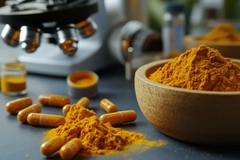
There are decades of research into the potential health benefits of standard curcumin. However, standard curcumin has a problem — it is difficult for the body to actually use. It is not water soluble, it breaks down quickly in the digestive tract, and, even at high doses, it primarily delivers curcumin to the bloodstream in forms with low biological activity and short plasma half-lives. Verdure Sciences says it has solved that problem.
“Standard curcumin extract is not water soluble and has low bioavailability, making it challenging to deliver therapeutic doses to the tissues,” Kristina Campione, the chief science officer at Verdure Sciences tells Nutrition Insight. “Even at high doses, standard curcumin has been shown to only deliver curcumin as glucuronide and sulfate conjugates.”

“The low activity, low cell permeability and short plasma half-life of these conjugates is why Verdure Sciences focuses on the delivery of free curcumin to the target tissues.”
For formulators and brands building in the cognitive health supplement space, the company says that this distinction — between curcumin that reaches the tissues and curcumin that doesn’t — makes all the difference. Verdure Sciences will exhibit at Vitafoods Europe 2026 in Barcelona, Spain (5–6 May), with Lehvoss Nutrition at booth #3C72.
Longvida’s delivery advantage
Verdure Sciences’ Longvida solution is a lipid-based curcumin formulation developed by neuroscientists at the University of California, Los Angeles, US. The ingredient is specifically designed to overcome the absorption barriers that make standard curcumin difficult to work with in clinical settings.
The formulation protects curcumin from the harsh environment of the stomach.This allows it to survive initial hydrolysis and enter the body via the lymphatic system as free curcumin — the biologically active form.
Pharmacokinetic data and studies comparing oral administration of Longvida lipid curcumin particles against a standard 95% curcuminoid (a group of compounds that includes curcumin) extract reveal that Longvida delivers appreciable plasma concentrations. Verdure Sciences spotlights that Longvida delivers more of the ingredient to the body, even though it contains less actual curcumin.
The 650 mg dose used in the comparison comprised just 130 mg of free curcumin in the Longvida formulation, versus more than 390 mg of curcuminoid in the standard extract. Longvida outperformed at less than a third of the curcumin load. Moreover, Campione points out that the standard 95% curcuminoid extract showed no curcumin was detected.
One of the primary measurements used when calculating curcumin bioavailability is maximum plasma concentration of curcumin (cMAX). This marker is used to evaluate the bioavailability and pharmacokinetic profile of different curcumin formulations. Campione also notes that the area under the curve (AUC) is the most reliable of those calculations.
AUC is a pharmacokinetic measurement that looks at the total ingredient exposure via dosage and evaluates dose proportionality across different dose levels. Campione highlights that unlike cMAX, which captures only a snapshot, AUC accounts for the entire response over time.
Looking at the AUC of Longvida, the ingredient demonstrates a plasma half-life of approximately 7.5 hours — compared to less than one hour for standard curcumin. Campione states that this means the compound stays active in the body significantly longer.
The formulation achieves this without piperine, the black pepper compound some products rely on to boost curcumin absorption. Campions underscores that piperine is non-selective, which means it can also increase the uptake of undesirable compounds, such as heavy metals.
Verdure Sciences says that clinical studies have shown Longvida doses from 8 to 12 gm are delivered safely without piperine.
“Clearly, not all curcumins are created equally, which should be a top consideration when formulating products seeking its benefits,” Campione says.
Curcumin’s cognitive benefits
The cognitive health supplement category is crowded and there are many ingredients that make attention, memory, and focus claims. Campione says Longvida’s evidence base is an exception to that pattern.
Verdure Sciences reports that Longvida has been studied in 12 clinical trials focused on cognitive health. Multiple studies have shown meaningful effects at just 400 mg per day — 80 mg of actual curcumin — over as few as four weeks.
In healthy middle-aged and older adults, the company states that researchers found improvements in contentedness, calmness, and mood within that window. When extended to 12 weeks, the results held, with measurable reductions across markers of fatigue, tension, anxiety, confusion, and anger-hostility.
An earlier trial found that a single dose of Longvida produced significant acute improvements in sustained attention and working memory within one hour. Continuous supplementation over four weeks produced further improvements to working memory, spatial memory, learning, and mood.
A follow-up study extending the treatment period to 12 weeks confirmed improvements to working memory and spatial learning, measured via a virtual Morris Water Maze — a clinical tool for studying neurocognition and pharmacological results.
Verdure Sciences also points to a separate finding showing a 5% reduction in plasma beta-amyloid protein after just four weeks — a result with potential implications for Alzheimer’s disease research, though not a clinical or diagnostic finding.
Additionally, in early-stage research, Longvida demonstrated an ability to bind to and detect retinal amyloid spots. Researchers are exploring the spots as a potential marker for Alzheimer’s disease-related cognitive changes.
“Longvida has been extensively researched for over a decade, with over 80 publications including human, preclinical, and review papers, with almost 40 human trials alone,” Campione underscores.
Whole-body clinical evidence
Campione is deliberate about how she frames Longvida’s broader applications. The company does not position it as a cognitive ingredient with secondary benefits. They position it as a “whole-body” botanical — one that happens to have an “unusually deep” clinical portfolio across multiple health categories.
The metabolic data is notable. A pilot study published in 2025 found that 400 mg of Longvida daily for 12 weeks significantly lowered hemoglobin A1c levels in older adults with prediabetes. The same study found modest enrichment of beneficial gut microbes, pointing to potential applications in microbiome and gut barrier support.
The vascular findings are equally specific. At 2,000 mg per day over 12 weeks, Longvida improved vascular endothelial function in healthy middle-aged and older adults — increasing brachial artery flow-mediated dilation by 36% and forearm blood flow response by 37%.
Furthermore, Verdure Sciences highlights a pilot study in patients with epidermal growth factor receptor-mutant non-small cell lung cancer. Longvida was used alongside tyrosine kinase inhibitor therapy, was associated with reductions in C-reactive protein, and improved quality of life scores.
Formulation and flexibility
For brands looking to move beyond traditional supplement formats, Verdure Sciences says the formulation translates well into functional foods and beverages. Campione points to ready-to-drink products, bars, and powdered mixes as viable delivery formats, with in-house formulation support available through Verdure’s Insights Lab.
The adaptive dosing profile adds further flexibility. Multiple trials have demonstrated efficacy at 400 mg, with the ability to scale safely to 2,000 mg and beyond — giving formulators room to work across product types and target populations.
The company’s sourcing infrastructure is also worth noting for brands with sustainability commitments. Verdure’s turmeric procurement operates through a Sustainable Procurement Program established in 2017, covering agronomic training, soil health monitoring and full supply chain traceability. The program is certified under the Union for Ethical BioTrade/Rainforest Alliance.
“Customers can work with our in-house Insights Lab to create a multitude of unique items using Longvida from concept to commercialization,” Campione says. “We provide solutions for working with taste profile, texture, and other formulation considerations associated with botanicals in various delivery formats.”
A clinical standard
The cognitive health supplement market will keep growing, predicts Verdure Sciences. Consumer interest in brain health, memory and mood support is not a trend — it is a structural shift in how people think about long-term wellness. The ingredients that will hold market position in that environment are the ones with real clinical depth behind them.
Longvida’s portfolio — nearly 40 human trials, consistent results in randomized double-blind placebo-controlled studies — has a short list of ingredients that can credibly leverage its claims.
“While its use in cognition is heavily supported,” Campione says, “the evidence suggests Longvida should actually be approached like a whole-body care botanical.”