




Unprocessed diets lead to eating more foods but fewer calories

Key takeaways
- Reanalysis of a 2019 trial shows that people on a fully unprocessed diet ate about 57% more food by weight, yet 330 fewer calories than on a UPF diet.
- Whole-food diets naturally shift intake toward large volumes of fruits and vegetables, increasing micronutrient intake.
- The findings suggest excess calorie intake is driven less by overeating itself and more by how UPFs steer people toward energy-dense choices.

A reanalysis of data from a clinical trial on ultra-processed food (UPF) consumption reveals that people consuming a completely unprocessed diet ate about 57% more food (by weight) than participants eating UPFs, but consumed an average of 330 calories less per day.
The original trial was among the first to note that eating UPFs exclusively led to excessive calorie intake and weight gain.
According to the new analysis, participants who ate only whole foods consumed more fruit and vegetables, sometimes several hundred grams per meal, instead of eating higher-calorie foods like steak, pasta, and cream.
“Overeating is not necessarily the core problem,” says lead author Jeff Brunstrom, professor of Experimental Psychology at the University of Bristol, UK.

“Our research clearly demonstrated that consumers on a whole food diet actually ate far more than those on a processed food one. But the nutritional make-up of food is influencing choices, and it seems that UPFs are nudging people toward higher calorie options, which even in much lower quantities are likely to result in excess energy intake and in turn fuel obesity.”
External experts, not involved in the study, note that the work raises important new questions about food design and public health but call for larger trials to confirm the findings.
“If confirmed, these results suggest that effective dietary strategies should focus less on calorie restriction and more on restoring natural nutritional trade-offs,” says professor Martin Warren, chief scientific officer at the UK Quadram Institute.
“This could mean designing meals and food environments where micronutrients are delivered primarily through low-energy-dense foods (such as vegetables), rather than being bundled with calories via fortification and processing.”
Diet quality
The paper published in The American Journal of Clinical Nutrition also reveals that participants who ate whole foods had a more nutritious diet. The range and volumes of fruit and vegetables contained essential vitamins and minerals that participants would not have consumed by eating higher-calorie whole foods.
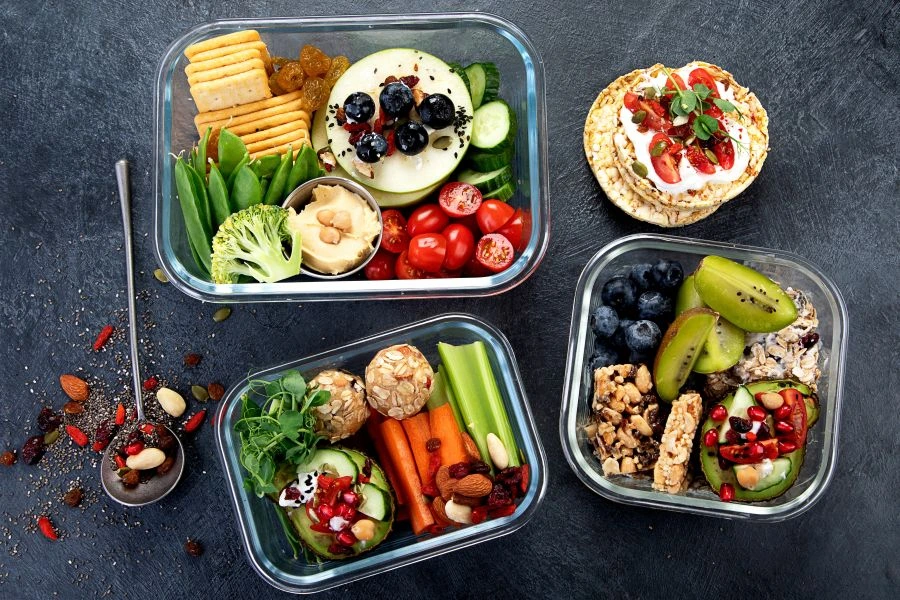 Participants on the whole food diet consumed more fruit and vegetables, resulting in higher food but lower calorie intake.“Had participants eaten only the calorie-rich foods, our findings showed they would have fallen short on several essential vitamins and minerals and eventually developed micronutrient insufficiencies. Those micronutrient gaps were filled by lower-calorie fruits and vegetables,” explains study co-author Mark Schatzker, at McGill University, Canada.
Additionally, the authors suggest that participants eating only UPFs are also likely to meet micronutrient requirements, as foods are often fortified with nutrients like vitamins.
For example, the foods with the highest vitamin A concentration were UPFs: French toast sticks and pancakes. In the unprocessed diet, participants mainly obtained this vitamin through carrots and spinach.
Reacting to the study, professor Nita Forouhi, from the University of Cambridge, UK, notes that the research adds to the scientific understanding of why and how UPFs promote higher calorie intake by affecting food choice and fortification.
“The finding that people eat more food yet consume fewer calories on a whole food unprocessed diet directly challenges narratives that suggest lack of individual restraint as an underlying cause of excess caloric intake.”
“The research suggests that fortifying UPFs with vitamins/minerals may inadvertently encourage overconsumption by bundling high energy and micronutrients together, weakening the natural appetite cues that whole foods preserve,” she details.
At the same time, Forouhi notes the research was limited by a small sample size, calling for findings to be replicated in other trials and observational studies “that reflect more real-world settings.”
Driving healthy choices
Professor Jules Griffin, director of the Rowett Institute at the University of Aberdeen, UK, questions how the study helps consumers make healthier choices. Griffin is not part of the research.
“What is driving this motivation to eat more fruit and vegetables when on an unprocessed diet? The authors suggest that this might be due to where we get our nutrients from and the energy that comes along with these nutrients — e.g., cereals that have been fortified but could contain lots of sugar in the ultra-processed diet or blueberries in the unprocessed diet, for one comparison.”
However, Griffin highlights alternative explanations for why unprocessed meals were healthier, saying these provided more fiber in a natural form, which has a beneficial effect on the gut by enhancing satiety and releasing GLP-1.
 External experts welcome the research findings but call for larger trials in real-world settings to confirm them.“Given the recent questions about weight regain following GLP1-agonists, so-called ‘fat-jabs,’ this research highlights that governments should be thinking about improving people’s access to fruit, vegetables, and unprocessed foods as well as drugs for treating people living with obesity.”
UPF vs. unprocessed foods
In the “seminal” clinical trial from 2019, led by Kevin Hall, Ph.D., then part of the National Institute of Health, 20 weight-stable adults consumed either an ultra-processed or unprocessed diet for two weeks, followed by the alternate diet for another two weeks.
The researchers designed meals to match the calories, energy density, macronutrients, sugar, sodium, and fiber provided. They instructed participants to consume as much or as little as they wanted.
On the UPF diet, participants had higher energy intake (an additional average of 508 kcal), with increased carbohydrate (280 kcal) and fat (230 kcal) intake, but similar protein intake.
While on the UPF diet, participants gained an average of 0.9 kg, while they lost 0.9 kg on the unprocessed diet.
Nutritional intelligence
The authors of the reanalysis claim their findings indicate that consumers have an inbuilt “nutritional intelligence” to achieve a well-balanced diet.
“It’s exciting to see when people are offered unprocessed options, they intuitively select foods that balance enjoyment, nutrition, and a sense of fullness, while still reducing overall energy intake,” says Brunstrom.
“Our dietary choices aren’t random — in fact, we seem to make much smarter decisions than previously assumed when foods are presented in their natural state.”
The authors also note that their study provides further insights into the effects of processed food consumption. Similarly, a 2025 clinical trial found that people on minimally processed diets lost twice as much weight as while on a UPF diet, as they consumed fewer calories.
Nutrition Insight recently explored the role of ingredient suppliers in bringing clarity to the debate on UPF healthiness and definitions.
These foods occupy a considerable share of supermarket shelves, and research increasingly links them to health issues. However, experts also caution against blanket policies and nutrition advice on these foods, as not all UPFs have the same poor nutritional value.